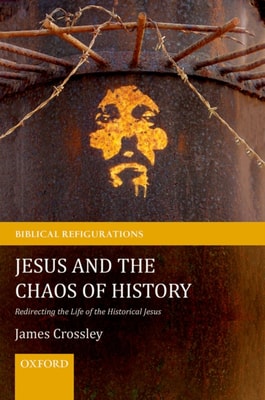
In Jesus and the Chaos of History, James Crossley looks at the way the earliest traditions about Jesus interacted with a context of social upheaval and the ways in which this historical chaos of the early first century led to a range of ideas which were taken up, modified, ignored, and reinterpreted in the movement that followed.
This unique and meticulously-researched study examines the triangular relationship between the British government, the Palace, and the modern Commonwealth since 1945.
The Oxford History of the British Empire is a major new assessment of the Empire in the light of recent scholarship and the progressive opening of historical records.
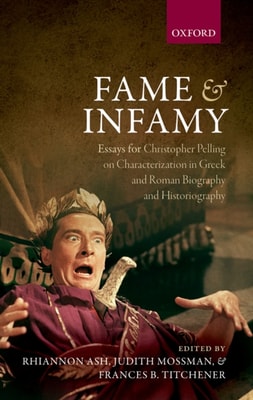
Fame and Infamy honours Christopher Pelling, reflecting the range of his interests and demonstrating the extent of his influence in spearheading the so-called literary turn in the study of ancient historiography.
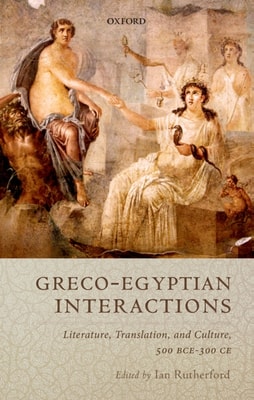
Contact and interaction between Greek and Egyptian culture can be traced in different forms over more than a millennium: from the sixth century BC, when Greeks visited Egypt for the sake of tourism or trade, through to the Hellenistic period, when Egypt was ruled by the Macedonian-Greek Ptolemaic dynasty who encouraged a mixed Greek and Egyptian culture, and even more intensely in the Roman Empire, when Egypt came to be increasingly seen as a place of wonder and a source of magic and mystery.
This volume provides the first geographically broad, comparative survey of early modern 'sacred history', or writing on the history of the Christian Church, its leaders and saints, and its institutional and doctrinal developments, in the two centuries from c.
This edited collection looks at two of the most important ancient Greek historians living in the 5th Century BCE who are considered to be the founders of the western tradition of historiography.
Volume III of The Oxford History of Historical Writing contains essays by leading scholars on the writing of history globally during the early modern era, from 1400 to 1800.
This is a collection of studies on ancient (especially Latin) poetry and historiography, concentrating especially on the impact of rhetoric on both genres, and on the importance of considering the literature to illuminate the historical Roman context and the historical context to illuminate the literature.
The Norman Conquest in 1066 was the last time England was successfully invaded, and was one of the most profound turning points in English history, cataclysmically transforming a disparate collection of small nations into a European state.
Essential reading for anyone interested in the African continent and the diversity of human history, this Very Short Introduction looks at Africa's past and reflects on the changing ways it has been imagined and represented.
This is a collection of studies on ancient (especially Latin) poetry and historiography, concentrating especially on the impact of rhetoric on both genres, and on the importance of considering the literature to illuminate the historical Roman context and the historical context to illuminate the literature.
History, Historians, and Conservatism in Britain and America examines the subjects, motives, and personal and intellectual origins of conservative historians who were also successful public intellectuals.
The Oxford History of the British Empire is a major new assessment of the Empire in the light of recent scholarship and the progressive opening of historical records.
The Norman Conquest in 1066 was the last time England was successfully invaded, and was one of the most profound turning points in English history, cataclysmically transforming a disparate collection of small nations into a European state.
This study of six historians from the edges of the Roman world at the end of the Republic - the author of I Maccabees, Posidonius, Diodorus Siculus, Pompeius Trogus, Nicolaus of Damascus, and Memnon of Heraclea - combines discussion of their biographical details, the intellectual and elite culture in which they composed, and the methodological difficulties of interpreting fragmentary texts, with textual analysis of their representations of Rome.
The most important surviving encyclopedia from the ancient world, Pliny the Elder's Natural History is unparalleled as a guide to the cultural meanings of everyday things in first-century Rome.
The origins and development of Greek historiography cannot be properly understood unless early historical writings are situated in the framework of late archaic and early classical Greek culture and society.
Essential reading for anyone interested in the African continent and the diversity of human history, this Very Short Introduction looks at Africa's past and reflects on the changing ways it has been imagined and represented.
Ammianus Marcellinus' Res Gestae holds a prominent position in modern studies of the emperor Julian as the fullest extant narrative of the reign of the last 'pagan' emperor.
Ammianus Marcellinus' Res Gestae holds a prominent position in modern studies of the emperor Julian as the fullest extant narrative of the reign of the last 'pagan' emperor.
The Historians of Angevin England is a study of the explosion of creativity in historical writing in England in the late twelfth and early thirteenth centuries, and what this tells us about the writing of history in the middle ages.
The Historians of Angevin England is a study of the explosion of creativity in historical writing in England in the late twelfth and early thirteenth centuries, and what this tells us about the writing of history in the middle ages.
Historians and the Church of England explores the vital relationship between the Church of England and the development of historical scholarship in the Victorian and Edwardian era.
Starting with the most meagre resources, Philip made his kingdom the greatest power in Europe The Greek historian Diodorus of Sicily is one of our most valuable sources from ancient times.
Starting with the most meagre resources, Philip made his kingdom the greatest power in Europe The Greek historian Diodorus of Sicily is one of our most valuable sources from ancient times.
Hugo Grotius and the Century of Revolution, 1613-1718 is a reconstruction of the way Hugo Grotius (1583-1645) was read and used by English political and religious writers in the seventeenth and early eighteenth centuries.
Hugo Grotius and the Century of Revolution, 1613-1718 is a reconstruction of the way Hugo Grotius (1583-1645) was read and used by English political and religious writers in the seventeenth and early eighteenth centuries.
One of the most exciting recent developments in archaeology and history has been the adoption of new perspectives which see human societies in the past-as in the present-as made up of networks of interlinked individuals.
In Jesus and the Chaos of History, James Crossley looks at the way the earliest traditions about Jesus interacted with a context of social upheaval and the ways in which this historical chaos of the early first century led to a range of ideas which were taken up, modified, ignored, and reinterpreted in the movement that followed.
Reimagining Hagar illustrates that while interpretations of Hagar as Black are not frequent within the entire history of her interpretation, such interpretations are part of strategies to emphasize elements of Hagar's story in order to associate or disassociate her from particular groups.