The Jewish migration at the end of the nineteenth and beginning of the twentieth centuries was one of the dramatic events that changed the Jewish people in modern times.
Is the idea of the "e;Middle East"e; simply a geopolitical construct conceived by the West to serve particular strategic and economic interests-or can we identify geographical, historical, cultural, and political patterns to indicate some sort of internal coherence to this label?
Silencing the Sea follows Palestinian poets' debates about their craft as they traverse multiple and competing realities of secularism and religion, expulsion and occupation, art, politics, immortality, death, fame, and obscurity.
Although Iraqi Jews saw themselves as Iraqi patriots, their community-which had existed in Iraq for more than 2,500 years-was displaced following the establishment of the state of Israel.
In its last decade, the Ottoman Empire underwent a period of dynamic reform, and the 1908 revolution transformed the empire's 20 million subjects into citizens overnight.
Many today place great hope in law as a vehicle for the transformation of society and accept that law is autonomous, universal, and above all, secular.
Based on archival and primary sources in Persian, Hebrew, Judeo-Persian, Arabic, and European languages, Between Foreigners and Shi'is examines the Jews' religious, social, and political status in nineteenth-century Iran.
This book tells the story of the Donme, the descendents of Jews who resided in the Ottoman Empire and converted to Islam along with their messiah, Rabbi Shabbatai Tzevi, in the seventeenth century.
While the construction of architecture has a place in architectural discourse, its destruction, generally seen as incompatible with the very idea of "e;culture,"e; has been neglected in theoretical and historical discussion.
American Evangelicals have long considered Africa a welcoming place for joining faith with social action, but their work overseas is often ambivalently received.
"e;Laura Bier unpacks the complicated dynamics and legacy of an historical moment in which women were understood to be crucial to modern nation-building.
Before the discovery of oil in the late 1960s, Oman was one of the poorest countries in the world, with only six kilometers of paved roads and one hospital.
The rise of political Islam has provoked considerable debate about the compatibility of democracy, tolerance, and pluralism with the Islamist position.
Between 1830 and 1870, French army officers serving in the colonial Offices of Arab Affairs profoundly altered the course of political decision-making in Algeria.
To better understand the diverse inheritance of Islamic movements in present-day Turkey, we must take a closer look at the religious establishment, the ulema, during the first half of the twentieth century.
Pursuing Justice in Africa focuses on the many actors pursuing many visions of justice across the African continenttheir aspirations, divergent practices, and articulations of international and vernacular idioms of justice.
Beginning in January 2011, the Arab world exploded in a vibrant demand for dignity, liberty, and achievable purpose in life, rising up against an image and tradition of arrogant, corrupt, unresponsive authoritarian rule.
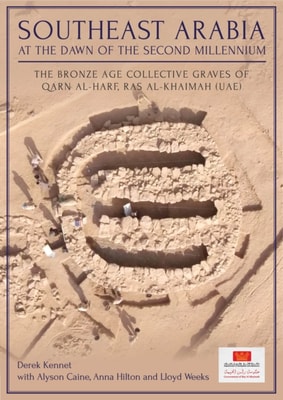
First full publication of a cemetery of the Bronze Age Wadi Suq period (2000-1650 BC) in the region of the UAE, a period marked by large scale cultural and economic changes.
Scientific Challenges to Evolutionary Theory: How These Challenges Affect Religion addresses all aspects of the giant battle between two major belief systemsthose that believe in a ';naturalistic worldview' and evolution, and those that believe in a miracle-performing God and the Creation of all things.
In the Ethico-Religious Concepts in the Qur'an Toshihiko Izutsu analyzes the guiding spirit of the Islamic moral code, the basic ethical relationship of man to God.
Paul Merkley draws on the published literature of the World Council of Churches, the Middle East Council of Churches, the Roman Catholic Church, and other Christian organizations that have an interest in the question of Israel's past, present, and future, and on interviews with numerous key figures within the government of Israel, spokesmen for the Palestine Authority, and leaders of all the major pro and anti-Zionist Christian organizations to demonstrate that Christian attitudes towards Israel remain remarkably polarized.
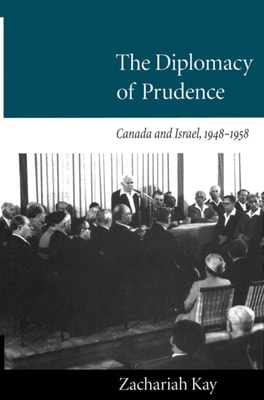
Using a case study approach, Kay explores Canada's response to key issues such as the recognition of the new state of Israel, the status of Jerusalem, the Palestinian refugee problem, arms sales to Israel, particularly the sale of F-86s in 1956, and the Suez war.
Maajid Nawaz spent his teenage years listening to American hip-hop and learning about the radical Islamist movement spreading throughout Europe and Asia in the 1980s and 90s.
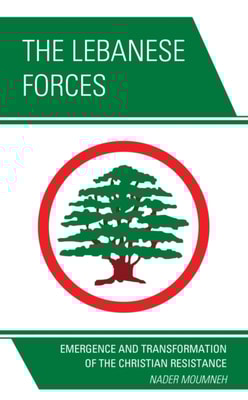
In this book, author Nader Moumneha Canadian senior policy adviser of Lebanese descent examines the research of the formation and evolution of the Christian resistance in Lebanon he performed as a graduate student at the American University of Beirut in the early 1990s.
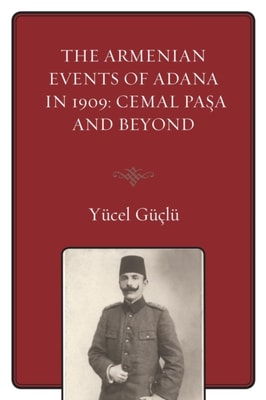
The purpose of the book is twofold: first, to give an accurate and reasonably complete narrative account of the Armenian events of 1909 and their aftermath in the province of Adana and the developments leading up to and following them; and equally importantly, to provide an interpretive framework that makes some sense out of this episode in Ottoman history.
Iranian Diaspora Identities: Stories and Songs combines oral history, storytelling, theories of communication, and performance studies into a unique study of an immigrant community.