Sustaining Conflict develops a groundbreaking theory of political apathy, using a combination of ethnographic material, narrative, and political, cultural, and feminist theory.
This thought-provoking book, the first of its kind in the English language, reexamines the fifty-year-old nation of Israel in terms of its origins as a haven for a persecuted people and its evolution into a multi- cultural society.
From the fall of the Ottoman Empire through the Arab Spring, this completely revised and updated edition of Mehran Kamrava's classic treatise on the making of the contemporary Middle East remains essential reading for students and general readers who want to gain a better understanding of this diverse region.
The Deoband movementa revivalist movement within Sunni Islam that quickly spread from colonial India to Pakistan, Afghanistan, Bangladesh, and even the United Kingdom and South Africahas been poorly understood and sometimes feared.
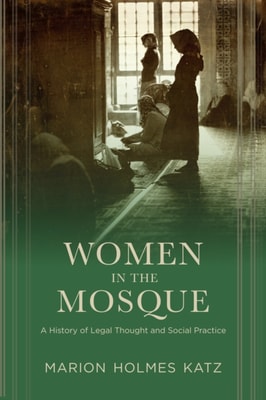
Juxtaposing Muslim scholars' debates over women's attendance in mosques with historical descriptions of women's activities within Middle Eastern and North African mosques, Marion Holmes Katz shows how over the centuries legal scholars' arguments have often reacted to rather than dictated Muslim women's behavior.
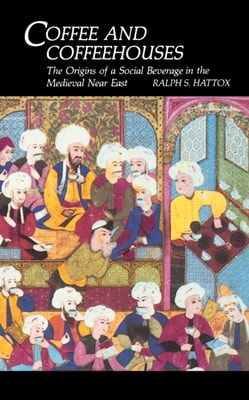
Drawing on the accounts of early European travelers, original Arabic sources on jurisprudence and etiquette, and treatises on coffee from the period, the author recounts the colorful early history of the spread of coffee and the influence of coffeehouses in the medieval Near East.
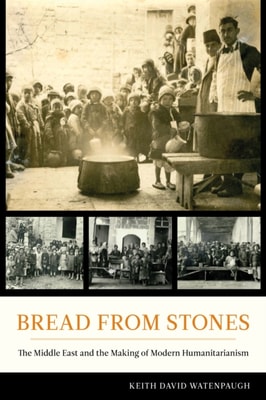
Bread from Stones, a highly anticipated book from historian Keith David Watenpaugh, breaks new ground in analyzing the theory and practice of modern humanitarianism.
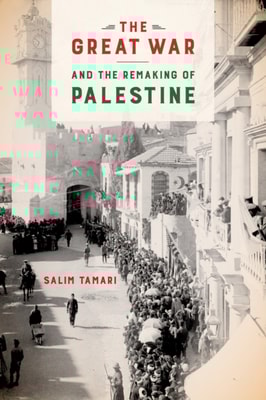
This rich history of Palestine in the last decade of the Ottoman Empire reveals the nation emerging as a cultural entity engaged in a vibrant intellectual, political, and social exchange of ideas and initiatives.
Across the Middle East in the postWorld War I era, European strategic moves converged with late Ottoman political practice and a newly emboldened Zionist movement to create an unprecedented push to physically divide ethnic and religious minorities from Arab Muslim majorities.
Debating or making speeches, American politicians invariably cite tenets of Christian faitheven as they unfailingly defend the liberal principles of tolerance and religious neutrality that underpin a pluralistic democracy.
In the fourteenth-century Persian city of Shiraz, poets composed, scholars studied, mystics sought hidden truths, ascetics prayed and fasted, drunkards brawled, and princes and their courtiers played deadly games of power.
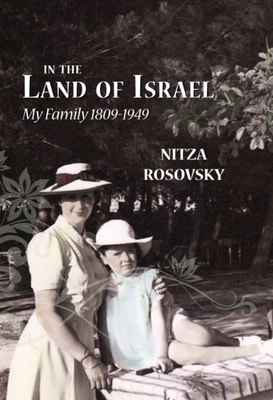
At once an intimate account of a young girls coming of age during the tempestuous times attending the birth of Israel and a rare record of Jewish family life in Palestine under the Ottomans dating to 1809, Nitza Rosovskys In the Land of Israel: My Family 1809-1949 adds fresh insights into the narrative of Jewish migration from early nineteenth century Europe to the formation of a Jewish homeland.
Before the discovery of oil in the late 1960s, Oman was one of the poorest countries in the world, with only six kilometers of paved roads and one hospital.
Based on archival and primary sources in Persian, Hebrew, Judeo-Persian, Arabic, and European languages, Between Foreigners and Shi'is examines the Jews' religious, social, and political status in nineteenth-century Iran.
In this book, George Gilder asserts that widespread antagonism toward the current state of Israel springs from, like anti-Semitism everywhere, envy of superior accomplishment.
Focusing on the complicity of Israeli universities in maintaining the occupation of Palestine, and on the repression of academic and political freedom for Palestinians, Against Apartheid powerfully explains why scholars and students throughout the world should refuse to do business with Israeli institutions.
In Apartheid Israel: The Politics of an Analogy, eighteen scholars of Africa and its diaspora reflect on the similarities and differences between apartheid-era South Africa and contemporary Israel, with an eye to strengthening and broadening today's movement for justice in Palestine.
The "e;home"e; is a quintessentially quotidian topic, yet one at the center of global concerns: Consumption habits, aesthetic preferences, international trade, and state authority all influence the domestic sphere.
There is a tendency to think of Korean American literature-and Asian American literature writ large-as a field of study involving only two spaces, the United States and Korea, with the same being true in Asian studies of Korean Japanese (Zainichi) literature involving only Japan and Korea.
Many today place great hope in law as a vehicle for the transformation of society and accept that law is autonomous, universal, and above all, secular.
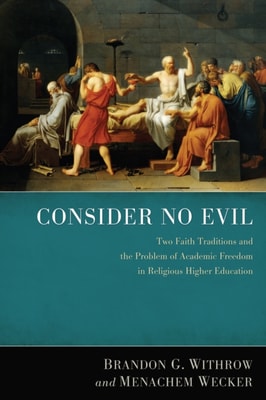
Even casual acquaintances of the Bible know that the Truth shall set you free, but in the pursuit of that Truth in higher education--particularly in Christian or Jewish seminaries--there are often many casualties suffered along the way.