The forgotten story of the nineteenth-century freethinkers and twentieth-century humanists who tried to build their own secular religionIn The Church of Saint Thomas Paine, Leigh Eric Schmidt tells the surprising story of how freethinking liberals in nineteenth-century America promoted a secular religion of humanity centered on the deistic revolutionary Thomas Paine (1737-1809) and how their descendants eventually became embroiled in the culture wars of the late twentieth century.
In this classic work George Hourani deals with the history of the sea trade of the Arabs in the Indian Ocean from its obscure origins many centuries before Christ to the time of its full extension to China and East Africa in the ninth and tenth centuries.
Balancing respect for religious conviction and the values of liberal democracy is a daunting challenge for judges and lawmakers, particularly when religious groups seek exemption from laws that govern others.
The enigmatic sixteenth-century Swiss physician and natural philosopher Philippus Aureolus Theophrastus Bombastus von Hohenheim, called Paracelsus, is known for the almost superhuman energy with which he produced his innumerable writings, for his remarkable achievements in the development of science, and for his reputation as a visionary (not to mention sorcerer) and alchemist.
At the turn of the nineteenth century, the Ottoman Empire straddled three continents and encompassed extraordinary ethnic and cultural diversity among the estimated thirty million people living within its borders.
Perhaps no other Western writer has more deeply probed the bitter struggle in the Muslim world between the forces of religion and law and those of violence and lawlessness as Noah Feldman.
This book will be immensely helpful to those who wish to orient themselves to what has become a very large body of literature on medieval Islamic history.
Emilio Gentile, an internationally renowned authority on fascism and totalitarianism, argues that politics over the past two centuries has often taken on the features of religion, claiming as its own the prerogative of defining the fundamental purpose and meaning of human life.
A firm grasp of Islamic fundamentalism has often eluded Western political observers, many of whom view it in relation to social and economic upheaval or explain it away as an irrational reaction to modernity.
Turkey has leapt to international prominence as an economic and political powerhouse under its elected Muslim government, and is looked on by many as a model for other Muslim countries in the wake of the Arab Spring.
Shortlisted for the Palestine Book Awards 2017 A powerful, groundbreaking history of the Occupied Territories from one of Israel's most influential historians From the author of the bestselling study of the 1948 War of Independence comes an incisive look at the Occupied Territories, picking up the story where The Ethnic Cleansing of Palestine left off.
A major new history of the century-long debate over what a Jewish state should beMany Zionists who advocated the creation of a Jewish state envisioned a nation like any other.
Many Americans wish to believe that the United States, founded in religious tolerance, has gradually and naturally established a secular public sphere that is equally tolerant of all religions--or none.
With Hezbollah's entry into the Lebanese government in 2009 and forceful intervention in the Syrian civil war, the potent Shi'i political and military organization continues to play an enormous role in the Middle East.
An urgent and compelling study of Gaza from one of the region's most experienced journalists REVISED AND UPDATED EDITION ';A brilliant and incisive account of this tiny, vibrant, but embattled enclave a must-read.
Situated within the wider post-secular turn in politics and international relations, this volume focuses not on religion per se, but rather explicitly on theology.
Why the pursuit of state recognition by seemingly marginal religious groups in Egypt and elsewhere is a devotional practiceOver the past decade alone, religious communities around the world have demanded state recognition, exemption, accommodation, or protection.
Seit dem Übergang zur Demokratie in Tunesien scheint der Konflikt zwischen der islamistischen Ennahda und den nichtislamistischen Parteien das Parteiensystem zu strukturieren, dennoch besteht Uneinigkeit über den Konfliktgegenstand.
This book poses a radical challenge to the legend of Socrates bequeathed by Plato and echoed by scholars through the ages: that Socrates was an innocent sage convicted and sentenced to death by the democratic mob, for merely questioning the political and religious ideas of his time.
This book uses original research and interviews to consider the views of contemporary members of the Orange Order in Canada, including their sense of political and societal purpose, awareness of the decline of influence, views on their present circumstances, and hopes for the future of Orangeism in Canada.
Populisten wie Donald Trump, Viktor Orbán oder Jair Bolsonaro verändern die Weltpolitik und stellen etablierte institutionelle Verfahrensweisen in Frage.
Zwar fällt die Populismusforschung auf den ersten Blick ins Kerngebiet der Politikwissenschaft, aber keine Geistes- oder Sozialwissenschaft verschließt sich der Debatte.
The nexus of urban governance and human migration was a crucial feature in the modernisation of cities in the Ottoman Empire of the nineteenth century.
It is a curious and relatively little-known fact that for two decades-from the end of World War II until the late 1960s-existentialism's most fertile ground outside of Europe was in the Middle East, and Jean-Paul Sartre was the Arab intelligentsia's uncontested champion.
Controversial megachurch pastor Mark Driscoll proclaimed from a conference stage in 2013, "e;I know who made the environment and he's coming back and going to burn it all up.
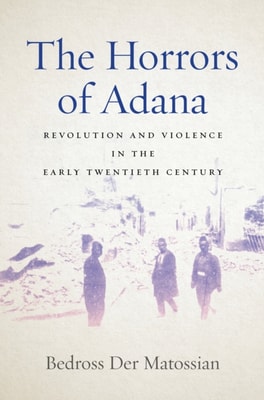
In April 1909, two waves of massacres shook the province of Adana, located in the southern Anatolia region of modern-day Turkey, killing more than 20,000 Armenians and 2,000 Muslims.
Bridging the gap between migration studies and the anthropological tradition, Ghassan Hage illustrates that transnationality and its attendant cultural consequences are not necessarily at odds with classic theory.
This book argues that Political Islam in the Iranian context evolved into three main schools of thought during the 1960s and 1970s: Jurisprudential Islam led by Ayatollah Khomeini, Leftist Islam led by Shariati, and Liberal Islam led by Bazargan.
A medieval Islam historian’s incisive portrait of ISIS, revealing the group’s deep ideological and intellectual roots in the earliest days of Islam With tremendous speed, the Islamic State has moved from the margins to the center of life in the Middle East.