For the last sixty years, American foreign and defense policymaking has been dominated by a network of institutions created by one piece of legislation--the 1947 National Security Act.
While the First, or 'Great', English Civil War of 1642-6 was largely contested at regional and county level, in often hard-fought and long-lasting local campaigns, historians often still continue to dwell on the well-known major battles, such as Edgehill and Naseby, and the prominent national leaders.
In 'Kriegsgefangen - Erlebtes 1870 & Reisebriefe vom Kriegsschauplatz' präsentiert Theodor Fontane eine Sammlung von Berichten über seine Erlebnisse als Kriegskorrespondent während des deutsch-französischen Krieges von 1870.
2024 Christy Award FinalistBased on true World War II stories of life in the USO variety shows, worlds collide when performers from around the United States come together to tour North Africa.
Executive editor: Klaus-Peter Friedrich; English-language edition prepared by: Elizabeth Harvey, Russell Alt-Haaker, Johannes Gamm, Georg Felix Harsch, Dorothy Mas, and Caroline Pearce This source edition on the persecution and murder of the European Jews by Nazi Germany presents in a total of 16 volumes a thematically comprehensive selection of documents on the Holocaust.
In this account of the bloodiest war fought on American soil, Brooks Simpson recounts the events of the war from the opening salvo at Fort Sumter through the battlefields of Gettysburg and Shiloh to the Confederate surrender at Appomattox Court House.
Als eine der großen Veteranenorganisationen und rechte Sammlungsbewegung war der "Stahlhelm – Bund der Frontsoldaten" ein bedeutender politischer Akteur der Weimarer Republik.
The focus of this volume is the rise and fall of the Indian maritime merchant in the early modern period: the heyday of Moghul Surat, the appearance of a group of independent merchant shipowners, and their eclipse at the end of the period in the face of European competition and monopolies.
This book examines the particular experience of ethnic, religious and national minorities who participated in the First World War as members of the main belligerent powers: Britain, France, Germany and Russia.
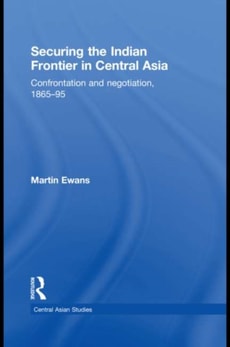
The three decades between 1865 and 1895 marked a particularly contentious period in the relationship between Britain and Russia in Central Asia, which more than once brought them to the verge of war.
This book enables Western scholars and educators to recognize the roles and contributions of shadow education/hakwon education in an international context.
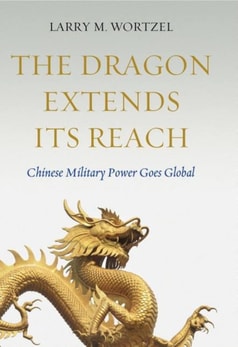
China has evolved from a nation with local and regional security interests to a major economic and political power with global interests, investments, and political commitments.
This edited volume offers an original exploration into the ways in which Soviet culture and experience of time were unique, examining the temporalities expressed in the world of socialist things: from the objects of everyday life to urban architecture.
Dieses eBook: "Ravensnest oder die Rothäute" ist mit einem detaillierten und dynamischen Inhaltsverzeichnis versehen und wurde sorgfältig korrekturgelesen.
"e;Benjamin Tallmadge narrates his time spent as a military officer during the American Revolutionary War, detailing his roles as both commander and intelligence gatherer.
From Afghanistan to Angola, Indonesia to Iran, and Colombia to Congo, violent reactions erupt, states collapse, and militaries relentlessly pursue operations doomed to fail.
This book offers a broad comparative perspective on regime building under Axis rule during the Second World War, exploring case studies in Europe and Asia.
During the first 18 months of World War I, Woodrow Wilson sought to maintain American neutrality, but as this carefully argued study shows, it was ultimately an unsustainable stance.
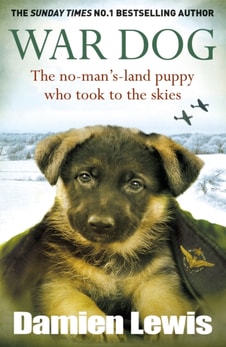
In the winter of 1939 in the cold snow of no-man's-land, two loners met and began an extraordinary journey together, one that would bind them for the rest of their lives.
Executive editors: Katja Happe, Barbara Lambauer, and Clemens Maier-Wolthausen, with Maja Peers; English-language edition prepared by: Elizabeth Harvey, Johannes Gamm, Georg Felix Harsch, Dorothy Mas, and Caroline Pearce In summer 1942 the Germans escalated the systematic deportations of Jews from Western and Northern Europe to the extermination camps.
There are currently between twenty and thirty civil wars worldwide, while at a global level the Cold War has been succeeded by a "e;war on drugs"e; and a "e;war on terror"e; that continues to rage a decade after 9/11.
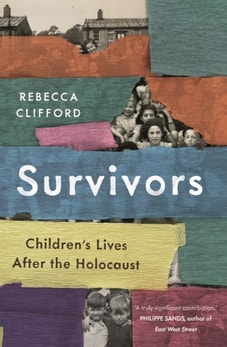
Shortlisted for the 2021 Wolfson History Prize and a finalist for the 2021 Cundill History Prize Told for the first time from their perspective, the story of children who survived the chaos and trauma of the Holocaust-named a best history book of 2020 by the Daily Telegraph ?
In his memoir, Alvin Ziontz reflects on his more than thirty years representing Indian tribes, from a time when Indian law was little known through landmark battles that upheld tribal sovereignty.
An exceptional storyteller with an analytical eye, Merrel Clubb has gathered the letters he sent his parents from the Pacific Theater of World War II and his subsequent reflections on that war and on his life into a kind of then-and-now memoir.
This "e;riveting account of one of history's greatest blunders"e; chronicles Russia's tragic mishandling of Nazi Germany's invasion during WWII (William L.