This book provides readers with a brief account of the history of Language Identification (LI) research and a survey of the features and methods most used in LI literature.
This book provides readers with a brief account of the history of Language Identification (LI) research and a survey of the features and methods most used in LI literature.
This book provides an analysis of acoustic features of polysemous strings and an implementation of a speech disambiguation program based on the phonetic information.
This book provides an analysis of acoustic features of polysemous strings and an implementation of a speech disambiguation program based on the phonetic information.
This book introduces the new paradigm of lifelong and continual learning dialogue systems to endow dialogue systems with the ability to learn continually by themselves through their own self-initiated interactions with their users and the working environments.
This book introduces the new paradigm of lifelong and continual learning dialogue systems to endow dialogue systems with the ability to learn continually by themselves through their own self-initiated interactions with their users and the working environments.
Based on the accumulation of research experience and knowledge over the past 30 years, this volume lays out the research issues posed by the construction of various types of Chinese language resources, how they were resolved, and the implication of the solutions for future Chinese language processing research.
This edited book covers a range of topics related to the use of corpora in translation education, including their standing in corpus-based translation studies, their relationship with machine learning and post-editing, recent advances in learner corpora development and the integration of corpora into translation pedagogy.
This edited book covers a range of topics related to the use of corpora in translation education, including their standing in corpus-based translation studies, their relationship with machine learning and post-editing, recent advances in learner corpora development and the integration of corpora into translation pedagogy.
This book addresses social and complex network analysis challenges, exploring social network structures, dynamic networks, and hierarchical communities.
This illuminating book offers an up-to-date introduction to the psychology of language, exploring aspects of language processing that have previously not been given centre stage such as the role of body and brain, social aspects of language use, and mental models.
This illuminating book offers an up-to-date introduction to the psychology of language, exploring aspects of language processing that have previously not been given centre stage such as the role of body and brain, social aspects of language use, and mental models.
Based on the accumulation of research experience and knowledge over the past 30 years, this volume lays out the research issues posed by the construction of various types of Chinese language resources, how they were resolved, and the implication of the solutions for future Chinese language processing research.
Have you ever wondered how the principles behind Shannon's groundbreaking Information Theory can be interwoven with the intricate fabric of linguistic communication?
This revised edition of the highly recommended book "e;First-Order Modal Logic"e;, originally published in 1998, contains both new and modified chapters reflecting the latest scientific developments.
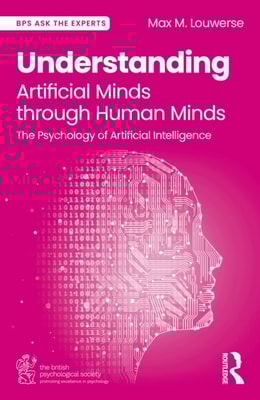
Understanding Artificial Minds through Human Minds: The Psychology of Artificial Intelligence provides an accessible introduction into artificial intelligence through the lens of psychology.
This revised edition of the highly recommended book "e;First-Order Modal Logic"e;, originally published in 1998, contains both new and modified chapters reflecting the latest scientific developments.
This book provides a comprehensive overview of methods to build comparable corpora and of their applications, including machine translation, cross-lingual transfer, and various kinds of multilingual natural language processing.
This book provides a comprehensive overview of methods to build comparable corpora and of their applications, including machine translation, cross-lingual transfer, and various kinds of multilingual natural language processing.
This book explores the applications and advancements of federated learning across diverse sectors, focusing on its integration with cutting- edge technologies like Internet of Things (IoT), artificial intelligence (AI), blockchain, and digital twins.
Data Analytics using Machine Learning Techniques on Cloud Platforms examines how machine learning (ML) and cloud computing combine to drive data-driven decision-making across industries.
The success of predictive large language models (PLLMs) like GPT3 and ChatGPT has created both enthusiasts and skeptics of their widespread practical applications, but this book argues that the larger significance of such models is contained in what they suggest about human cognition.
Applying Natural Language Processing (NLP) concepts to help humans in their daily life, this book discusses an automatic translation of an unstructured Natural Language Question (NLQ) into a Structured Query Language (SQL) statement.
Applying Natural Language Processing (NLP) concepts to help humans in their daily life, this book discusses an automatic translation of an unstructured Natural Language Question (NLQ) into a Structured Query Language (SQL) statement.