Es gibt hervorragende Grammatiken und Syntaxen, die die Satz- und die Wortgruppenebene beschreiben, sowie bewährte text- und gesprächslinguistische Ansätze für die Modellierung text- und gesprächsgrammatischer Strukturen.
Es gibt hervorragende Grammatiken und Syntaxen, die die Satz- und die Wortgruppenebene beschreiben, sowie bewährte text- und gesprächslinguistische Ansätze für die Modellierung text- und gesprächsgrammatischer Strukturen.
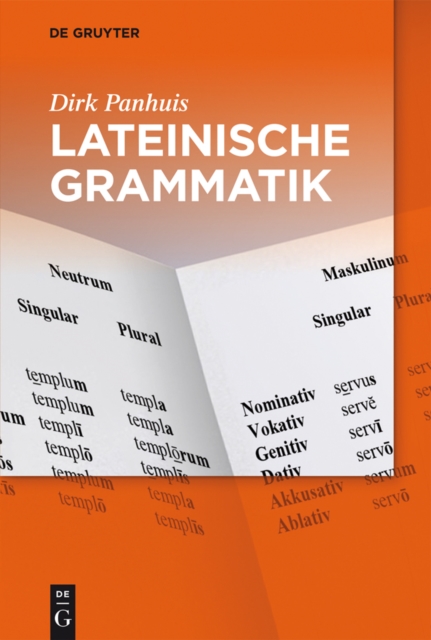
This study describes third person reference in the fourth century Latin text commonly known as the Itinerarium Egeriae, focusing on what is traditionally labelled demonstratives (hic, iste, ille, is, ipse and idem), bare NPs, and null pronouns.
This study describes third person reference in the fourth century Latin text commonly known as the Itinerarium Egeriae, focusing on what is traditionally labelled demonstratives (hic, iste, ille, is, ipse and idem), bare NPs, and null pronouns.
This book deals with shared verb morphology in Japanese and other languages that have been identified as Transeurasian (traditionally: "e;Altaic"e;) in previous research.
This book deals with shared verb morphology in Japanese and other languages that have been identified as Transeurasian (traditionally: "e;Altaic"e;) in previous research.
This book presents an empirical study of syllable structure and phonotactic restructuring in six Caribbean creoles with Dutch, English and French as main lexifier languages.
The book investigates pathways of (inter)subjectification followed by prenominal elements in the English Noun Phrase, by tracing the development of identifying, noun-intensifying and subjective compound uses.
This book deals with syntax in three dimensions: in part I with the history of grammatical theory, in part II with synchronic aspects of Present-Day English, and in part III with diachronic aspects of English.
Bringing together diachronic research from a variety of perspectives, notably typology, formal syntax and semantics, this volume focuses on the interplay of syntactic and semantic factors in language change - an issue so far largely neglected both in (mostly lexical) historical semantics as well as historical syntax, but recently brought into focus by grammaticalization theory as well as Minimalist diachronic syntax.