Winner of the 2020 ESSE Book Award in English Language and LinguisticsLexical Innovation in World Englishes contributes to the investigation of World Englishes by offering insights into the lexical developments of selected English varieties and their cross-fertilization potential.
Winner of the 2020 ESSE Book Award in English Language and LinguisticsLexical Innovation in World Englishes contributes to the investigation of World Englishes by offering insights into the lexical developments of selected English varieties and their cross-fertilization potential.
Linguistic Planets of Belief presents a way for people to notice, examine, and question the role language plays in identifying, recognizing, and understanding those around them.
Linguistic Planets of Belief presents a way for people to notice, examine, and question the role language plays in identifying, recognizing, and understanding those around them.
The second edition of this hugely successful textbook provides comprehensive coverage of a wide range of topics in theoretical and applied linguistics.
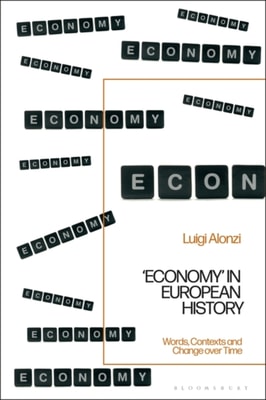
Prompted by the 'linguistic turn' of the late 20th century, intellectual and conceptual historians continue to devote a great deal of attention to the study of concepts in history.
Prompted by the 'linguistic turn' of the late 20th century, intellectual and conceptual historians continue to devote a great deal of attention to the study of concepts in history.
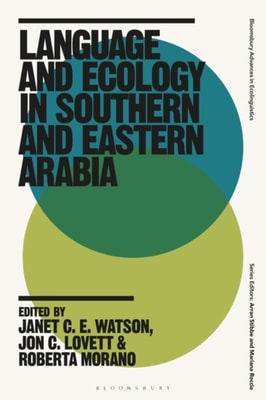
Regions of the world with greatest biodiversity are shown to exhibit greatest linguistic diversity, strongly suggesting that the relationship between language and ecology is both symbiotic and spatially and temporally determined.
Regions of the world with greatest biodiversity are shown to exhibit greatest linguistic diversity, strongly suggesting that the relationship between language and ecology is both symbiotic and spatially and temporally determined.
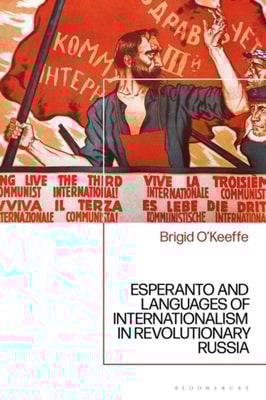
Hoping to unite all of humankind and revolutionize the world, Ludwik Zamenhof launched a new international language called Esperanto from late imperial Russia in 1887.
Hoping to unite all of humankind and revolutionize the world, Ludwik Zamenhof launched a new international language called Esperanto from late imperial Russia in 1887.
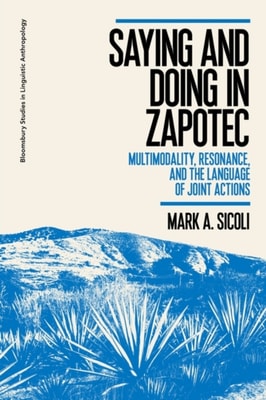
A multimodal ethnography of language as living process, this book demonstrates methods for the integrated analysis of talk, gesture, and material culture, developing a fresh way to understand human language through a focus on jointly achieved social actions to which it is part.
A multimodal ethnography of language as living process, this book demonstrates methods for the integrated analysis of talk, gesture, and material culture, developing a fresh way to understand human language through a focus on jointly achieved social actions to which it is part.
Translating in Town uncovers administrative and cultural multilingualism and translation practices in multilingual European communities during the long 19th century.
Translating in Town uncovers administrative and cultural multilingualism and translation practices in multilingual European communities during the long 19th century.
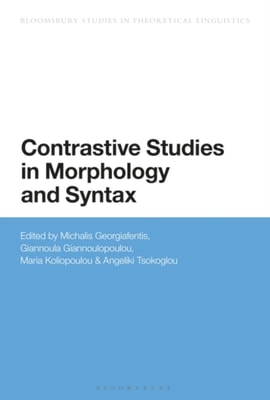
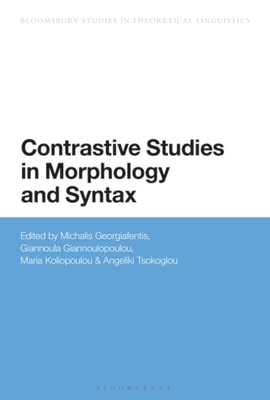
Using different theoretical approaches and frameworks, this book addresses a broad range of themes in contrastive linguistics, including inflection, derivation and compounding, tense, wh-questions, post-verbal subjects, focus and clitics, among others.
Using different theoretical approaches and frameworks, this book addresses a broad range of themes in contrastive linguistics, including inflection, derivation and compounding, tense, wh-questions, post-verbal subjects, focus and clitics, among others.
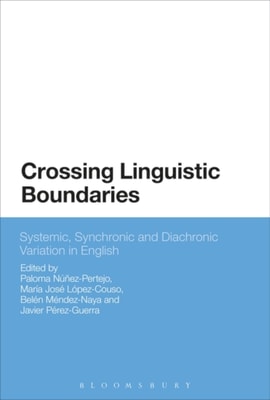
Breaking away from previously rigid descriptions of the linguistic system of the English language, Crossing Linguistic Boundaries explores fascinating case studies which refuse to fall neatly within the traditional definitions of linguistic domains and boundaries.
Breaking away from previously rigid descriptions of the linguistic system of the English language, Crossing Linguistic Boundaries explores fascinating case studies which refuse to fall neatly within the traditional definitions of linguistic domains and boundaries.
Building on Raymond Williams' iconic "e;Keywords"e; released in 1975, Jeffries and Walker show how some pivotal words significantly increased in use and evolved in meaning during the years of the 'New Labour' project.
Building on Raymond Williams' iconic "e;Keywords"e; released in 1975, Jeffries and Walker show how some pivotal words significantly increased in use and evolved in meaning during the years of the 'New Labour' project.
"e;An illustrated analytical study, Words and the First World War considers the situation at home, at war, and under categories such as race, gender and class to give a many-sided picture of language used during the conflict.
"e;An illustrated analytical study, Words and the First World War considers the situation at home, at war, and under categories such as race, gender and class to give a many-sided picture of language used during the conflict.
This accessible and lively introduction to semantics and the multi-faceted nature of language guides the student and non-specialist through the major ways in which the English language makes meaning.
The book identifies and assesses the importance of a range of influences on child language acquisition and development, paying particular attention to situational influences.
The Language of Irish Literature is the first book on the market to discuss Irish Literature in terms of the history of, and the linguistic contacts in, the island.
Global English Slang brings together nineteen key international experts and provides a timely and essential overview of English slang around the world today.
Global English Slang brings together nineteen key international experts and provides a timely and essential overview of English slang around the world today.
George Orwell coined the term 'Newspeak' for his novel 1984, the purpose of which was designed to shrink vocabularies and eliminate subtlety and nuance.
George Orwell coined the term 'Newspeak' for his novel 1984, the purpose of which was designed to shrink vocabularies and eliminate subtlety and nuance.