Ludwig Wittgenstein's works encompass a huge number of published philosophical manuscripts, notebooks, lectures, remarks, and responses, as well as his unpublished private diaries.
Ludwig Wittgenstein's works encompass a huge number of published philosophical manuscripts, notebooks, lectures, remarks, and responses, as well as his unpublished private diaries.
Striking out from a number of new headings and in a number of new directions each of the essays in this collection pushes at the borders of their topics, disciplines and ways of thinking, providing innovative and inventive insights into the work - and application - of Jacques Derrida on a diverse range of themes including Irish identity, communication, ethics, love, tele-technology, Victorian studies, the limits of philosophy, translation, otherness and literature, demonstrating that, today, despite repeated accusations over recent years that the work of Derrida has become passe, there is more vitality and spirit in engaging with the writings of Derrida than ever before.
Structuralism and the Logic of Dissent is a fascinating and lucid exploration of the seminal writings of four eminent French structuralists that sheds new light on influential theoretical texts.
This book explores the relation between language and our senses and emotions, taking readers into domains as diverse as wine-tasting, marriage guidance counselling, medical training and face recognition.
This book examines the achievements of William Carlos Williams in the context of the transcendentalism of Ralph Waldo Emerson, Henry David Thorgau and Walt Whitman.
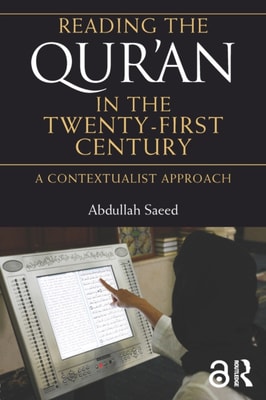
Reading the Qur'an in the Twenty-First Century considers the development of Qur'anic interpretation and highlights modern debates around new approaches to interpretation.
Reading the Qur'an in the Twenty-First Century considers the development of Qur'anic interpretation and highlights modern debates around new approaches to interpretation.
Providing an analysis of the complete story of Mary in its liturgical, narrative and rhetorical contexts, this literary reading is a prerequisite to any textual reading of the Qur'an whether juristic, theological, or otherwise.
Providing an analysis of the complete story of Mary in its liturgical, narrative and rhetorical contexts, this literary reading is a prerequisite to any textual reading of the Qur'an whether juristic, theological, or otherwise.
Linguistics and Aphasia is a major study of recent developments in applying psycholinguistics and pragmatics to the study of acquired language disorders (aphasia) and their remediation.
Linguistics and Aphasia is a major study of recent developments in applying psycholinguistics and pragmatics to the study of acquired language disorders (aphasia) and their remediation.
Covering a wide range of areas including international politics, colonial history, critical pedagogy, postcolonial literature and applied linguitics, this book examines ways to understand the cultural and political implications of the global spread of English.
Covering a wide range of areas including international politics, colonial history, critical pedagogy, postcolonial literature and applied linguitics, this book examines ways to understand the cultural and political implications of the global spread of English.
Grammatical errors and orthographic mishaps are often played for laughs, but this subtle sanctioning by the sticklerocracy can have real social consequences too.
This book pursues a strand in the history of thought - ranging from codified statutes to looser social expectations - that uses particulars, more specifically examples, to produce norms.
This book pursues a strand in the history of thought - ranging from codified statutes to looser social expectations - that uses particulars, more specifically examples, to produce norms.
In this book Michael Potter offers a fresh and compelling portrait of the birth of modern analytic philosophy, viewed through the lens of a detailed study of the work of the four philosophers who contributed most to shaping it: Gottlob Frege, Bertrand Russell, Ludwig Wittgenstein, and Frank Ramsey.
In this book Michael Potter offers a fresh and compelling portrait of the birth of modern analytic philosophy, viewed through the lens of a detailed study of the work of the four philosophers who contributed most to shaping it: Gottlob Frege, Bertrand Russell, Ludwig Wittgenstein, and Frank Ramsey.
Lacan postulated that the psyche can be understood by means of certain structures, which control our lives and our desires, and which operate differently at different logical moments or stages of formation.
Lacan postulated that the psyche can be understood by means of certain structures, which control our lives and our desires, and which operate differently at different logical moments or stages of formation.
Wittgenstein's philosophical achievement lies in the development of a new philosophical method rather than in the elaboration of a particular philosophical system.
Wittgenstein's philosophical achievement lies in the development of a new philosophical method rather than in the elaboration of a particular philosophical system.
Peter Munz, a former student of both Popper and Wittgenstein, begins his comparison of the two great twentieth-century philosophers, by explaining that since the demise of positivism there have emerged, broadly speaking, two philosophical options: Wittgenstein, with the absolute relativism of his theory that meaning is a function of language games and that social configurations are determinants of knowledge; and Popper's evolutionary epistemology - conscious knowledge is a special case of the relationship which exists between all living beings and their environments.
Peter Munz, a former student of both Popper and Wittgenstein, begins his comparison of the two great twentieth-century philosophers, by explaining that since the demise of positivism there have emerged, broadly speaking, two philosophical options: Wittgenstein, with the absolute relativism of his theory that meaning is a function of language games and that social configurations are determinants of knowledge; and Popper's evolutionary epistemology - conscious knowledge is a special case of the relationship which exists between all living beings and their environments.