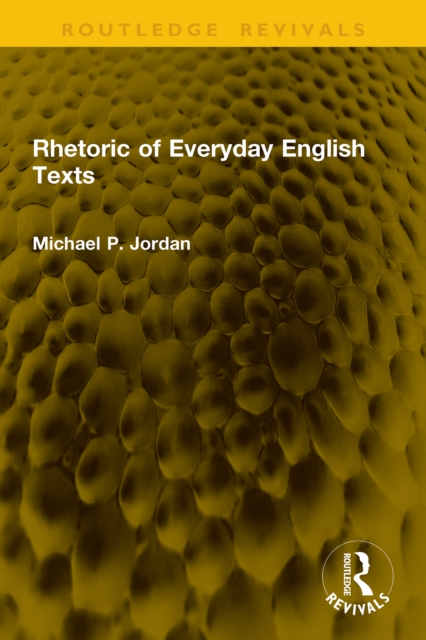
First published in 1984, in Rhetoric of Everyday English Texts, the author uses over 100 short texts from educated writers in all walks of life to demonstrate that when we communicate there is a powerful unspoken linguistic consensus as to what is 'relevant' to our purpose in writing a particular text for a particular audience.
Building on the first volume in the Studies in Pragmatics series which clearly set out the differences and similarities in approaches to discourse markers, Pragmatic Markers in Contrast continues the debate through offering a unique and thorough examination of the methods and theories for studying pragmatic markers cross-linguistically.