This book centres on self-accounts of suicidal behavior, using a Critical Discourse Analysis (CDA) approach to offer a qualitative perspective within current suicidology and suicide prevention research.
The book investigates how the multiple senses of a Chinese polysemous lexical item are perceived by Chinese native (L1) speakers and second language (L2) learners.
Reasons for Logic, Logic for Reasons presents a philosophical conception of logic-"e;logical expressivism"e;-according to which the role of logic is to make explicit reason relations, which are often neither monotonic nor transitive.
Die Studie geht der Frage nach, wie „nationale Identität“ im Zeitraum der so genannten Berliner Republik als epistemische Größe sprachlich in Erscheinung tritt.
Die Einzigartigkeit und eine schwierige theoretische Erfassbarkeit der Sprachsituation in Belarus fordern von der Soziolinguistik eine Hinwendung zur Innenperspektive – zu Spracheinstellungen der Sprachverwender, an deren umfassenden Auswertung, die der Komplexität und der Interdisziplinarität des Forschungsgegenstandes gerecht wäre, es fehlt.
This volume presents new and cutting-edge research on the question of how we parse, interpret and understand language in more complex discourse settings.
These volumes contain a selection of contributions first presented at the 21st International Colloquium on Latin Linguistics, held in Santiago de Compostela (2022).
Die Einzigartigkeit und eine schwierige theoretische Erfassbarkeit der Sprachsituation in Belarus fordern von der Soziolinguistik eine Hinwendung zur Innenperspektive – zu Spracheinstellungen der Sprachverwender, an deren umfassenden Auswertung, die der Komplexität und der Interdisziplinarität des Forschungsgegenstandes gerecht wäre, es fehlt.
Discourse and ideology are quintessential, albeit contested concepts in many functionally oriented branches of linguistics, such as linguistic anthropology, critical discourse studies, sociolinguistics, and sociology of language.
The realization of information structural units has been intriguing as information packaging has reflections in the semantic, pragmatic, syntactic and prosodic domains.
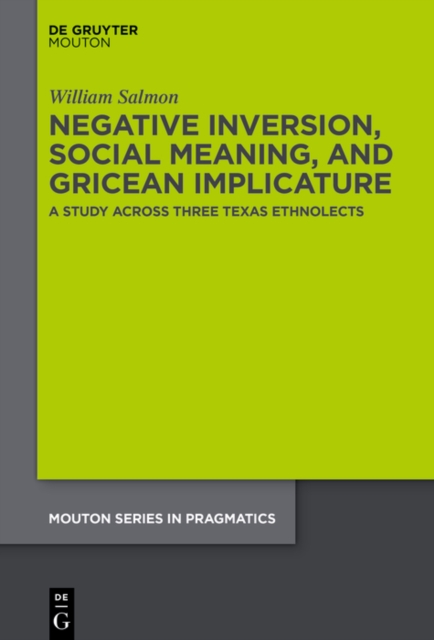
Relying on a wealth of new data, this book argues that long-standing puzzles of Negative Inversion (NI) syntax are not puzzles at all when viewed through the lenses of Gricean pragmatics and Labovian sociolinguistics.
This volume presents new and cutting-edge research on the question of how we parse, interpret and understand language in more complex discourse settings.
This volume aims to fill two gaps in pragmatic research into English as a lingua franca (ELF): the investigation of conflict talk and the incorporation of a multimodal perspective into the analysis of ELF interactions.
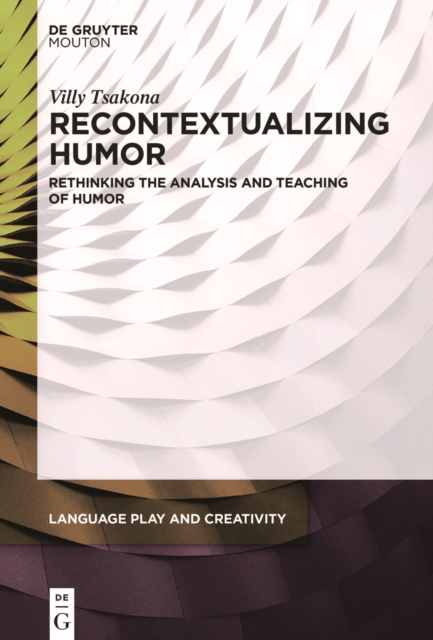
Humor may surface in numerous and diverse contexts, which at the same time determine how humor works, its form, and its functions and consequences for interlocutors.
Discourse and ideology are quintessential, albeit contested concepts in many functionally oriented branches of linguistics, such as linguistic anthropology, critical discourse studies, sociolinguistics, and sociology of language.
The realization of information structural units has been intriguing as information packaging has reflections in the semantic, pragmatic, syntactic and prosodic domains.
This volume aims to fill two gaps in pragmatic research into English as a lingua franca (ELF): the investigation of conflict talk and the incorporation of a multimodal perspective into the analysis of ELF interactions.
Relying on a wealth of new data, this book argues that long-standing puzzles of Negative Inversion (NI) syntax are not puzzles at all when viewed through the lenses of Gricean pragmatics and Labovian sociolinguistics.
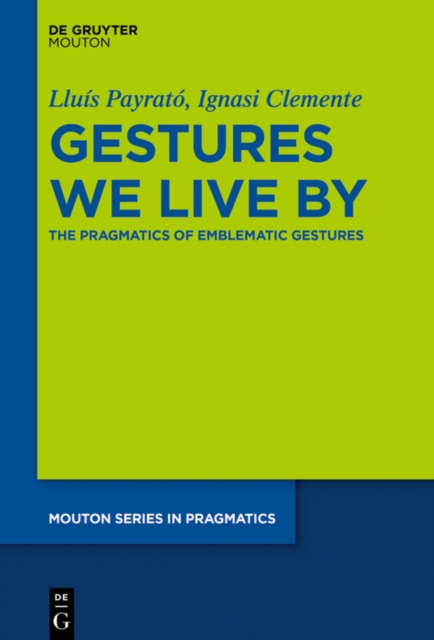
This book examines emblems (or emblematic gestures) from a pragmatic view, that is to say, as autonomous gestures that fulfill communicative functions, embody illocutionary values, and act as signals of cognitive relevance.
Humor may surface in numerous and diverse contexts, which at the same time determine how humor works, its form, and its functions and consequences for interlocutors.
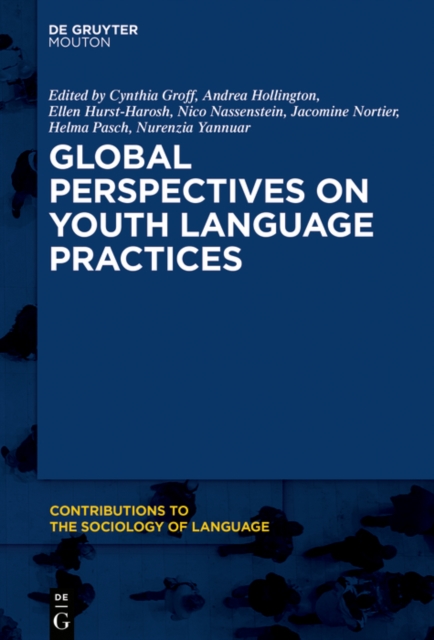
Most journal articles, edited volumes and monographs on youth language practices deal with one specific variety, one geographical setting, or with one specific continent.
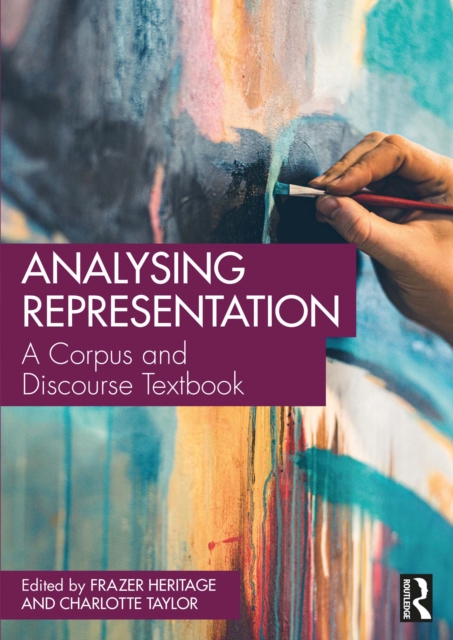
Analysing Representation: A Corpus and Discourse Textbook guides readers through the process of researching how people and phenomena are represented in discourse and introduces them to key tools they can use from corpus linguistics and (critical) discourse analysis.