This book advances our understanding of change over time in human social conduct, and represents the first consolidated effort to reveal how micro-analytic studies of social interaction address such issues.
This book traces the development of the ideal of sincerity from its origins in Anglo-Saxon monasteries to its eventual currency in fifteenth-century familiar letters.
Essentialism--roughly, the view that natural kinds have discrete essences, generating truths that are necessary but knowable only a posteriori--is an increasingly popular view in the metaphysics of science.
This volume contains contributions from leaders in the field of child language in honor of one of the preeminent scholars in the field of child language acquisition, Melissa Bowerman.
The second edition of this hugely successful textbook provides comprehensive coverage of a wide range of topics in theoretical and applied linguistics.
There is considerable debate amongst philosophers as to the basic philosophical problem Wittgenstein is attempting to solve in Philosophical Investigations.
Based on ethnographic and policy data collected over a ten-year span at a university in the People's Republic of China, this book analyses the history of English Language Teaching (ELT) polices in Chinese higher education.
Specialised translation has received very little attention from academic researchers, but in fact accounts for the bulk of professional translation on a global scale and is taught in a growing number of university-level translation programmes.
A masterful overview of the philosophy of language from one of its most important thinkersIn this book one of the world's foremost philosophers of language presents his unifying vision of the field-its principal achievements, its most pressing current questions, and its most promising future directions.
Examines Transcendentalism as a distinct rhetorical genre concerned primarily and self-consciously with questions of powerNathan Crick has crafted a new critical rhetorical history of American Transcendentalists that interprets a selection of their major works between the years 1821 and 1852 as political and ethical responses to the growing crises of their times.
In a world of ever-increasing medical technology, a study of the need for wisdom, truth, and public moral argumentIn this provocative and interdisciplinary work, Michael J.
An interdisciplinary examination of the strategies GLBTQ communities have used to advocate for political, social, and cultural changeQueerly Remembered investigates the ways in which gay, lesbian, bisexual, transgender, and queer (GLBTQ) individuals and communities have increasingly turned to public tellings of their ostensibly shared pasts in order to advocate for political, social, and cultural change in the present.
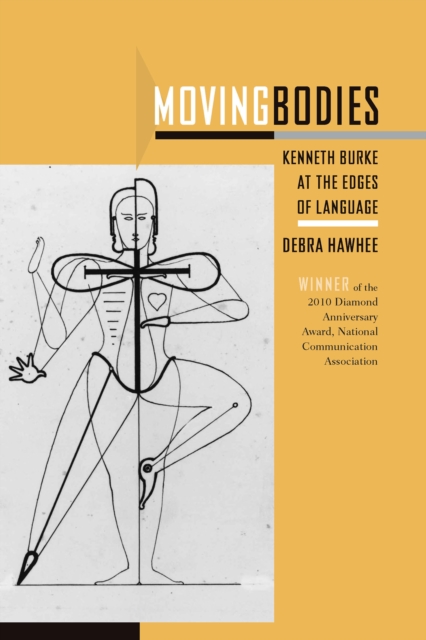
Kenneth Burke may be best known for his theories of dramatism and of language as symbolic action, but few know him as one of the twentieth century's foremost theorists of the relationship between language and bodies.
A revaluing of rhetoric in the educational model of the father of humanistic studiesSpeaking for the Polis considers Isocrates' educational program from the perspective of rhetorical theory and explores its relation to sociopolitical practices.
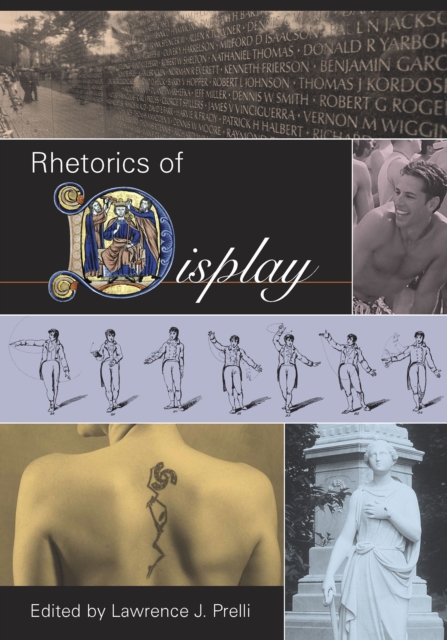
Groundbreaking case studies mapping the rhetoric inherent in acts of presentation and concealmentRhetorics of Display is a pathbreaking volume that brings together a distinguished group of scholars to assess an increasingly pervasive form of rhetorical activity.
This collection sets out an innovative research agenda for advancing a multidisciplinary approach to genre, bringing together researchers from a variety of disciplines to enhance our existing understanding of the challenges and opportunities for current and future genre research.
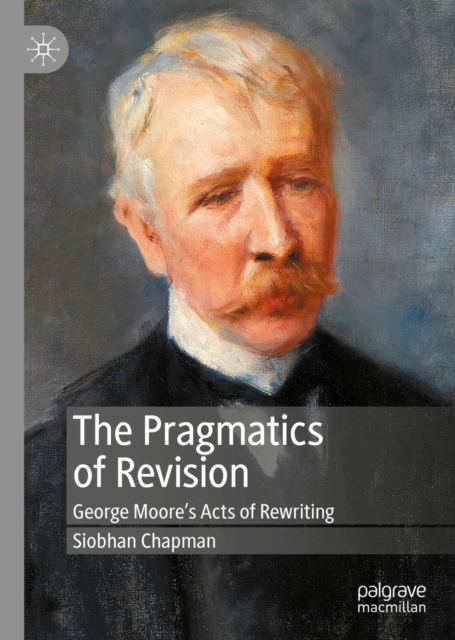
This book presents the first full-length study of the stylistically experimental and influential novelist George Moore's (1852-1933) repeated acts of rewriting.
This book explores the use of discourse markers - lexical items where drawing a distinction between propositional and non-propositional, syntactically-semantically integrated and discourse-pragmatic uses is especially relevant.
This book proposes a semantic theory of conditionals that can account for (i) the variability in usages that conditional sentences can be put; and (ii) both conditional sentences of the form 'if p, q' and those conditional thoughts that are expressed without using 'if'.
This volume comprises a selection of contributions to the theorizing about argumentation that have been presented at the 9th conference of the International Society for the Study of Argumentation (ISSA), held in Amsterdam in July 2018.
This book shows how pragmatics and philosophy are interconnected, and explores the consequences and ramifications of this innovative idea, especially in addressing and solving the problem of breaking Grice's circle.
This book investigates major linguistic transformations in the translation of children's literature, focusing on the English-language translations of Janusz Korczak, a Polish-Jewish children's writer known for his innovative pedagogical methods as the head of a Warsaw orphanage for Jewish children in pre-war Poland.
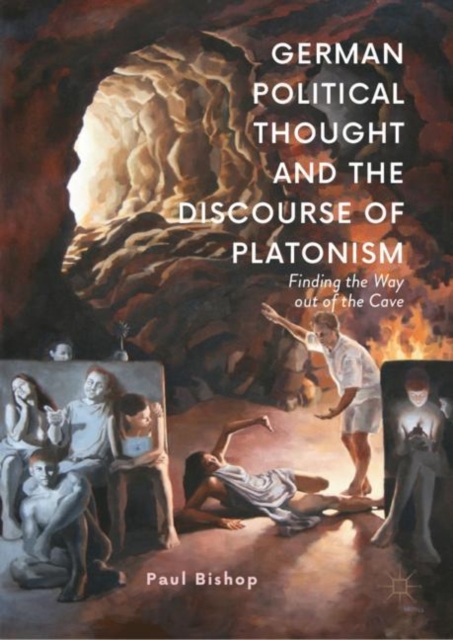
Taking Plato's allegory of the cave as its starting-point, this book demonstrates how later European thinkers can be read as a reaction and a response to key aspects of this allegory and its discourse of enchainment and liberation.
This volume presents new conceptual and experimental studies which investigate the connection between vagueness and rationality from various systematic directions, such as philosophy, linguistics, cognitive psychology, computing science, and economics.
What skills do journalists exhibit in sensationalising, exaggerating and otherwise 'tabloiding' the truth, while usually stopping short of stating unambiguous falsehoods?
This book explores the practical aspects of intersemiotic translation, examining how different signs and sign sets can be transposed into different kinds of semiotic forms of reference.
This book provides a detailed example of an eye-tracking method for comparing the reading experience of a literary source text readers with readers of a translation at stylistically marked points.
Development Discourse and Global History introduces readers to the shifting ways in which people have been talking and writing about 'development' over time, and the rules governing the conversation.
This book presents an extended account of the language of dystopia, exploring the creativity and style of dystopian narratives and mapping the development of the genre from its early origins through to contemporary practice.
Rethinking Place Through Literary Form regards the relationship between place and linguistic form as challenging real and perceived configurations of place and renegotiating geopolitically determined categories of the 'centre' and 'periphery'.
This book considers metaphor as a communicative phenomenon in the poetry of Emily Dickinson, Elizabeth Bishop and Seamus Heaney, in light of the relevance theory account of communication first developed by Dan Sperber and Deirdre Wilson in the 1980s.
This book implements a new approach to the study of manipulative tactics in selected Congressional debates in the early history of the United States, highlighting the ways in which language can be used to manipulate an audience.
This book offers a linguistic-semantic analysis of the expression 'Eastern Europe' in international English-language media discourse and academic discourse.