Discourse Description presents in one convenient volume a variety of approaches to text description that have been proposed in the linguistic literature in the last decade or so.
This volume contains revised and expanded versions of those papers from the 1990 Functional Grammar Conference in Copenhagen that contributed specifically to the current investigation of clause structure in terms of semantic layers.
This study of Anglo-American legal discourse is the first comprehensive discourse analysis of American legal language in its prototypical setting, the trial by jury.
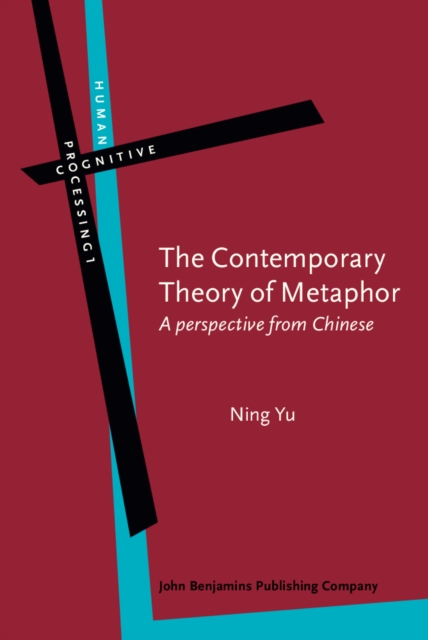
This comparative study of Chinese and English metaphor contributes to the search for metaphoric universals by placing the contemporary theory of metaphor in a broad cross-linguistic and cross-cultural perspective.
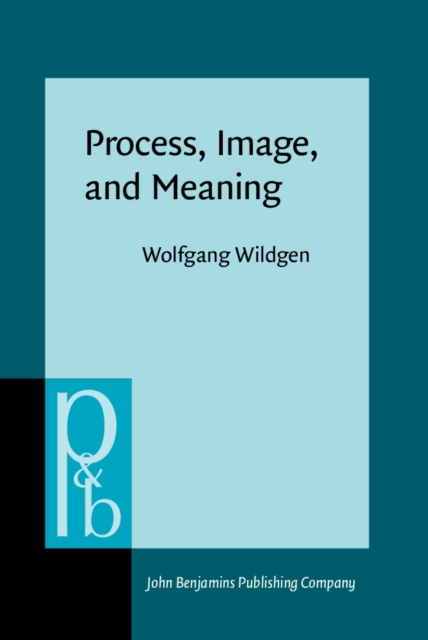
The general topic of this book is the development of a “realistic” model of meaning; it has to account for the ecological basis of meaning in perception, action, and interaction, and is realistic in the sense of “scientific realism”, i.
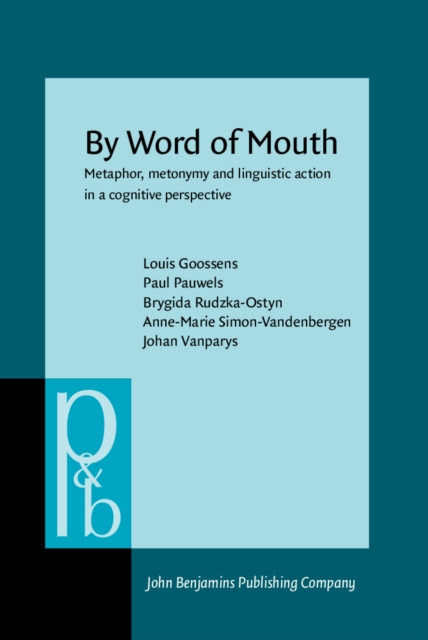
This volume contains seven synchronic and diachronic empirical investigations into the expression and conceptualization of linguistic action in English, focusing on figurative extensions.
This monograph aims to contribute to linguistic knowledge about the distribution and function of discourse particles, particularly with respect to a small group of particles which are highly frequent in contemporary spoken standard French.
This book provides a comprehensive study of hedging in academic research papers, relating a systematic analysis of forms to a pragmatic explanation for their use.
The eleven original papers collected in this volume address themselves to some of the central issues in the relevance theoretic research programme since the 1995 publication of the second edition of Sperber and Wilson’s Relevance.
If politics is a serious matter and humour a funny one, this volume investigates how and why the boundaries between the two are blurred: politics can be represented in a humorous manner and humour can have a serious intent.
Justice's first aim in this volume is to demystify the Arabic language, which is widely perceived as difficult to learn, and has been characterised as ambiguous and confusingly polysemous.
“The semantics of aspect and modality” will be of interest both to linguists working on temporality, as a general phenomenon in language, and Hebraists investigating the semantics of the verbal forms in biblical Hebrew.
The papers collected in this volume concern five different aspects of the role of the lexicon in the theory of Functional Grammar such as developed by Simon C.
Functional Grammar (FG) as set out by Simon Dik is the ambitious combination of a functionalist approach to the study of language with a consistent formalization of the underlying structures which it recognizes as relevant.
This essay is an attempt to build up a plausible model of the cognitive processes behind the behavior exhibited by speaker-hearers in a specific discourse situation.
The purpose of this essay is to both discuss commands as a species of speech act and to discuss commands within the broader framework of how they are used and reacted to.
The aim of this book is to show the way forward to a coherent view of language in which the achievement of the formalist paradigm is strengthened to the extent that its claims are weakened.
The thesis of this essay is that social or cultural competence consists more of an interpretive or methodological ability to use language in the service of interaction than of a substantive knowledge of collections of cultural categories and of the semantic relations between the terms naming those categories.
By focusing on the "e;East European"e; dialogues and polemics, both contemporary and past, the present volume pursues two aims: 1) It would like to locate the discussion between semiotics and dialectics in an historical context.
The basic function the expression you know serves in conversational discourse is said to be that of a pragmatic particle used when the speaker wants the addressee to accept as mutual knowledge (or at least be cooperative with respect to) the propositional content of his utterance.
This volume presents a selection of the best papers from the Fifth International Conference on Historical Linguistics (ICHL), which was held in Galway, April 6-10 1981.
Rene Thom, the famous French mathematician and founder of catastrophe theory, considered linguistics an exemplary field for the application of his general morphology.
This volume contains a facsimile reprint of the 1883 Boston edition of Studies in Logic by Members of the Johns Hopkins University, edited by Charles S.
Looking at the 'semiotic landscape' - the panorama of constituted semiotics - two traditions seem to have developed separately and without interpenetration.