This book presents an innovative approach to linguistic semantics, starting from the idea that language is a mechanism for the expression of linguistic meanings as particular surface forms (texts).
Irony and Humor: From pragmatics to discourse is a complete updated panorama of linguistic research on irony and humor, based on a variety of perspectives, corpora and theories.
Located at the intersection of historical pragmatics, letters and manuscript studies, this book offers a multi-dimensional analysis of the letters of Joan and Maria Thynne, 1575-1611.
This monograph is about how the Scots language is discursively constructed, both from 'above' (through texts such as educational policies, debates in parliament and official websites) and from 'below' (in focus group discussions among Scottish people).
In this volume leading academics in Interactional Linguistics and Conversation Analysis consider the notion of units for the study of language and interaction.
This book focuses on aspects of variation and change in language use in spoken and written discourse on the basis of corpus analyses, providing new descriptive insights, and new methods of utilising small specialized corpora for the description of language variation and change.
Chinese Language Narration: Culture, cognition, and emotion is a collection of papers presenting original research on narration in Mandarin, especially as it contrasts to what is known regarding narration in English.
How do people listen in a conversation, especially in an intercultural setting, and how do they shift from listener to speaker in the particular context?
Language and Power in Blogs systematically analyses the discursive practices of bloggers and their readers in eight English-language personal/diary blogs.
This volume presents some of the latest research in Frame Semantics, including work in computational lexicography as developed within the FrameNet project.
Discourse and Crisis: Critical perspectives brings together an exciting collection of studies into crisis as text and context, as unfolding process and unresolved problem.
Uncovering the meaning of individual words or entire texts is a complex process that needs to take into consideration the multiple interactions of linguistic organization including orthography, morphology, syntax and, ultimately, pragmatics.
This book investigates the intricate interplay between language and food in natural conversations among people eating and talking about food in English, Japanese, Wolof, Eegimaa, Danish, German, Arabic, Persian, and Turkish.
Based on extensive quantitative and qualitative analyses of a corpus of American presidential speeches that includes all inaugural addresses and State of the Union messages from 1789 to 2008, as well as major foreign and security policy speeches after 1945, this research monograph analyzes the various forms and functions of intertextual references found in the discourse of American presidents.
It is now an acknowledged fact in the world of linguistics that the concept of evaluation is crucial, and that there is very little - if any - discourse that cannot be analyzed through the prism of its evaluative content.
Diachronic corpus pragmatics extends the pragmatic perspective to developments in the history of various languages and uses corpus-linguistic methods to trace them.
The Spatial Language of Time presents a crosslinguistically valid state-of-the-art analysis of space-to-time metaphors, using data mostly from English and Wolof (Africa) but additionally from Japanese and other languages.
In this tribute to Knud Lambrecht, a pioneer of Information Structure, a diverse group of scholars examines the intersection of syntax, discourse, pragmatics, and semantics.
This is the first book to present an account of literary meaning and effects drawing on our best understanding of mind and language in the form of a Cognitive Grammar.
Building on existing analytical frameworks, this book provides a new methodology allowing different language policies in international multilingual organisations (or "e;language regimes"e;) to be compared and evaluated on the basis of criteria such as efficiency and fairness.
The media often point an accusatory finger at new technologies; they suggest that there is always a loss of information or quality, or even that computer-mediated communication is destroying language.
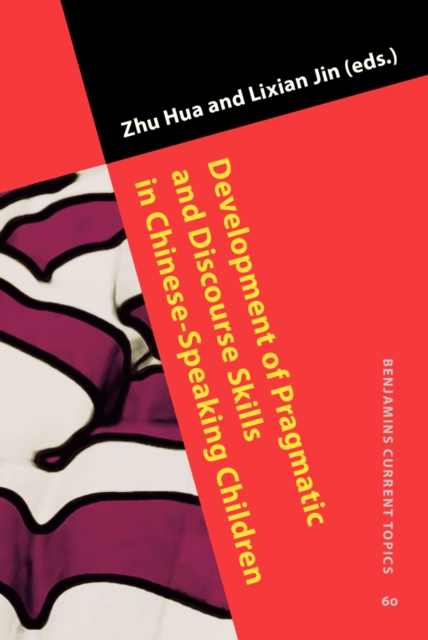
For many years, studies of the development of pragmatic and discourse skills in young children have predominantly focused on English and other European languages, as with the field of child language development in general.
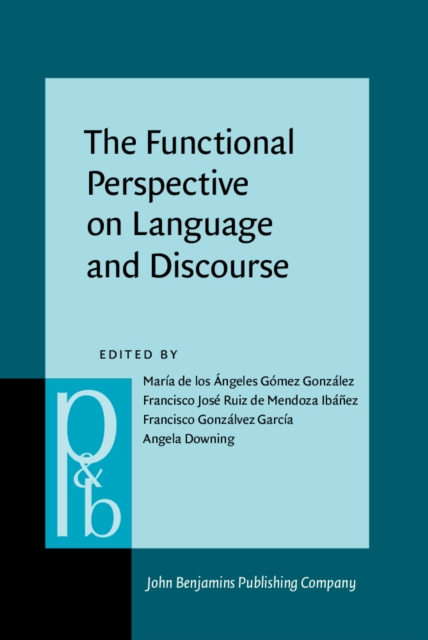
Over the last forty years, the functionalist approach to linguistic description and explanation has given rise to several major schools of thought that share two crucial assumptions: (i) form is not independent of meaning/function or language use; and (ii) linguistic description and explanation need to take into account the communicative function of language.
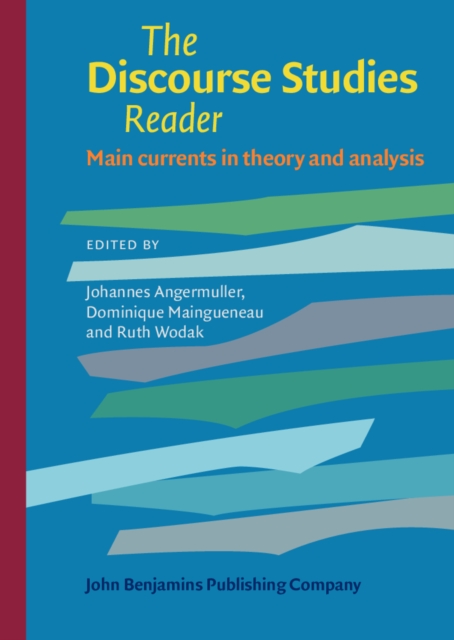
Discourse Studies is an interdisciplinary field studying the social production of meaning across the entire spectrum of the social sciences and humanities.
In keeping with the profile of Pragmatics & Beyond New Series, this volume presents and discusses issues that are central to aspects of social inequality, power, dominance and status as expressed in discourse in its broadest sense.
Trust and Discourse: Organizational perspectives offers a timely collection of new articles on the relationship between discursive practices in organizational or institutional contexts and the psychological/moral category of trust.
In recent decades, linguists have significantly advanced our understanding of the grammatical properties of evidentials, but their social and interactional properties and uses have received less attention.
In the United States, political argumentation occurs in institutionalized settings and the broader public forum, in efforts to resolve conflict and efforts to foster it, in settings with time limits and controversies that extend over centuries.