This volume aims at analyzing the relationship between the dialogical accomplishment of spoken talk-in-interaction on the one hand and entrenched patterns of linguistic and socio-cultural knowledge (constructions, frames, and communicative genres) on the other.
The book systematically discusses the formal and functional properties as well as the rules of the manifold productive reduplication types of Bikol, an Austronesian language of the Philippines.
Lysias' 21st speech "e;On a charge of taking bribes"e; is an important example of Attic oratory that sheds significant light on Classical history and society.
This book, situated within the framework of Comparative Interactional Linguistics, explores a family of fourteen discourse markers across the languages of Europe and beyond (Yiddish, Hebrew, Russian, Polish, Romani, Estonian, Finnish, Upper Saxonian and Standard German, Dutch, Icelandic, and Swedish), arguing that they go back to one, possibly two, particles: NU/NA.
The concept of authenticity has received some attention in recent academic discourse, yet it has often been left under-defined from a sociolinguistic perspective.
The study of code-switching has been carried out from linguistic, psycholinguistic, and sociolinguistic perspectives, largely in isolation from each other.
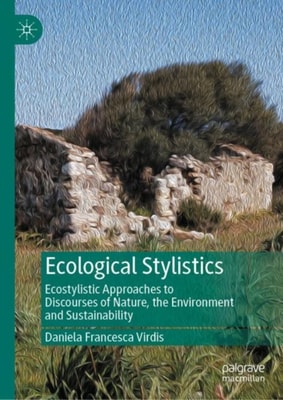
This book reflects the cutting edge in ecostylistic approaches to nature, the environment and sustainability as represented in contemporary non-literary discourse.