This book develops the dual themes that languages can differ widely in their vocabularies, and are also sensitive indices to the cultures to which they belong.
In this book, Ghil'ad Zuckermann introduces revivalistics, a new trans-disciplinary field of enquiry surrounding language reclamation, revitalization, and reinvigoration.
An engaging and authoritative guide to the impact of reading medium on learning, from a foremost expert in the fieldWe face constant choices about how we read.
An engaging and authoritative guide to the impact of reading medium on learning, from a foremost expert in the fieldWe face constant choices about how we read.
The discipline of translation studies has gained increasing importance at the beginning of the 21st century as a result of rapid globalization and the development of computer-based translation methods.
The discipline of translation studies has gained increasing importance at the beginning of the 21st century as a result of rapid globalization and the development of computer-based translation methods.
In the 1970s, Basil Bernstein's work on children's sociolinguistic codes and his formulation of the contexts in which they are transmitted were the most influential in the field.
An exploration of the ways that shifting relations between materiality and language bring about different forms of politics in TehranIn Revolution of Things, Kusha Sefat traces a dynamism between materiality and language that sheds light on how the merger of the two permeates politics.
This book explores debaters' professional identity construction through implicit negation in televised debates from an interpersonal pragmatic perspective.
This book presents a much-needed discussion on ethnic identification and morphosyntactic variation in San Francisco Chinatown-a community that has received very little attention in linguistic research.
This book is a systematic narrative, tracking the colonial language policies and acts responsible for the creation of a sense of "e;self-identity"e; and culminating in the evolution of nationalistic fervor in colonial India.
Technology and Adolescent Health: In Schools and Beyond discusses how today's adolescents are digital natives, using technology at home and in school to access information, for entertainment, to socialize and do schoolwork.
This book offers the first full-length study of the education of children living within the Gaeltacht, the Irish-speaking communities in Ireland, from 1900 to the present day.
This volume offers insights on language learning outside the classroom, or in the wild, where L2 users themselves are the driving force for language learning.
This volume contributes to a better understanding of both psycho- and sociolinguistic levels of multilingualism and their interplay in development and use.
Adverse Childhood Experiences: Using Evidence to Advance Research, Practice, Policy, and Prevention defines ACEs, provides a summary of the past 20 years of ACEs research, as well as provides guidance for the future directions for the field.
This book examines the nature of human language and the ideology of linguistic legitimacy - the common set of beliefs about language differences that leads to the rejection of some language varieties and the valorization of others.
This book focuses on the challenges of teaching in diversely multilingual classrooms, discussing how these challenges and complexities interact in the preparation of teachers (language & content areas) in and for multilingual settings, and how they impact on educational processes, developments, and outcomes.
This Handbook maps the contours of an exciting and burgeoning interdisciplinary field concerned with the role of language and languages in situations of conflict.
This book combines media studies and linguistics with theories of national and supranational identity to offer an interdisciplinary approach to the study of European identity/ies and news discourses.
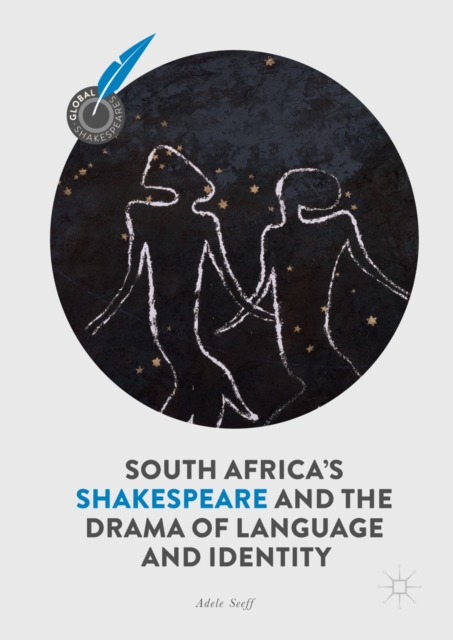
This volume considers the linguistic complexities associated with Shakespeare's presence in South Africa from 1801 to early twentieth-first century televisual updatings of the texts as a means of exploring individual and collective forms of identity.
In this book David Block draws on analytical techniques from Critical Discourse Studies to critically investigate truth, truths, the propagation of ignorance and post-truth.
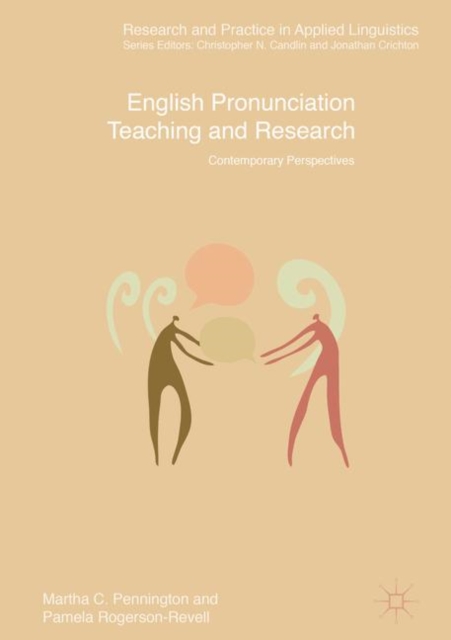
This book offers contemporary perspectives on English pronunciation teaching and research in the context of increasing multilingualism and English as an international language.
Practical Ethics for Effective Treatment of Autism Spectrum Disorder is for behavior analysts working directly with, or supervising those who work with, individuals with autism.
Teen suicide has long been considered one of society's darkest secrets; the idea of troubled young people driven to take their own lives was a tragedy too horrible to contemplate, let alone talk about openly.
This exciting new book advances current practice-based and theoretical knowledge around how youth defines and engages with consumerism to provoke a larger conversation within science and environmental education.
This book explores the lives of five Mexican immigrant-origin youths in the United States, documenting their language and literacy journeys over an eight-year period from adolescence to young adulthood.
This book explores the problem-oriented interdisciplinary research movement comprised of Critical Discourse Analysis (CDA) and Critical Discourse Studies (CDS) for scholars, teachers, and students from many backgrounds.
Concise Encyclopedia of Pragmatics, Second Edition (COPE) is an authoritative single-volume reference resource comprehensively describing the discipline of pragmatics, an important branch of natural language study dealing with the study of language in it's entire user-related theoretical and practical complexity.
In a context where linguistic and cultural diversity is characterized by ever-increasing complexity, adopting official multilingual policies to correct a country's ethno-linguistic, socio-economic, and symbolic imbalances presents many obstacles, but the greatest challenge is implementing them effectively.