Since 2008 increasing pirate activities in Somalia, the Gulf of Aden, and the Indian Ocean have once again drawn the international community's attention to piracy and armed robbery at sea.
Debate has long been waged over the morality of capital punishment, with standard arguments in its favour being marshalled against familiar arguments that oppose the practice.
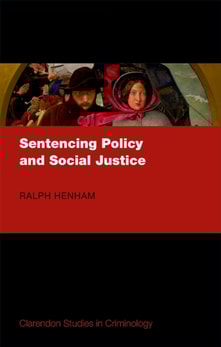
Sentencing Policy and Social Justice argues that the promotion of social justice should become a key objective of sentencing policy, advancing the argument that the legitimacy of sentencing ultimately depends upon the strength of the relationship between social morality and penal ideology.
Sentencing Policy and Social Justice argues that the promotion of social justice should become a key objective of sentencing policy, advancing the argument that the legitimacy of sentencing ultimately depends upon the strength of the relationship between social morality and penal ideology.
Money Laundering Law and Regulation offers a practical and comprehensive guide to domestic anti-money laundering law and regulation, increasingly seen as key weapons in the fight against serious and organized crime.
The move to end impunity for human rights atrocities has seen the creation of international and hybrid tribunals and increased prosecutions in domestic courts.
Since 2008 increasing pirate activities in Somalia, the Gulf of Aden, and the Indian Ocean have once again drawn the international community's attention to piracy and armed robbery at sea.
The Optional Protocol to the UN Convention Against Torture (OPCAT) establishes an independent international monitoring committee (SPT) which itself will visit states and places where persons are deprived of their liberty.
Debate has long been waged over the morality of capital punishment, with standard arguments in its favour being marshalled against familiar arguments that oppose the practice.
Despite the growth in international criminal courts and tribunals, the majority of cases concerning international criminal law are prosecuted at the domestic level.
Despite the growth in international criminal courts and tribunals, the majority of cases concerning international criminal law are prosecuted at the domestic level.
Based on an interdisciplinary conference held at the University of Cambridge in May 2012, Legitimacy and Criminal Justice: An International Exploration brings together internationally renowned scholars from a range of disciplines including criminology, international relations, sociology and political science to examine the meaning of legitimacy and advance its theoretical understanding within the context of criminal justice.
Based on an interdisciplinary conference held at the University of Cambridge in May 2012, Legitimacy and Criminal Justice: An International Exploration brings together internationally renowned scholars from a range of disciplines including criminology, international relations, sociology and political science to examine the meaning of legitimacy and advance its theoretical understanding within the context of criminal justice.
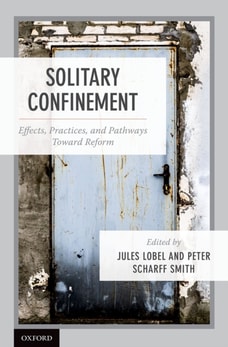
The use of solitary confinement in prisons became common with the rise of the modern penitentiary during the first half of the nineteenth century and his since remained a feature of many prison systems all over the world.
The use of solitary confinement in prisons became common with the rise of the modern penitentiary during the first half of the nineteenth century and his since remained a feature of many prison systems all over the world.
People convicted of crimes are subject to a criminal sentence, but they also face a host of other restrictive legal measures: Some are denied access to jobs, housing, welfare, the vote, or other goods.
Habeas Corpus in Wartime unearths and presents a comprehensive account of the legal and political history of habeas corpus in wartime in the Anglo-American legal tradition.
Problem-solving courts provide judicially supervised treatment for behavioral health needs commonly found among criminal offenders, including substance abuse and mental health disorders, and they treat a variety of offender populations.
Problem-solving courts provide judicially supervised treatment for behavioral health needs commonly found among criminal offenders, including substance abuse and mental health disorders, and they treat a variety of offender populations.
Given that persons typically have a right not to be subjected to the hard treatment of punishment, it would seem natural to conclude that the permissibility of punishment is centrally a question of rights.
Although the issue of offender decision-making pervades almost every discussion of crime and law enforcement, only a few comprehensive texts cover and integrate information about the role of decision-making in crime.
The Behavioral Science of Firearms focuses on applying behavioral science principles and knowledge to inform and improve firearm-related policy, practice, and research.
In many criminal trials, forensic technical evidence is lacking and triers of fact must rely on the reliability of eyewitness statements, identifications, and testimony; however, such reports can be riddled with deceptive statements or erroneous recollections.