Problem-solving courts provide judicially supervised treatment for behavioral health needs commonly found among criminal offenders, including substance abuse and mental health disorders, and they treat a variety of offender populations.
Problem-solving courts provide judicially supervised treatment for behavioral health needs commonly found among criminal offenders, including substance abuse and mental health disorders, and they treat a variety of offender populations.
Given that persons typically have a right not to be subjected to the hard treatment of punishment, it would seem natural to conclude that the permissibility of punishment is centrally a question of rights.
Although the issue of offender decision-making pervades almost every discussion of crime and law enforcement, only a few comprehensive texts cover and integrate information about the role of decision-making in crime.
The Behavioral Science of Firearms focuses on applying behavioral science principles and knowledge to inform and improve firearm-related policy, practice, and research.
In many criminal trials, forensic technical evidence is lacking and triers of fact must rely on the reliability of eyewitness statements, identifications, and testimony; however, such reports can be riddled with deceptive statements or erroneous recollections.
This volume makes a contribution to the field of neurolaw by investigating issues raised by the development, use, and regulation of neurointerventions.
Terrorism: Commentary on Security Documents is a series that provides primary source documents and expert commentary on various topics relating to the worldwide effort to combat terrorism, as well as efforts by the United States and other nations to protect their national security interests.
Terrorism: Commentary on Security Documents is a series that provides primary source documents and expert commentary on various topics relating to the worldwide effort to combat terrorism, as well as efforts by the United States and other nations to protect their national security interests.
Terrorism: Commentary on Security Documents is a series that provides primary source documents and expert commentary on various topics relating to the worldwide effort to combat terrorism, as well as efforts by the United States and other nations to protect their national security interests.
This volume makes a contribution to the field of neurolaw by investigating issues raised by the development, use, and regulation of neurointerventions.
Terrorism: Commentary on Security Documents is a series that provides primary source documents and expert commentary on various topics relating to the worldwide effort to combat terrorism, as well as efforts by the United States and other nations to protect their national security interests.
Terrorism: Commentary on Security Documents is a series that provides primary source documents and expert commentary on various topics relating to the worldwide effort to combat terrorism, as well as efforts by the United States and other nations to protect their national security interests.
The Behavioral Science of Firearms focuses on applying behavioral science principles and knowledge to inform and improve firearm-related policy, practice, and research.
In many criminal trials, forensic technical evidence is lacking and triers of fact must rely on the reliability of eyewitness statements, identifications, and testimony; however, such reports can be riddled with deceptive statements or erroneous recollections.
In 1998, the Rome Statute to the International Criminal Court (ICC) emerged as a groundbreaking treaty both due to its codification of international criminal law and its recognition of the crimes committed against women in times of war and conflict.
Parents who care for children with special needs, particularly those whose children have multiple disabilities or intellectual delays, are pioneers in home health care and caregiving, yet their experience and expertise are rarely recognized.
Parents who care for children with special needs, particularly those whose children have multiple disabilities or intellectual delays, are pioneers in home health care and caregiving, yet their experience and expertise are rarely recognized.
Almost everyone agrees--Right on Crime, the ACLU, Koch Industries, George Soros's Open Society Foundation, the editorial boards of the New York Times and the Wall Street Journal--that America's current systems for sentencing criminal offenders are a shambles, with crazy quilts of incompatible and conflicting laws, policies, and practices in every state and the federal system.
Corruption undermines nearly all key legal and developmental priorities today, including the effective functioning of democratic institutions and honest elections; environmental protection; human rights and human security; international development programs; and fair competition for global trade and investment.
Corruption undermines nearly all key legal and developmental priorities today, including the effective functioning of democratic institutions and honest elections; environmental protection; human rights and human security; international development programs; and fair competition for global trade and investment.
This book serves as a vital resource for clinicians, therapists, and individuals aiming to integrate their psychedelic experiences through the transformative practice of Art Therapy.
The rules governing who will be punished and how much determine a society's success in two of its most fundamental functions: doing justice and protecting citizens from crime.
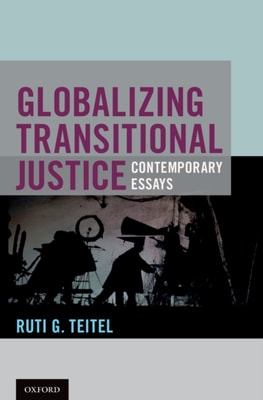
Among the most prominent and significant political and legal developments since the end of the Cold War is the proliferation of mechanisms for addressing the complex challenges of transition from authoritarian rule to human rights-based democratic constitutionalism, particularly with regards to the demands for accountability in relation to conflicts and abuses of the past.
Over recent decades, tremendous advances in the prevention, medical treatment, and quality of life issues in children and adolescents surviving cancer have spawned a host of research on pediatric psychosocial oncology.
Given that persons typically have a right not to be subjected to the hard treatment of punishment, it would seem natural to conclude that the permissibility of punishment is centrally a question of rights.