Analyzing globalization and the increasing tension it has caused between the goals of free trade and environmental protection, International Trade and the Protection of the Environment provides a comprehensive and detailed legal analysis, both at the national and international level of what looks set to become the new legal order of the twenty-first century.
The Routledge Handbook of Law and the Anthropocene provides a critical survey into the function of law and governance during a time when humans have the power to impact the Earth system.
The principles and practices of corporate social responsibility (CSR) date back more than a century, but the current wave of interest in this topic is unprecedented.
'My hope is that people can grow to appreciate this sector - its challenges and opportunities, but most importantly, the role agriculture can play in improving South Africa's rural economy, creating jobs and bringing about much-needed transformation (or inclusive growth).
This comprehensively updated third edition explores the nature and role of environmental management and offers an introduction to this rapidly expanding and changing field.
This comparative book explores the dynamics driving how courts across Europe and beyond understand and analyse scientific information in nature conservation.
This comparative book explores the dynamics driving how courts across Europe and beyond understand and analyse scientific information in nature conservation.
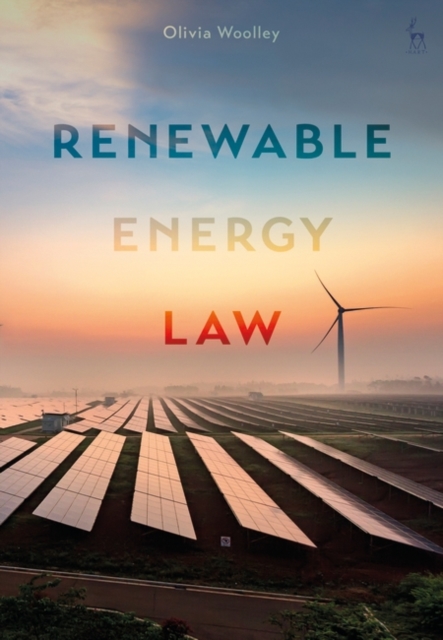
This is the first textbook to provide a clear understanding of law's role in promoting the global growth of renewable energy production and consumption.
This is the first textbook to provide a clear understanding of law's role in promoting the global growth of renewable energy production and consumption.
Since the adoption of the Kyoto Protocol to the United Nations Framework Convention on Climate Change in 1997, the negotiation of policy responses to climate change has become an area of major research.
Since the adoption of the Kyoto Protocol to the United Nations Framework Convention on Climate Change in 1997, the negotiation of policy responses to climate change has become an area of major research.
Space tourism has become extremely significant in recent times, especially in pursuance of the new space race among corporate giants such as Virgin Galactic, Blue Origin and SpaceX.
This book examines the development and implementation of the EU's legislative framework on the commercial release of GMO products as a case study of social regulation operating within a predominantly technical framework.
The first volume of the International Yearbook of Soil Law and Policy includes an important discussion on the implementation of the Sustainable Development Goals that are the basis for the post-2015 development agenda up to the year 2030; the Yearbook focuses in particular on Goal 15, which includes achieving a "e;land degradation-neutral world.
This book explains, compares and assesses the legal implications of Dieselgate within a range of selected jurisdictions and at the EU, international and comparative law level.
The focus of this publication is the uniqueness of the Baltic Sea from a legal perspective, and the regulatory voids that result from the multiple layers of regulation this area is subjected to: up to six layers of regulation (general international law, regional conventions, EU law, national laws, local and municipal rules plus a whole range of non-binding norms and other 'soft law' arrangements) act in parallel.
This book offers a detailed account of the legal issues concerning the British Indian Ocean Territory (Chagos Islands) by leading experts in the field.
This book explores the legal regime of non-product related process and production methods (NPR PPMs) in the context of trade-restrictive environmental measures, eco-labelling requirements and sanitary measures under the WTO.
This is the first book to outline a basic philosophy of ecology using the standard categories of academic philosophy: metaphysics, axiology, epistemology, aesthetics, ethics, and political philosophy.
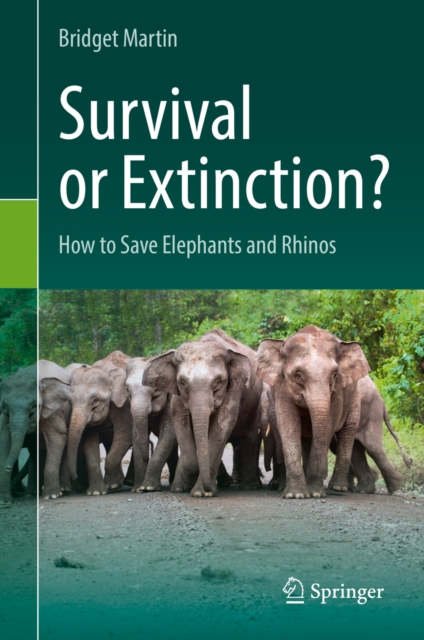
Written with passion for anyone interested in seeing an end to the illegal trade in elephant ivory and rhino horn, this book shows how, by working together, people all over the world who care about these animals are gradually bringing about change for the better.
This fourth volume in the book series on Nuclear Non-Proliferation in International Law focuses on human perspectives regarding the development and use of nuclear energy; the need for regional solutions; and recent activities towards prohibiting and abolishing nuclear weapons.
This book focuses on understanding the characteristics of the marine environment; overall characteristic of the marine resources (especially the marine new energy) and their current utilization; important routes, channels, and ports; and the Maritime Silk Road from the perspective of international law.
News:The 2012 Elizabeth Haub Prize for Environmental Law is awarded to Emeritus Professor Koh Kheng-Lian in recognition of her important and pioneering contributions to the development and evolution of environmental law in Singapore and in the whole ASEAN region.
This textbook is intended to be used in an upper-level international environmental issues class as part of the American Environmental Studies and Sciences book series.
Enough laws have been enacted since the adoption of the Nagoya Protocol on access and benefit-sharing to permit a study which is capable of accurately portraying the status quo of national implementation of the Protocol and the ensuing practice, emerging challenges and how countries are coping with them.
The role of law in responding to global environmental problems and the interplay between different levels of regulation and governance is becoming increasingly relevant in the field of liability and reparation for environmental damage.
The role of law in responding to global environmental problems and the interplay between different levels of regulation and governance is becoming increasingly relevant in the field of liability and reparation for environmental damage.
This revised edition of Energy Law and the Environment considers how international and national legislation now requires the energy sector to focus more on sustainability and the circular economy in response to new policies at both international and national levels.
This revised edition of Energy Law and the Environment considers how international and national legislation now requires the energy sector to focus more on sustainability and the circular economy in response to new policies at both international and national levels.