Economic interaction has enlarged the international trade in goods and services, but the safe and humane flow of persons across international borders remains a challenge in a State-based model of territorial jurisdictions.
Economic interaction has enlarged the international trade in goods and services, but the safe and humane flow of persons across international borders remains a challenge in a State-based model of territorial jurisdictions.
Current Legal Issues, like its sister volume Current Legal Problems (now available in journal format), is based upon an annual colloquium held at University College London.
Current Legal Issues, like its sister volume Current Legal Problems (now available in journal format), is based upon an annual colloquium held at University College London.
Doctrine, Practice and Advocacy in the Inter-American Human Rights System is the first casebook to focus on the Inter-American human rights system, the primary system for advancing and protecting rights in the Western hemisphere.
Doctrine, Practice and Advocacy in the Inter-American Human Rights System is the first casebook to focus on the Inter-American human rights system, the primary system for advancing and protecting rights in the Western hemisphere.
In 1980, Professors McDougal, Lasswell, and Chen published the original edition of Human Rights and World Public Order to present a "e;comprehensive framework of inquiry"e; from which to approach international human rights law, and international law, and inadequacies therein in the discourse of that time by combining theme, structure, method, and process.
In 1980, Professors McDougal, Lasswell, and Chen published the original edition of Human Rights and World Public Order to present a "e;comprehensive framework of inquiry"e; from which to approach international human rights law, and international law, and inadequacies therein in the discourse of that time by combining theme, structure, method, and process.
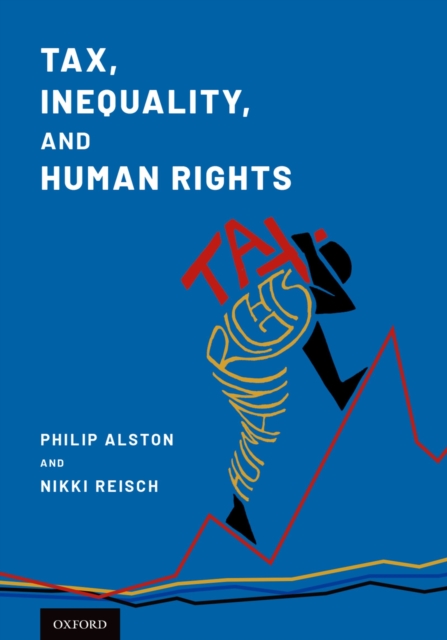
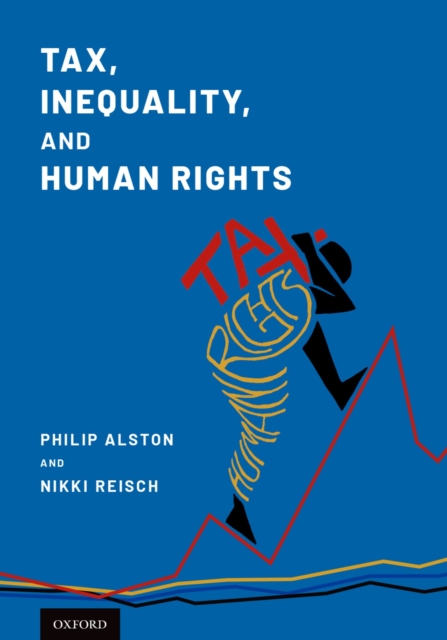
In Tax, Inequality, and Human Rights, experts in human rights law and in tax law debate the linkages between the two fields and highlight how each can help to tackle rapidly growing inequality in the economic, social, and political realms.
In Tax, Inequality, and Human Rights, experts in human rights law and in tax law debate the linkages between the two fields and highlight how each can help to tackle rapidly growing inequality in the economic, social, and political realms.
A human right to higher education was included in the International Covenant on Economic Social and Cultural Rights (ICESCR), which came into force in 1976.
A human right to higher education was included in the International Covenant on Economic Social and Cultural Rights (ICESCR), which came into force in 1976.
This book offers a thorough, critical, and accessible analysis of the American Convention on Human Rights which is the main human rights treaty of the Americas.
It has been well-established that many of the injustices that people around the world experience every day, from food insecurity to unsafe labor conditions and natural disasters, are the result of wide-scale structural problems of politics and economics.
It has been well-established that many of the injustices that people around the world experience every day, from food insecurity to unsafe labor conditions and natural disasters, are the result of wide-scale structural problems of politics and economics.
While an abundance of literature covers the right of states to defend themselves against external aggression, this is the first book dedicated to the right to personal self-defense in international law.
While an abundance of literature covers the right of states to defend themselves against external aggression, this is the first book dedicated to the right to personal self-defense in international law.
Paradigms of International Human Rights Law explores the legal, ethical, and other policy consequences of three core structural features of international human rights law: the focus on individual rights instead of duties; the division of rights into substantive and nondiscrimination categories; and the use of positive and negative right paradigms.
Paradigms of International Human Rights Law explores the legal, ethical, and other policy consequences of three core structural features of international human rights law: the focus on individual rights instead of duties; the division of rights into substantive and nondiscrimination categories; and the use of positive and negative right paradigms.
The growth of international law in the post-World War II era stemmed partly from the belief that universal norms would make life for the entire world's population safer, more equitable, and more conducive to each person's acquisition of basic material needs.
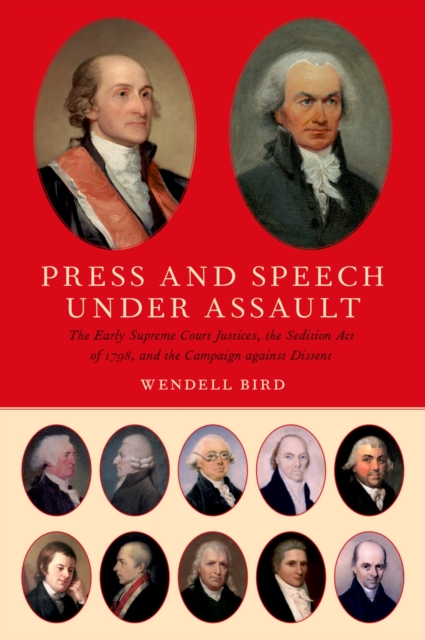
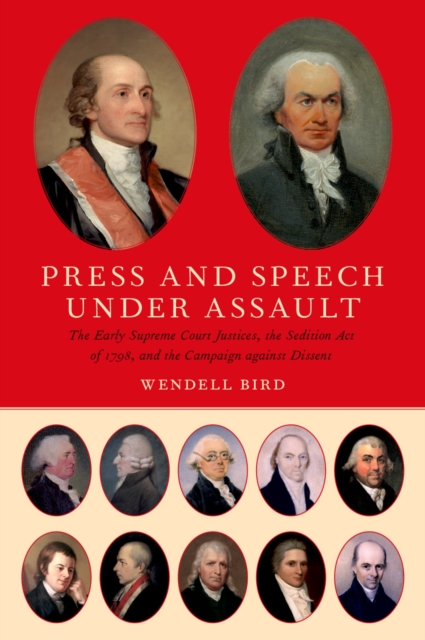
The early Supreme Court justices wrestled with how much press and speech is protected by freedoms of press and speech, before and under the First Amendment, and with whether the Sedition Act of 1798 violated those freedoms.
The early Supreme Court justices wrestled with how much press and speech is protected by freedoms of press and speech, before and under the First Amendment, and with whether the Sedition Act of 1798 violated those freedoms.
The international law governing armed conflict is at a crossroads, as the formal framework of laws designed to control the exercise of self-defense and conduct of inter-state conflict finds itself confronted with violent 21st Century disputes of a very different character.
The international law governing armed conflict is at a crossroads, as the formal framework of laws designed to control the exercise of self-defense and conduct of inter-state conflict finds itself confronted with violent 21st Century disputes of a very different character.