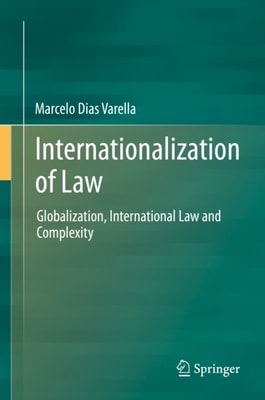
The book provides an overview of how international law is today constructed through diverse macro and microprocesses that expand its traditional subjects and sources, with the attribution of sovereign capacity and power to the international plane (moving the international toward the national).
This publication provides an unparalleled comparative analysis of two "e;hot topics"e; in the field of antitrust and unfair competition laws with regard to a number of key countries.
This book provides a comprehensive review of the Measures for Administration of Takeover of Chinese Listed Companies (the Chinese takeover law), with emphasis on the differences between the Chinese takeover law and takeover legislation in the UK, the US and Hong Kong.
Dieser Buchtitel ist Teil des Digitalisierungsprojekts Springer Book Archives mit Publikationen, die seit den Anfängen des Verlags von 1842 erschienen sind.
This book gathers the general contributions to the 3rd Thematic Congress of the International Academy of Comparative Law, which took place from 16 to 18 November 2016 in Montevideo, Uruguay.
The book provides a systematic examination of the legal, fiscal and institutional frameworks for the commercial development of petroleum and solid mineral resources in Africa.
Following events such as the 2008 credit crunch and financial crisis, many sectors of the economy suffered; nevertheless, reinsurance managed to maintain its strong position in the market industry and the global economic arena.
This book provides a clear and thorough account of the process leading up to the revision of the International Telecommunication Regulations (ITRs) one of the four treaties administered by the ITU.
The volume explores the consequences of recent events in global Internet policy and possible ways forward following the 2012 World Conference on International Telecommunications (WCIT-12).
Even though Corporate Social Responsibility (CSR) has become a widely accepted concept promoted by different stakeholders, business corporations' internal strategies, known as corporate self-regulation in most of the weak economies, respond poorly to this responsibility.