Safety and Security for Churches and Other Places of Worship is a reference book focused on how to form a first responder team for churches, synagogues, temples, and other places of worship.
Building on previous work in rural criminology, this book casts a global and comparative look across 19 countries, drawing on themes of crime and victimisation, safety and fear, practices of policing and police trust, and crime prevention practices.
This book provides a comprehensive analysis of the current directions in social rehabilitation scholarship and research by bringing together the voices of legal scholars, criminal justice professionals, social scientists, and people directly impacted by criminal justice in a comparative, international, and interdisciplinary fashion.
Safety and Security for Churches and Other Places of Worship is a reference book focused on how to form a first responder team for churches, synagogues, temples, and other places of worship.
The revised tenth edition of this core textbook provides an understanding of major world criminal justice systems by discussing and comparing the systems of six of the world's countries - each representative of a different type of legal system.
Unlike other textbooks on the subject, this book presents a comprehensive and structured account of the process of administering planned change in the criminal justice system.
This book proposes an explicit recognition of criminology as a moral science: a philosophically textured appreciation of the presence and role of values in people's reasoning and motivation, set within an empirically rigorous social-scientific account.
This book proposes an explicit recognition of criminology as a moral science: a philosophically textured appreciation of the presence and role of values in people's reasoning and motivation, set within an empirically rigorous social-scientific account.
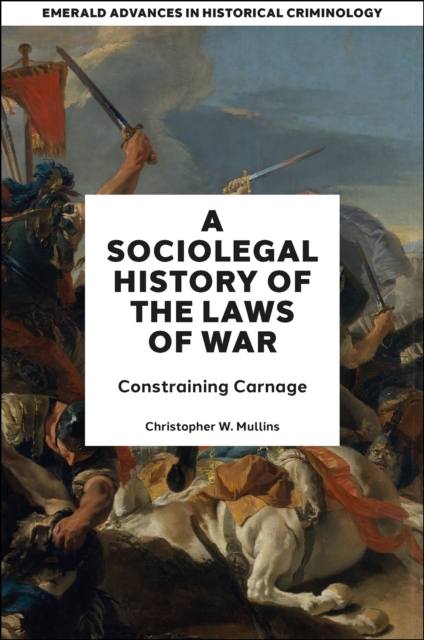
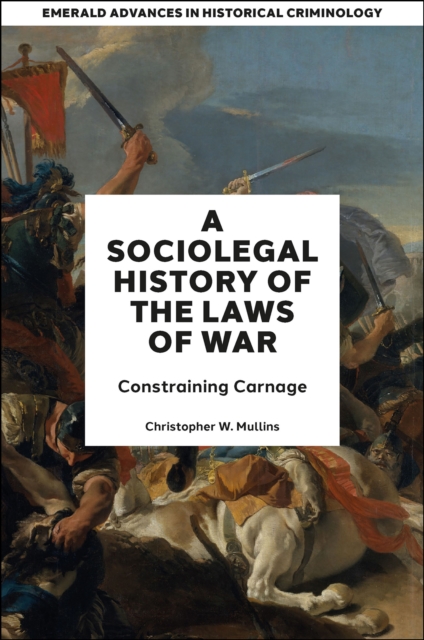
Since the Second World War, international laws governing the conduct of war and the behaviour of soldiers on the field of battle have been of strong academic and legal interest.
Since the Second World War, international laws governing the conduct of war and the behaviour of soldiers on the field of battle have been of strong academic and legal interest.
Forensic Victimology: Examining Violent Crimes in Investigative and Legal Contexts, Third Edition introduces criminologists and criminal investigators to the idea of systematically gathering and examining victim information for the purposes of addressing investigative and forensic issues.
The Art of Investigation Revisited: Practical Tips from the Experts examines the qual- ities required to be a professional, thorough, and effective investigator and is a follow up to the authors' highly touted book, The Art of Investigation (2019).
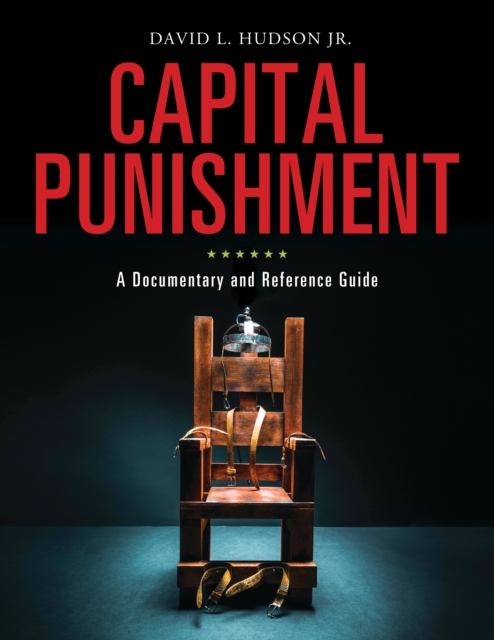
Each entry in this essential collection of primary resources on capital punishment features an authoritative introduction and analysis that helps provide crucial context for understanding the evolution of law and public attitudes toward the death penalty in America, from colonial times to the present.
Analyzing sex-offense laws and false claims, this book shows that laws based on vengeance rather than justice or evidence create new forms of harm while failing to address the real and pervasive problem of sexual violence.
Analyzing sex-offense laws and false claims, this book shows that laws based on vengeance rather than justice or evidence create new forms of harm while failing to address the real and pervasive problem of sexual violence.
An unprecedented look at the evolution of American police, from filling their intended role as peacekeepers and guardians of citizen rights to calling themselves-and acting primarily as-"e;law enforcement officers.
Each entry in this essential collection of primary resources on capital punishment features an authoritative introduction and analysis that helps provide crucial context for understanding the evolution of law and public attitudes toward the death penalty in America, from colonial times to the present.
Forensic Victimology: Examining Violent Crimes in Investigative and Legal Contexts, Third Edition introduces criminologists and criminal investigators to the idea of systematically gathering and examining victim information for the purposes of addressing investigative and forensic issues.
"Pretendo hacer de este texto una guía para aquellos investigadores, fiscales y jueces que puedan conocer de casos de secuestros; por ende, hago mucho hincapié en las estrategias seguidas durante la investigación: la recopilación de información, de evidencias y testimoniales que, por separado todos ellos, no nos dicen nada, pero, una vez analizados y concatenados entre sí, nos llevaron a la resolución de los hechos investigados.
Dieses Handbuch stellt juristische und polizeipraktische Inhalte einschließlich einiger Fallkonstellationen mit Lösungsansätzen und Handlungsempfehlungen im Hinblick auf die aktuelle Rechtslage dar.
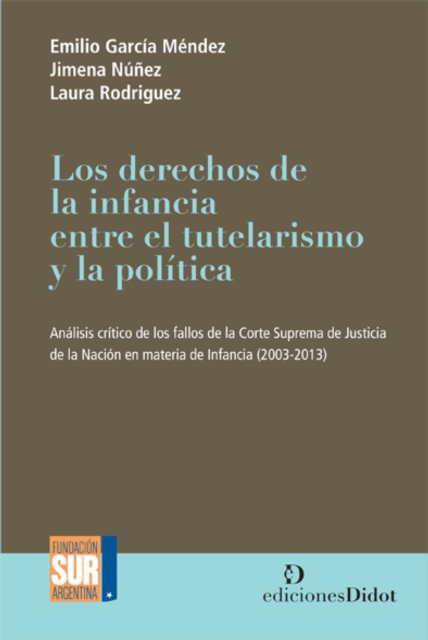
Nos encontramos ante un texto que intenta practicar un análisis lo más objetivo posible de todas las sentencias, que en materia de infancia, ha proferido la Corte Suprema de Justicia de la Nación entre los años 2003 y 2013.
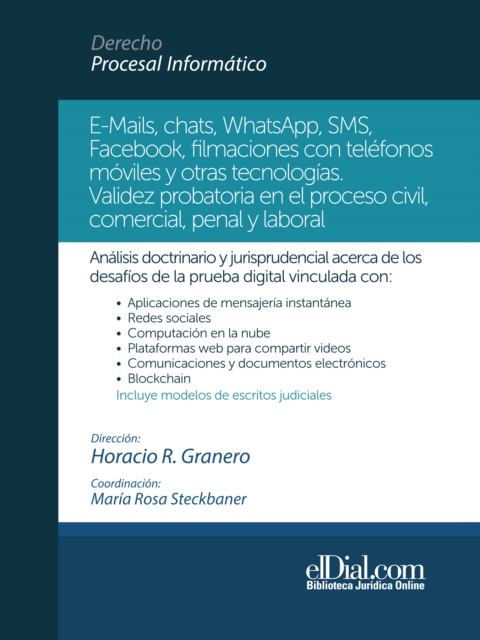
Análisis doctrinario y jurisprudencial acerca de los desafíos de la prueba digital vinculada con el correo electrónico (e-mail), los mensajes de WhatsApp y Telegram, los mensajes de Texto (SMS), los perfiles de Facebook y otras redes sociales, las capturas de pantallas, los videos y fotos extraídos desde teléfonos móviles, los videos de YouTube, los Documentos electrónicos y digitales, los smartcontracts, el Cloud Computing y la Inteligencia Artificial, en el marco del proceso civil y comercial, laboral, y procesal penal.
Edmundo Hendler ha sido y lo sigue siendo un luchador incansable en la búsqueda del conocimiento sobre los detalles, secretos y verdades respecto a aquello que los juristas llaman derecho comparado.
En la presente obra se hace un exhaustivo análisis doctrinario y jurisprudencial acerca de los desafíos de la prueba digital vinculada con aplicaciones de mensajería instantánea, redes sociales, computación en la nube, plataformas web para compartir videos, comunicaciones y documentos electrónicos y Blockchain, smart contracts.
Aguirre evoca en el primer capítulo –dedicado a Voltaire- los tiempos fundacionales del derecho penal del Estado liberal, continuando con las idas y venidas de esos principios reflejados en los conmovedores alegatos de Zola en el caso Dreyfus, como en los procesos criminales descriptos en clave literaria por las insignes plumas de Honoré de Balzac, Víctor Hugo, Anatole France y Albert Camus.
La selección de los temas abordados por los distintos trabajos que componen el volumen compilado tiende a paliar la relativa escasez de textos referidos a la parte de Derecho penal.
Este libro es uno de los pocos estudios que se han realizado sobre la específica conceptualización del derecho en la obra de Foucault, así como de la relación de algunos de sus conceptos, como el poder disciplinario, la biopolítica y la gubernamentalidad, con el mismo derecho.
La elaboración de los sucesivos sistemas de imputación jurídico-penal derivan siempre de una clara asociación con teorías de base, ya sean de la filosofía o de la sociología.
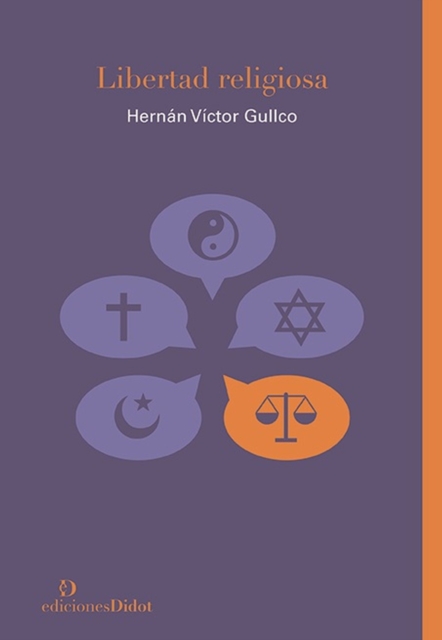
En lo principal este trabajo de investigación repasa los hitos históricos más importantes en materia de libertad religiosa; plantea y elucida interrogantes conceptuales (delimitación de la idea de "religión"); asume una perspectiva de derechos humanos que reposa en los tratados de derechos humanos aplicables; examina los límites al poder estatal en materia de controversias vinculadas a la conciencia; estudia las consecuencias de la postura que demanda una neutralidad estatal en materia religiosa; y analiza el grado de autonomía de las asociaciones religiosas en punto a posibles conflictos con otros derechos.
El problema de la impunidad y la devaluación de los derechos de las mujeres que sufren violencia machista en las relaciones de pareja sigue presente en los sistemas penales europeos.