The Behavioral Science of Firearms focuses on applying behavioral science principles and knowledge to inform and improve firearm-related policy, practice, and research.
Terrorism, the use of military force in Afghanistan, Iraq and Syria, and the fatal police shootings of unarmed persons have all contributed to renewed interest in the ethics of police and military use of lethal force and its moral justification.
In many criminal trials, forensic technical evidence is lacking and triers of fact must rely on the reliability of eyewitness statements, identifications, and testimony; however, such reports can be riddled with deceptive statements or erroneous recollections.
Scholars and lay persons alike routinely express concern about the capacity of democratic publics to respond rationally to emotionally charged issues such as crime, particularly when race and class biases are invoked.
The notion that an individual accused of a crime is presumed innocent until proven guilty is one of the cornerstones of the American criminal justice system.
Although white-collar crime has caused a substantial amount of damage on both the individual and societal levels, it often ranks below street crime as a matter of public concern.
Parents who care for children with special needs, particularly those whose children have multiple disabilities or intellectual delays, are pioneers in home health care and caregiving, yet their experience and expertise are rarely recognized.
Parents who care for children with special needs, particularly those whose children have multiple disabilities or intellectual delays, are pioneers in home health care and caregiving, yet their experience and expertise are rarely recognized.
The notion that an individual accused of a crime is presumed innocent until proven guilty is one of the cornerstones of the American criminal justice system.
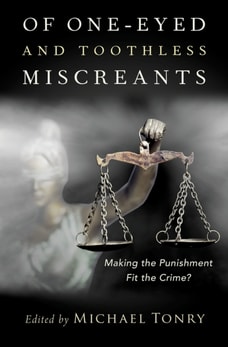
Almost everyone agrees--Right on Crime, the ACLU, Koch Industries, George Soros's Open Society Foundation, the editorial boards of the New York Times and the Wall Street Journal--that America's current systems for sentencing criminal offenders are a shambles, with crazy quilts of incompatible and conflicting laws, policies, and practices in every state and the federal system.
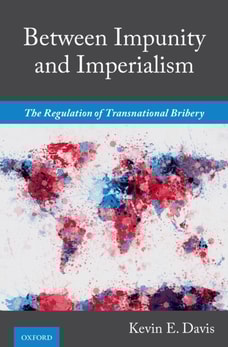
Corruption undermines nearly all key legal and developmental priorities today, including the effective functioning of democratic institutions and honest elections; environmental protection; human rights and human security; international development programs; and fair competition for global trade and investment.
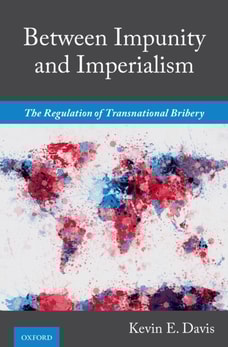
Corruption undermines nearly all key legal and developmental priorities today, including the effective functioning of democratic institutions and honest elections; environmental protection; human rights and human security; international development programs; and fair competition for global trade and investment.
In three parts, this volume in the AP-LS series explores the phenomena of captivity and risk management, guided and informed by the theory, method, and policy of psychological jurisprudence.
This book serves as a vital resource for clinicians, therapists, and individuals aiming to integrate their psychedelic experiences through the transformative practice of Art Therapy.
Over recent decades, tremendous advances in the prevention, medical treatment, and quality of life issues in children and adolescents surviving cancer have spawned a host of research on pediatric psychosocial oncology.
Given that persons typically have a right not to be subjected to the hard treatment of punishment, it would seem natural to conclude that the permissibility of punishment is centrally a question of rights.
Rapid technological change, the advent of Big Data, and the creation of society-wide government surveillance programs have transformed the accessibility of highly personal information; these developments have highlighted the ambiguous treatment of privacy and personal intimacy.
Rapid technological change, the advent of Big Data, and the creation of society-wide government surveillance programs have transformed the accessibility of highly personal information; these developments have highlighted the ambiguous treatment of privacy and personal intimacy.
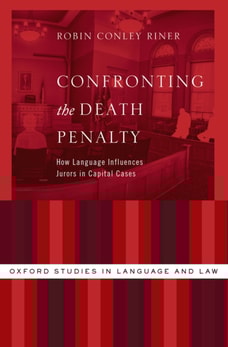
Confronting the Death Penalty: How Language Influences Jurors in Capital Cases probes how jurors make the ultimate decision about whether another human being should live or die.
Few resources exist for those interested in developing their professional competence vis-a-vis ethics in forensic psychology, with the most recent text being published more than a decade ago.
All modern sentencing systems, in the US and beyond, consider the offender's prior record to be an important determinant of the form and severity of punishment for subsequent offences.
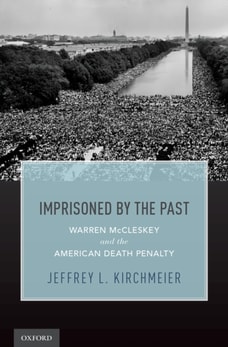
Imprisoned by the Past: Warren McCleskey and the American Death Penalty connects the history of the American death penalty to the case of Warren McCleskey.
Scholars and lay persons alike routinely express concern about the capacity of democratic publics to respond rationally to emotionally charged issues such as crime, particularly when race and class biases are invoked.
Language ideology is a concept developed in linguistic anthropology to explain the ways in which ideas about the definition and functions of language can become linked with social discourses and identities.
Almost everyone agrees--Right on Crime, the ACLU, Koch Industries, George Soros's Open Society Foundation, the editorial boards of the New York Times and the Wall Street Journal--that America's current systems for sentencing criminal offenders are a shambles, with crazy quilts of incompatible and conflicting laws, policies, and practices in every state and the federal system.