Although Mexico's Constitution of 1917 mandated the division of large landholdings, provided land for the landless, and guaranteed workers the rights to organize, strike, and bargain collectively, it also guaranteed fundamental liberal rights to property and due process that enabled property owners and employers to resist the implementation of the new social rights by filing suit in federal court.
In this book Sueann Caulfield explores the changing meanings of honor in early-twentieth-century Brazil, a period that saw an extraordinary proliferation of public debates that linked morality, modernity, honor, and national progress.
For more than two decades, the law and economics movement has been one of the most influential and controversial schools of thought in American jurisprudence.
Modern ideas about the protection of free speech in the United States did not originate in twentieth-century Supreme Court cases, as many have thought.
Tyrannicide uses a captivating narrative to unpack the experiences of slavery and slave law in South Carolina and Massachusetts during the Revolutionary Era.
Of all the written portraits of the delegates who attended the Federal Convention of 1787, few are as complete and compelling as those penned by William Pierce Jr.
The death of Georgia governor-elect Eugene Talmadge in late 1946 launched a constitutional crisis that ranks as one of the most unusual political events in U.
A scholarly study of how women's executions were staged, interpreted, and recorded in Renaissance England A Weak Woman in a Strong Battle: Women and Public Execution in Early Modern England provides critical insights on representations of women on the scaffold, focusing on how female victims and those writing about them constructed meaning from the ritual.
Thomas Goode Jones of Alabama is the first comprehensive biography of a key Alabama politician and federal jurist whose life and times embody the conflicts and transformations in the Deep South between the Civil War and World War I.
A political biography, probing the labyrinth of Alabama politics in an effort to discover what forces, other than his own, shaped Hugo Black and set him upon the road to the Court Almost any Alabamian, white or black, unsophisticated or meagerly educated, can name one man who was a justice of the United States Supreme Court.
Presents a thought-provoking collection of five essays that explore the purposes and meanings of legal punishment in the United States, both culturally and socially From the Gospel of Matthew to numerous US Supreme Court justices, many literary and legal sources have observed that how a society metes out punishment reveals core truths about its character.
In Knowing the Suffering of Others, legal scholar Austin Sarat brings together essays that address suffering as it relates to the law, highlighting the ways law imagines suffering and how pain and suffering become jurisprudential facts.
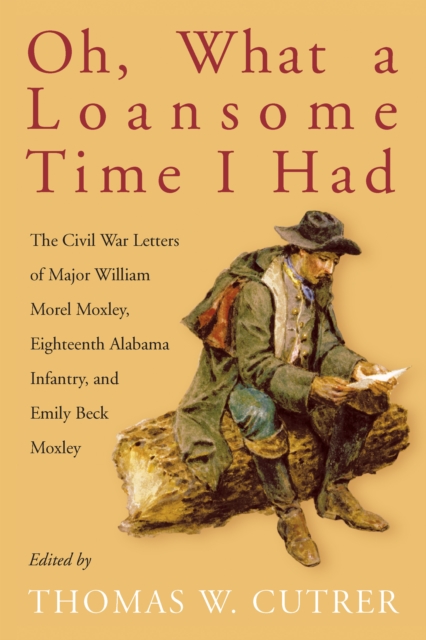
This rare correspondence between a soldier and his wife relates in poignant detail the struggle for survival on the battlefield as well as on the home front and gives voice to the underrepresented class of small farmers Most surviving correspondence of the Civil War period was written by members of a literate, elite class; few collections exist in which the woman's letters to her soldier husband have been preserved.
A timely examination of Alabama's severely criticized state constitution Alabama's present constitution, adopted in 1901, is widely viewed as the source of many, if not most, of the state's historic difficulties and inequities.
Expanding the Frontiers of Civil Rights documents an important shift in state level policy to make clear that civil rights in Michigan embraced all people.
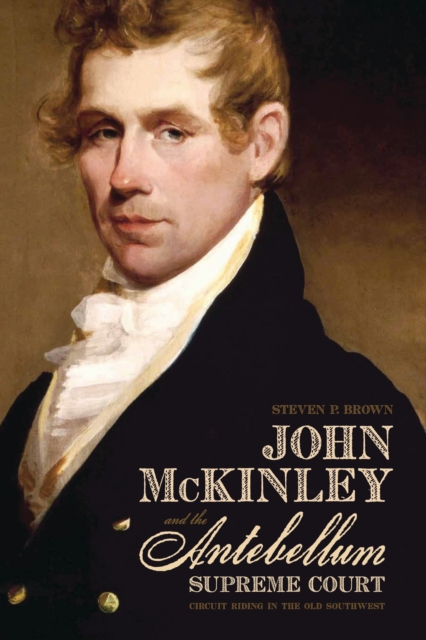
Any student of American history knows of Washington, Jefferson, and the other statesmen who penned the documents that form the legal foundations of our nation, but many other great minds contributed to the development of the young republic's judicial systemfigures such as William Littell, Ben Monroe, and John J.
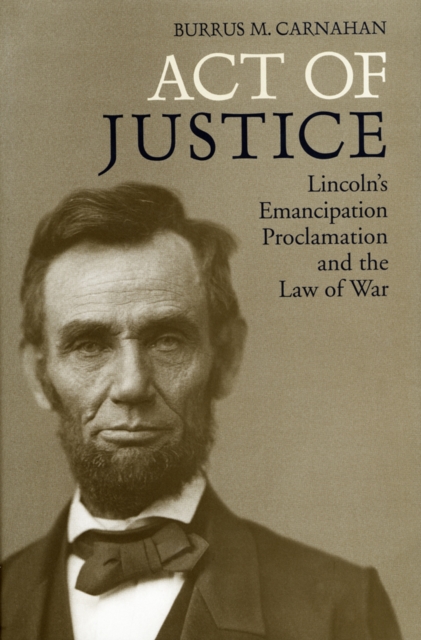
In his first inaugural address, Abraham Lincoln declared that as president he would "have no lawful right" to interfere with the institution of slavery.
In his first inaugural address, Abraham Lincoln declared that as president he would "have no lawful right" to interfere with the institution of slavery.
On the night of April 14, 1865, John Wilkes Booth assassinated President Abraham Lincoln in what he envisioned part of a scheme to plunge the federal government into chaos and gain a reprieve for the struggling Confederacy.
"A woman was sitting on the witness stand, and the lawyer asked her, 'Did you, or did you not, on the night of June 23rd have sex with a hippie on the back of a motorcycle in a peach orchard?
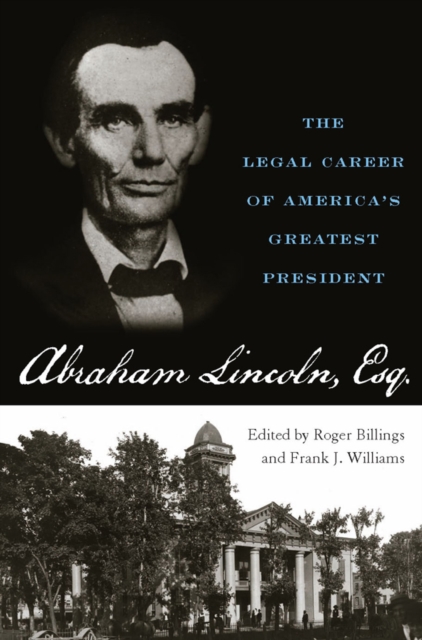
As our nation's most beloved and recognizable president, Abraham Lincoln is best known for the Emancipation Proclamation and for guiding our country through the Civil War.
"e;This groundbreaking work reads like a murder mystery, only in this case what has been killed is our American integrity and the right of an individual to a fair trial.
"e;Addresses fascinating aspects of obtaining justice in Florida: both historical court systems before Florida became a state and alternative courts operating within Florida now.