Market Abuse Regulation is a wide-ranging and insightful analysis of the market abuse regime and the applications of the regulations in the UK and European Union.
Market Abuse Regulation is a wide-ranging and insightful analysis of the market abuse regime and the applications of the regulations in the UK and European Union.
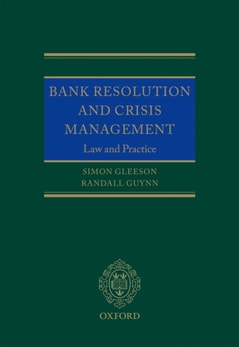
Responding to lessons learned during the global financial crisis, the EU Directive on the Recovery and Resolution of Banks and Securities Firms (the BRRD) has substantially changed the legal framework for insolvency management of financial services institutions across Europe.
Responding to lessons learned during the global financial crisis, the EU Directive on the Recovery and Resolution of Banks and Securities Firms (the BRRD) has substantially changed the legal framework for insolvency management of financial services institutions across Europe.
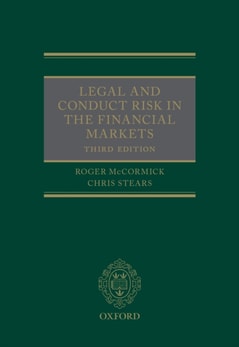
This is the third edition of the only work to focus on the topic of legal risk, expanded in this edition to include much new material specifically on conduct risk.
This is the third edition of the only work to focus on the topic of legal risk, expanded in this edition to include much new material specifically on conduct risk.
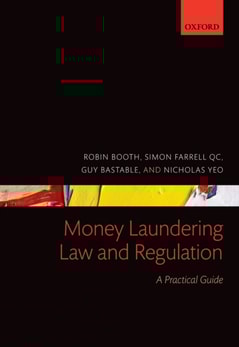
Money Laundering Law and Regulation offers a practical and comprehensive guide to domestic anti-money laundering law and regulation, increasingly seen as key weapons in the fight against serious and organized crime.
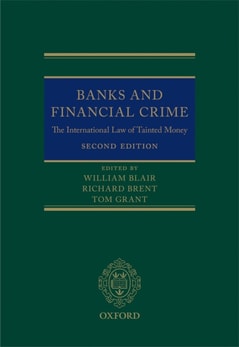
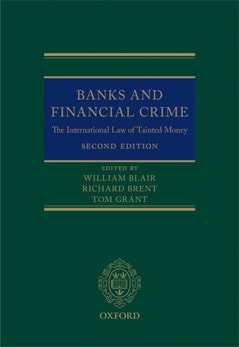
This thoroughly revised and updated new edition provides a practical guide for banks and their lawyers in respect of their regulatory responsibilities, their private law duties, their liabilities to third parties, and their obligations to assist persons seeking the recovery of assets (including regulatory bodies within and without the jurisdiction) as they relate to "e;tainted money"e;.
This thoroughly revised and updated new edition provides a practical guide for banks and their lawyers in respect of their regulatory responsibilities, their private law duties, their liabilities to third parties, and their obligations to assist persons seeking the recovery of assets (including regulatory bodies within and without the jurisdiction) as they relate to "e;tainted money"e;.
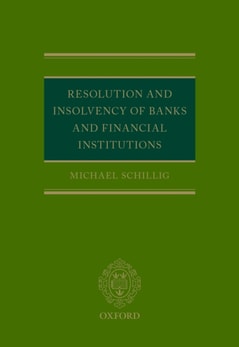
This book provides a detailed analysis and critical assessment of the EU and US resolution regimes for banks and financial institutions on a comparative basis.
This book provides a detailed analysis and critical assessment of the EU and US resolution regimes for banks and financial institutions on a comparative basis.
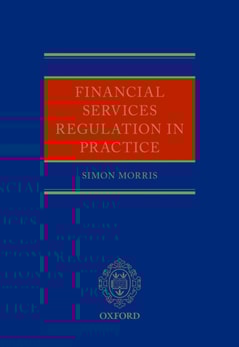
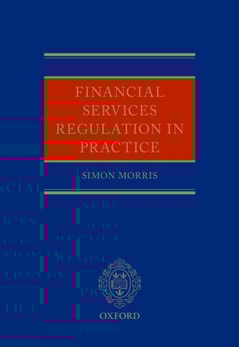
This book explains how to deal with legal, compliance, and enforcement issues faced by banks and other financial institutions and their legal advisers.
This book explains how to deal with legal, compliance, and enforcement issues faced by banks and other financial institutions and their legal advisers.
This book focuses on market law and policy in sub-Saharan Africa, showing how markets can be harnessed by poorer and developing economies to help make the markets work for them: to help them integrate into the world economy and provide a better standard of living for their people while preserving their values of inclusive development.
This book focuses on market law and policy in sub-Saharan Africa, showing how markets can be harnessed by poorer and developing economies to help make the markets work for them: to help them integrate into the world economy and provide a better standard of living for their people while preserving their values of inclusive development.
The rapid growth of foreign banks has aroused a growing interest in the academic field and specifically as regards to the question of why foreign banks exist.
Using a framework of volatile markets Emerging Market Bank Lending and Credit Risk Control covers the theoretical and practical foundations of contemporary credit risk with implications for bank management.
The book The Law of Securitisations: From Crises to Techno-sustainability provides a full and detailed account of the EU legislation in the area of structured finance with the new legal rules dissected and discussed in their full extent.
This book provides an original theoretically and empirically grounded analysis of regulatory enforcement activism in post-crises periods and the ensuing regulatory interactions.
The last decade has seen the increasing integration of European financial markets due to a number of factors including the creation of a common regulatory framework, the liberalisation of international capital movements, financial deregulation, advances in technology and the introduction of the Euro.
Combating white-collar crime is a challenge as these criminals are found among the most powerful members of society, including politicians, business executives, and government officials.
This book examines the convergence of Islamic legal principles and modern financial systems, covering the fundamental principles of Islamic finance and banking, and how they are practically applied within the banking sector.
This book examines the convergence of Islamic legal principles and modern financial systems, covering the fundamental principles of Islamic finance and banking, and how they are practically applied within the banking sector.