This book examines access to justice in summary criminal proceedings by considering the ability of defendants to play an active and effective role in the process.
This book examines access to justice in summary criminal proceedings by considering the ability of defendants to play an active and effective role in the process.
A must-read for students involved in mooting, this new edition of Jeffrey Hill's textbook has been fully updated and revised, and provides students with clear and compelling advice on every aspect of mooting.
A must-read for students involved in mooting, this new edition of Jeffrey Hill's textbook has been fully updated and revised, and provides students with clear and compelling advice on every aspect of mooting.
In this book, leading scholars of EU law, judges, and practitioners unpack the judicial reasoning offered by the UK Advocates General in over forty cases at the Court of Justice, which have influenced the shape of EU law.
In this book, leading scholars of EU law, judges, and practitioners unpack the judicial reasoning offered by the UK Advocates General in over forty cases at the Court of Justice, which have influenced the shape of EU law.
This is the first book to offer an extensive cosmopolitan, cross-cultural insight into the perennial controversy over the use of improperly obtained evidence in criminal trials.
This is the first book to offer an extensive cosmopolitan, cross-cultural insight into the perennial controversy over the use of improperly obtained evidence in criminal trials.
PRAISE FOR THE BOOK:"e;This constitutes a work of impressive scholarship that will become a major reference point for future discourse on choice of court agreements.
PRAISE FOR THE BOOK:"e;This constitutes a work of impressive scholarship that will become a major reference point for future discourse on choice of court agreements.
All litigants before the General Court of the EU (GC), the Court of Justice of the EU (ECJ) or indeed before any EU body or agency will need to have full access to the documents held by the European Union.
All litigants before the General Court of the EU (GC), the Court of Justice of the EU (ECJ) or indeed before any EU body or agency will need to have full access to the documents held by the European Union.
China after Mao has undergone vast transformations, including massive rural-to-urban migration, rising divorce rates, and the steady expansion of the country's legal system.
The Courage of their Convictions cites sixteen landmark civil liberties cases and the individuals who challenged laws that they felt impinged upon their personal freedom and who took their battles to the nation's highest court of law.
"e;Techniques of Crime Scene Investigation is a staple for any forensic science library and is routinely referenced by professional organizations as a study guide for certifications.
"e;Techniques of Crime Scene Investigation is a staple for any forensic science library and is routinely referenced by professional organizations as a study guide for certifications.
After simmering in the background through the nineties, Iraq burst into the awareness of many when it became a battleground against the war on terror under the Bush administration.
The Federal Court of Canada, which existed from 1875 to 1971 under the name Exchequer Court of Canada, occupies a special place in the court structure of Canada.
Unknown and uncelebrated by the public, overshadowed and frequently overruled by the Privy Council, the Supreme Court of Canada before 1949 occupied a rather humble place in Canadian jurisprudence as an intermediate court of appeal.
National security in the interest of preserving the well-being of a country is arguably the first and most important responsibility of any democratic government.
National security in the interest of preserving the well-being of a country is arguably the first and most important responsibility of any democratic government.
A lively narrative account of the first case to appear at the International Criminal Court, A Conviction in Question documents the trial of Union of Congolese Patriots leader and warlord, Thomas Lubanga Dyilo.
A lively narrative account of the first case to appear at the International Criminal Court, A Conviction in Question documents the trial of Union of Congolese Patriots leader and warlord, Thomas Lubanga Dyilo.
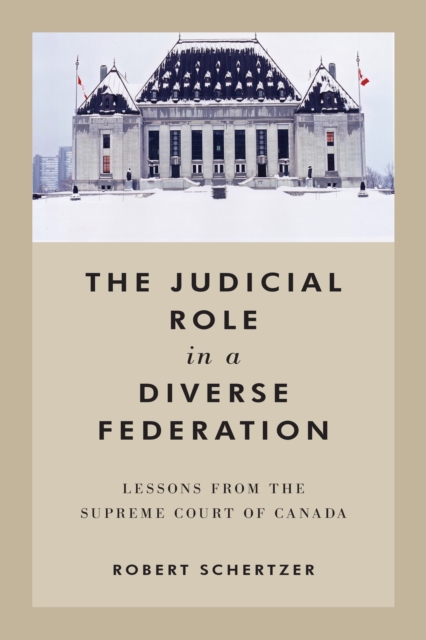
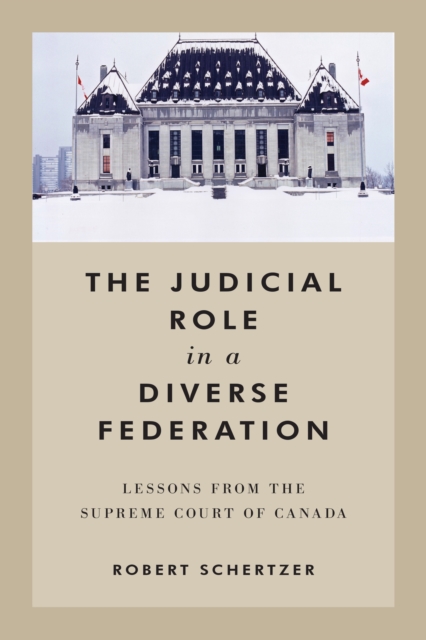
In The Judicial Role in a Diverse Federation, Robert Schertzer uses the example of the Supreme Court of Canada to examine how apex courts manage diversity and conflict in federal states.
In The Judicial Role in a Diverse Federation, Robert Schertzer uses the example of the Supreme Court of Canada to examine how apex courts manage diversity and conflict in federal states.
As lawyers, legal scholars, and academics throughout the social sciences debate the future of legal work and the legal profession itself, they turn their attention inevitably to the rise of the franchise law firms.
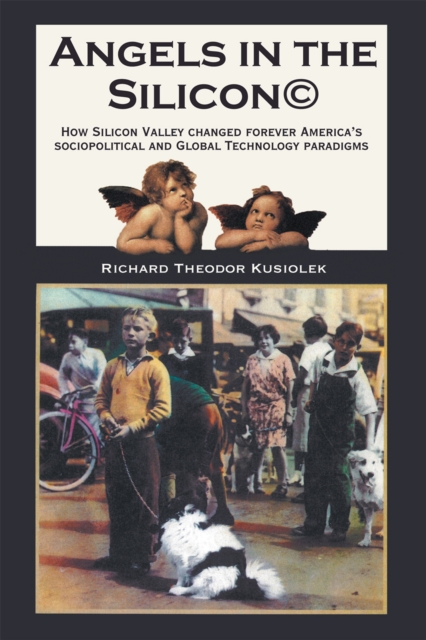
This creative non-fiction book for the reader is a great introduction to the effects of global capitalism on the dynamic region that is the San Francisco Bay Area.
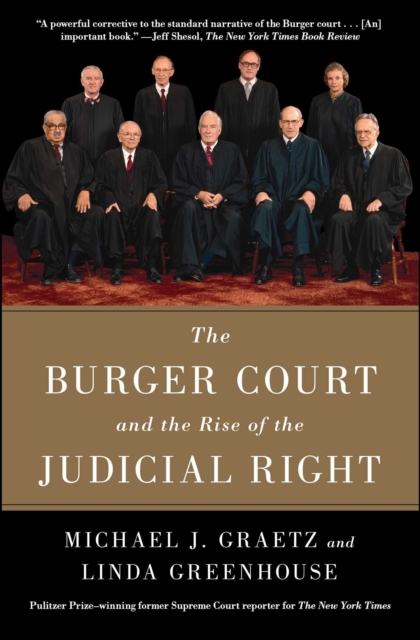
A revelatory look at the Warren Burger Supreme Court finds that it was not moderate or transitional, but conservativeand it shaped todays constitutional landscape.