In the struggle to ensure that schools receive their fair share of financial and educational resources, reformers translate policy goals into legal claims in a number of different ways.
Addressing the relationship between law and the visual, this book examines the importance of photography in Central, East, and Southeast European show trials.
Featuring contributions from leading scholars of health privacy law, this important volume offers insightful reflection on issues such as confidentiality, privacy, and data protection, as well as analysis in how a range of jurisdictions-including the US, the UK, Europe, South Africa, and Australia-navigate a rapidly developing biomedical environment.
William Leiss and Christina Chociolko explain that controversies arise in part because many participants try to avoid assuming full responsibility for the consequences of the risk-taking they advocate.
War, Politics, and Philanthropy: The History of Rehabilitation Medicine describes the development of this remarkable field of medical care from its inception in WWI and WWII through its dramatic expansion during the 1980s, as stimulated by the Medicare program.
The passage of the Archaeological Resources Protection Act (ARPA) in 1979 was a watershed moment in the movement to protect cultural objects against looting.
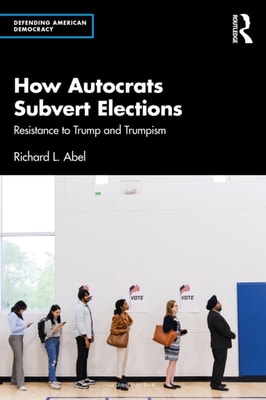
Chronicling and analyzing resistance to the threat that autocracy poses to American liberal democracy, this book provides the definitive account of the response to the January 6, 2021, assault on the Capitol and Republican efforts to overturn the 2020 election and bias future elections in their favor.
The Workplace (Health, Safety and Welfare) Regulations 1992 cover a wide range of basic health, safety and welfare issues and apply to most workplaces (except those involving construction work on construction sites, those in or on a ship, or those below ground at a mine).
This book offers a radically different introduction to law, one that reflects the challenges and opportunities presented by the rapid technological developments of our time.
It is difficult to think of an example of an advancement in the biological sciences that has had an impact on society similar to that of the new genetics.
This book adopts a novel approach to the social question of restitution and repatriation of sacred cultural property and heritage acquired unethically during the colonial era.
The book comprehensively analyses whether a State may be held responsible for environmental damage resulting from its wrongful conduct in international armed conflict.
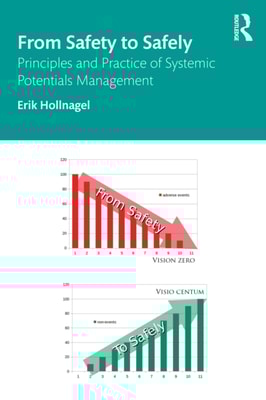
The conventional interpretation of safety, known as Safety-I, denotes a condition where as little as possible goes wrong, and the focus of practical efforts in management or analysis is on the occurrence of unacceptable outcomes and on how to reduce their number to an acceptable level, ideally zero.
Assembling a series of voices from across the field, this book demonstrates how posthuman theory can be employed to better understand and tackle some of the challenges faced by contemporary international law.
Public Health Law and Ethics: A Reader, 3rd Editionprobes the legal and ethical issues at the heart of public health through an incisive selection of judicial opinions, scholarly articles, and government reports.
Methamphetamine: A Love Storypresents an insider's view of the world of methamphetamine based on the life stories of thirty-three adults formerly immersed in using, dealing, and manufacturing meth in rural Oklahoma.
Now revised and expanded to cover today's most pressing health threats, Public Health Law and Ethics probes the legal and ethical issues at the heart of public health through an incisive selection of government reports, scholarly articles, and relevant court cases.
The Care Act 2014 is arguably the most significant piece of legislation for social workers who work with adults, since the NHS and Community Care Act 1990.
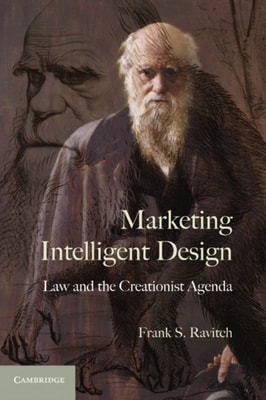
This book presents an argument that intelligent design is a well-designed marketing plan aimed at imposing a theistic naturalism in schools and scientific discourse.
This book presents an argument that intelligent design is a well-designed marketing plan aimed at imposing a theistic naturalism in schools and scientific discourse.
Analyses the highly controversial problems of DNA forensic technologies, providing important insights into their ethical, legal and societal dimensions.