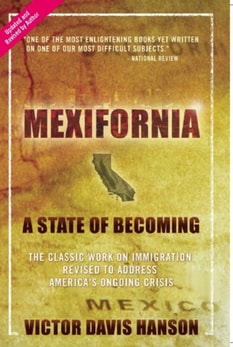
Victor Davis Hanson locates the cause of our immigration quagmire in the opportunistic coalition that stymies immigration reform and, even worse, stifles any honest discussion of the present crisis.
These biographical essays, many reprinted from The Pittsburgh Quarterly, describe the men who transformed Pittsburgh into one of the leading industrial cities in the world.
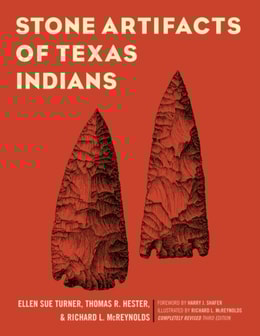
Useful for academic and recreational archaeologists alike, this book identifies and describes over 200 projectile points and stone tools used by prehistoric Native American Indians in Texas.
Just in time for the one-hundredth anniversary of Miami Beach, It Happened in Miami, the Magic City: An Oral History features nearly seventy fabulous voices including more than fifteen mini-memorists, telling stories, offering perceptions on subject matter as far back as memory allows up to the exciting headlines of today.
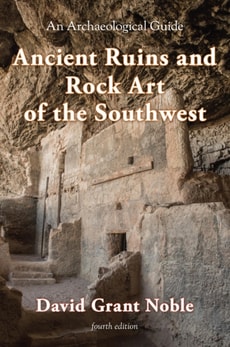
This fourth edition of David Grant Nobles indispensable guide to archaeological ruins of the American Southwest includes updated text and many newly opened archaeological sites.
They had two future Hall of Famers, the last pitcher to win thirty games, and a supporting cast of some of the most peculiar individuals ever to play in the majors.
Experience the mosaic of mid-century Manhattan in this exuberant oral history that begins in the postWorld War II years when the city came into its own, and ends in the mid-1970s when it nearly went bust.
In November 1905, the peak of foxhunting season across the Midlands of England and up and down the east coast of North America, two towns in Virginia saw the coming of illustrious and wealthy men.
Manhood Enslaved reconstructs the lives of three male captives to bring greater intellectual and historical clarity to the muted lives of enslaved peoples in eighteenth- and early nineteenth-century central New Jersey, where blacks were held in bondage for nearly two centuries.
Bringing to life the founding families' histories, Founders and Famous Families of Cincinnati shares these intertwined and fascinating tales with readers near and far.
A collection of stories of people and events in the Florida Keys extending from the time the Keys were first occupied by humans, through the Second Seminole War, the coming of the Overseas Railway, and finally the opening of the first Overseas Highway in 1927.
Blackbeard, Jose Gaspar, Jean Lafittethe names conjure up a romantic, swashbuckling figure with a black patch over one eye, a cutlass in his teeth, and a brace of pistols tucked into his waistband.
An engaging historical narrative covering many significant events in the history of south Florida, Tropical Surge includes the major developments and setbacks in the early years of Miami and Key West, as well as an in-depth look at Henry Flagler's amazing Overseas Railway.
Over the centuriesfrom 18th-century Spanish galleons through German U-boats and modern oil tankersseamen have feared the waters off North Carolina's Outer Banks.
Virtually every month for fourteen years, Gene Burnett wrote a history piece under the title "e;Florida's Past"e; for Florida Trend, Florida's respected magazine of business and finance.
Virtually every month for fourteen years, Gene Burnett wrote a history piece under the title "e;Florida's Past"e; for Florida Trend, Florida's respected magazine of business and finance.
Virtually every month for fourteen years, Gene Burnett wrote a history piece under the title Floridas Past for Florida Trend, Floridas respected magazine of business and finance.
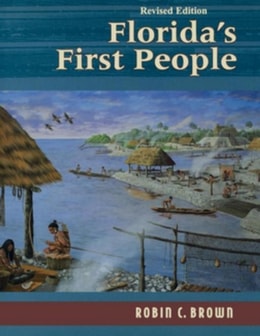
This comprehensive look at the first humans in Florida combines contemporary archaeology, the writings of early European explorers, and experiments to present a vivid history of the state's original inhabitants.
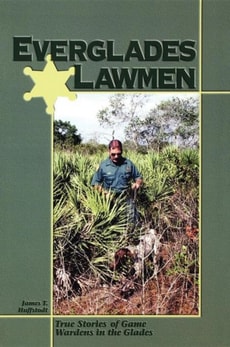
From the first game wardens in the Everglades to present-day wildlife officers, law enforcement in the wild, untamed Everglades has kept pace with changing times.
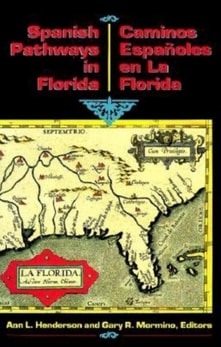
Florida served as one of the great meeting grounds of the planet, a place where peoples from Indian America, Latin America, Africa, the Caribbean and Europe converged.
Nature's Steward chronicles the development of southwest Florida using the modern-day Conservancy of Southwest Florida as the lens through which to examine environmental history.
For those who believe that the best way to understand someone is to walk a mile in his or her shoes, Florida's rich history features those whose footwear ranged from Native American moccasins to astronauts' boots.
Anyone looking to escape the hustle and bustle of the modern world for a while is invited to sit back and enjoy a leisurely trip down one of the best-known and most beloved rivers in the country.
This new paperback edition of Paynes Prairie still offers the sweeping history of the shallow-bowl basin in the middle of Florida, just south of Gainesville, but now adds a guide to outdoor activities that can be enjoyed in the state preserve there today, along with maps of trails for biking, hiking, and canoeing.
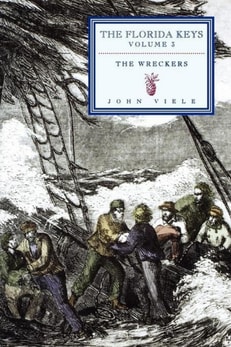
In this third book in a series on the history of the Florida Keys, John Viele tells the true story of the Florida Keys wreckers, the daring seamen who sailed out in fair weather or foul to save lives and property from ships cast up on the unforgiving Florida Reef in the passage south of the Florida Keys, one of the most dangerous in the world, having claimed thousands of ships and lives.
The Straits of Florida is a 110-mile sea passage between the Gulf of Mexico and the Atlantic Ocean bordered on the northern side by the Florida Keys and the Florida Reef.
Today, on the Keys between Key West and the mainland, some 40,000 residents and thousands of visitors fish, swim, sail, and dive in the crystal clear waters off a tropical reef; relax in the sun and cooling trade wind breezes; and sleep in the air-conditioned comfort of their homes and hotel rooms.
Simonton, Duval, Eaton, Whitehead, Southard, Trumanif you discover how these Key West streets, and all the others, came by their names, you will know much of the history of this little island at the nethermost end of the continental United States.