Shorebirds of Australia brings together the latest information about the evolution, ecology and behaviour of shorebirds and how they are distributed in Australia.
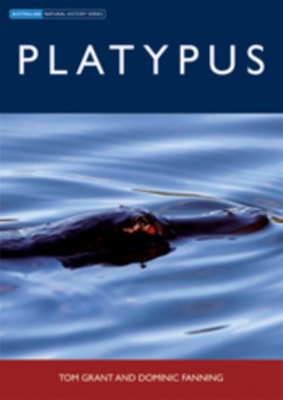
Since it first became known to European scientists and naturalists in 1798, the platypus has been the subject of controversy, interest and absolute wonder.
The bioregion of Australia, New Zealand, Antarctica and New Guinea possesses a unique natural heritage stretching back over 50 million years since the break-up of the great southern continent of Gondwanaland.
The bioregion of Australia, New Zealand, Antarctica and New Guinea possesses a unique natural heritage stretching back over 50 million years since the break-up of the great southern continent of Gondwanaland.
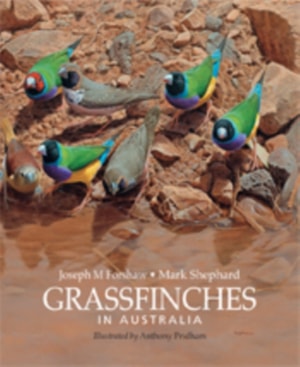
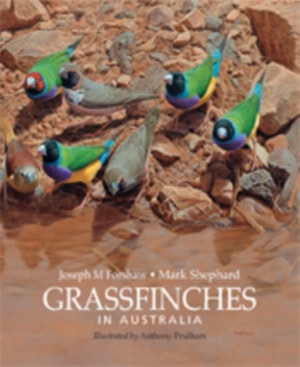
It is not surprising that Australian grassfinches are highly popular with ornithologists and aviculturists, for included among the species are one of the most beautiful of all birds - the Gouldian Finch Erythrura gouldiae - and one of the most familiar cagebirds - the Zebra Finch Taeniopygia guttata.
It is not surprising that Australian grassfinches are highly popular with ornithologists and aviculturists, for included among the species are one of the most beautiful of all birds – the Gouldian Finch Erythrura gouldiae – and one of the most familiar cagebirds – the Zebra Finch Taeniopygia guttata.
Wetlands are often seen as the ultimate symbol of beauty and tranquillity, their clear waters sheltering mysterious animals in a world where change is gentle and slow, from dragonflies skimming above their own reflections to the fishes glimpsed briefly below.
Wetlands are often seen as the ultimate symbol of beauty and tranquillity, their clear waters sheltering mysterious animals in a world where change is gentle and slow, from dragonflies skimming above their own reflections to the fishes glimpsed briefly below.
The rapidly increasing number of threatened flora and fauna species worldwide is one of the chief problems confronting environmental professionals today.
The rapidly increasing number of threatened flora and fauna species worldwide is one of the chief problems confronting environmental professionals today.
The bioregion of Australia, New Zealand, Antarctica and New Guinea possesses a unique natural heritage stretching back over 50 million years since the break-up of the great southern continent of Gondwanaland.
The bioregion of Australia, New Zealand, Antarctica and New Guinea possesses a unique natural heritage stretching back over 50 million years since the break-up of the great southern continent of Gondwanaland.
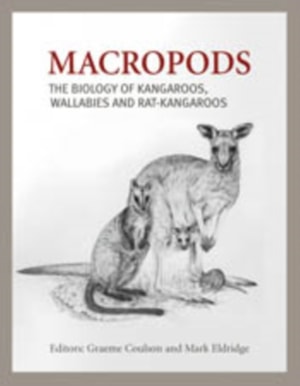
This book provides a clear and accessible account of kangaroos, showing how their reproductive patterns, social structure and other aspects of their biology make them well adapted to Australia's harsh climate and demanding environment.
This book provides a clear and accessible account of kangaroos, showing how their reproductive patterns, social structure and other aspects of their biology make them well adapted to Australia’s harsh climate and demanding environment.
The remote, beautiful and poorly known rainforests of Cape York Peninsula tell a special story about Australia's historic and present-day connections to New Guinea.
First published in 1994, The Complete Guide to Finding the Birds of Australia was the first ever book of its type in Australia - a complete guide to locating every resident bird species in Australia, plus supplementary information on where to find rarities, migratory species and logistical information.
Reef and Rainforest is a photographic portrayal of marine and terrestrial life in one of the world's most biodiverse regions - the tropics of north-eastern Australia, together with the South Pacific nations of Solomon Islands and Papua New Guinea.
This book covers the proceedings of a major 2006 symposium on macropods that brought together the many recent advances in the biology of this diverse group of marsupials, including research on some of the much neglected macropods such asthe antilopine wallaroo, the swamp wallaby and tree-kangaroos.
The Channel Country is of special interest because its extreme aridity is disrupted unpredictably by summer monsoonal rains, causing massive flooding, and is followed by prodigious growth of plants and reproduction of animals, before returning to daunting conditions of drought.