A thin pair of steel ribbons across town and countryside, along sea walls, over remote and lonely Highland moors, through tunnels, and carried on magnificent viaducts - the special association between railway and landscape is explored in this photo essay by two of the UK's best-known railway photographers, one of whom was named the Sunday Times 'Take A View' Young Landscape Photographer of the Year.
The Bulleid Pacifics remain one of the most iconic classes of locomotives in the history of Britain's railways - a unique breed that delighted enthusiasts all around the Southern Region.
The London to Brighton run, held each year by the Historic Commercial Vehicle Society, is a key date in the diary of any vintage vehicle enthusiast or member of the preservation community.
Formed in 1999, GB Railfreight was one of several new rail freight operators to appear after the privatisation and break-up of British Rail in the 1990s.
Since their introduction in 1984, the Class 150 series of 'Sprinter' diesel multiple units have plied their trade across the UK - from Cornwall to Scotland and many places in between - replacing large numbers of aging 1950s-built rolling stock.
Formed in 2003, Arriva Trains Wales was awarded the franchise to run the majority of services in Wales with services also extending over the border to Manchester, Birmingham and Cheltenham.
The Ayrshire Road Run was instigated in 1993 as an adjunct to the established annual vintage rally organised by the Ayrshire Vintage Tractor & Machinery Club (AVT&MC).
While Brighton is synonymous with EMUs and commuter trains, over the years there has also been some limited freight and parcels traffic and, eventually, the reintroduced direct services to the Midlands and North West brought further variety to the scene.
Scotland has always been an attractive destination for rail enthusiasts - a place with picturesque scenery and a variety of traction scattered across the country, with the BR Blue era offering a wonderful juxtaposition between the grit of the hardworking locos and their more serene surroundings.
The Midlands has always offered a range of interesting locales for the rail enthusiast - Nottingham, Guide Bridge, Birmingham New Street and, of course, Crewe.
Travelling around the Eastern Region in the 1970s and 1980s meant Deltics and then HSTs on the East Coast Main Line; long and slow freight trains crawling across an industrial landscape; rattling DMUs running between large grey cities or picturesque villages.
Roving around the Western Region in the 1970s and 1980s often meant making your way to Reading or Bristol Temple Meads before branching out further afield - South Wales and vast swathes of the West Country were within reach, and intrepid young photographers could reach favoured locations such as the sea wall at Dawlish, or seek out somewhere a little more unusual.
With a wealth of rare and previously unseen images, Southampton City Transport Buses illustrates the development of mainly diesel-powered buses operated by Southampton City Transport and its successors since the early years of the twentieth century until recent times.
East Anglia can sometimes be overlooked in favour of the larger mainlines that run through this country but, as can be seen by this exhibition of the sights found within the boundaries of an Anglia Day Ranger, it can be an interesting and often picturesque place to spend time on the rails.
The range and variety of British railway stations is truly astonishing: from the tiny wayside halt made of corrugated iron to the magnificent stone-built city centre terminus.
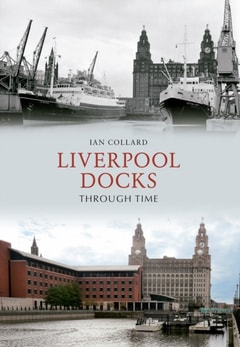
In the 1960s and 1970s, many of the traditional shipping companies trading or based in Liverpool slowly vanished because of containerisation or competition from passenger aircraft.
The range and variety of British railway stations is truly astonishing; from the tiny wayside halt made of corrugated iron to the magnificent stone-built city centre terminus.
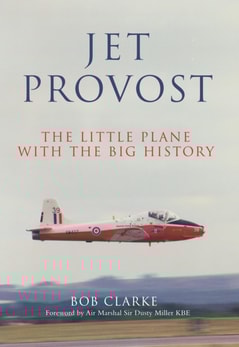
Initially designed and built by Hunting Percival, the Jet Provost was a jet-powered development of the piston Provost trainer, which only entered service five years before its more powerful younger sibling.
The Vought F-8 Crusader was a classic post-war aircraft; loved by its pilots, this big machine was nicknamed 'The Last of the Gunfighters' because of its primary armament of four 20 mm Colt cannon.
Becoming the fourth largest aircraft manufacturer in the United States when Consolidated merged with Vultee in 1943, Convair quickly built a reputation for designing and building some of the largest and most powerful aircraft in the world.
The start of the twenty-first century saw a flurry of bus activity at Stratford in East London to provide services to the Millennium Dome - this proved to be largely unneeded.
Here, John Dedman and Pete Nurse look back on the heyday of the Day Ranger and Rover tickets on the South Coast, covering areas stretching between Portsmouth Harbour and Weymouth Quay.
Ever since the Romans built Stane Street from London to Chichester and pedlars used the high ridge-line tracks across the South Downs, Sussex has needed strategic transportation as an aid to commerce and its ever-growing population.
The Midland Railway accrued its vast wealth through coal, and while bank interest rates were paying about 3 per cent the Midland Railway was paying double that on its shares.
Aberdeen Corporation Transport and its successors, Grampian Transport and FirstBus/First Aberdeen, can trace their history back to 1898 when they commenced tram operation within the city of Aberdeen.
Dating back to 1921 and originally operating from a base in the small Northamptonshire town of Irthlingborough, United Counties expanded significantly during the 1920s and 1930s, firmly establishing themselves in the county of Northamptonshire, as well as a network of services in south Lincolnshire, south Leicestershire and the Stony Stratford area of Buckinghamshire.
From author David Christie's home town in Essex, the Green Line route 721 (by RCL) was the usual way of getting to London - into Aldgate, one of his haunts as a young spotter in the '50s.
As the modernisation of the former British Railways moved forward into Railtrack and then Network Rail, various schemes to bring the West Country railway network up to date came - and went!
During the days of British Rail it was possible to purchase a Rail Rover type ticket for unlimited travel over certain areas or regions, over a single day, or for a longer period.
The six principal classes of diesel locomotive that once made up the 'Type 4' classification - the 40, 44, 45, 46, 47 and 50 - were the survivors of a wider group that can trace its origins to the British Transport Commission's Modernisation Plan of 1955.
Railways Around Hereford features photographs taken by author Robert Lewis and a number of other railway enthusiasts, covering a period of around fifty years.
The steam locomotive, 'the most potent symbol of nineteenth-century civilisation', is perhaps the image that best sums up the Victorian and Edwardian eras.
When Winston Churchill delivered his famous 'Iron Curtain' speech in 1946, he mentioned two words now engrained in Anglo-American terminology - 'special relationship'.