This volume is composed of four major in-depth yet pedagogic review chapters on the subject of star formation, written by the foremost researchers in the field.
Together with Virgo, the Coma Berenices cluster is one of the most well-studied clusters at all wavelengths and in all aspects, from the Sunyaev-Zeldovich effect to star formation in galaxies.
Accretion disks in compact stellar systems containing white dwarfs, neutron stars or black holes are the principal laboratory for understanding the role of accretion disks in a wide variety of environments from proto-stars to quasars.
At a moderately advanced level, this book seeks to cover the areas of clustering and related methods of data analysis where major advances are being made.
The objective of the workshop series "e;The Identification of Dark Matter"e; is to assess critically the status of work attempting to identify what constitutes dark matter; in particular, to consider what techniques are currently being used, how successful they are, and what new techniques are likely to improve the prospects for identifying dark matter candidates in the future.
A group of leading experts in the field of starbursts and active galactic nuclei have joined hands to produce this review volume which covers the starburst-AGN connection, and the tests to be carried out with the upcoming new astronomical facilities to ascertain the relevance of both components to the formation and evolution of galaxies.
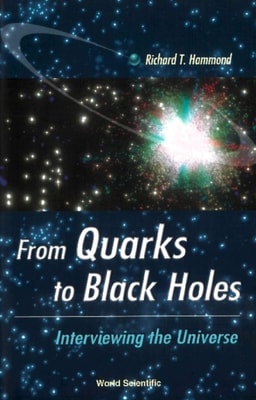
This book presents a series of delightful interviews in which natural objects such as an electron, a black hole, a galaxy, and even the vacuum itself, reveal their innermost secrets - not only what they are but also how they feel.
This book constitutes the proceedings of a very topical workshop aimed at understanding the shapes of the baryonic and dark matter components of galaxies.
This book contains written versions of the presentations made at the 4th International Workshop on the Identification of Dark Matter (IDM 2002), held in York, UK, in September 2002.
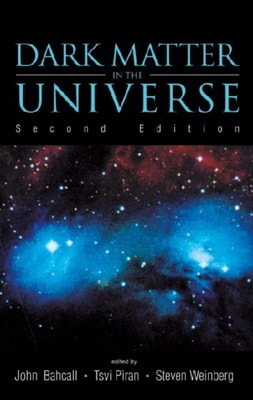
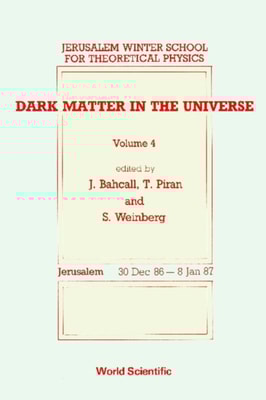
If standard gravitational theory is correct, then most of the matter in the universe is in an unidentified form which does not emit enough light to have been detected by current instrumentation.
The huge amount of data obtained by surveys in all wavebands, from radio to X-rays, has allowed major progress in the understanding of Active Galactic Nuclei and of their cosmic evolution.
Over the last decade the physics of black holes has been revolutionized by developments that grew out of Jacob Bekenstein's realization that black holes have entropy.
Space observations are currently providing a glimpse of various new states of matter possibly present in compact stars, with terrestrial laboratories producing compelling evidence in support.
Efforts to uncover the explosion mechanism of core collapse supernovae and to understand all of their associated phenomena have been ongoing for nearly four decades.
The prestigious Identification of Dark Matter workshop series was initiated to assess the status of work that attempts to identify the constitution of dark matter.
This book is an exposition of classical mechanics and relativity that addresses the question of whether it is possible to send probes to extrasolar systems.
Advances in Geosciences is the result of a concerted effort in bringing the latest results and planning activities related to earth and space science in Asia and the international arena.
This volume is the latest in a prominent biannual series of scientific meetings on the exciting research topics of dark matter and, more recently, of dark energy.
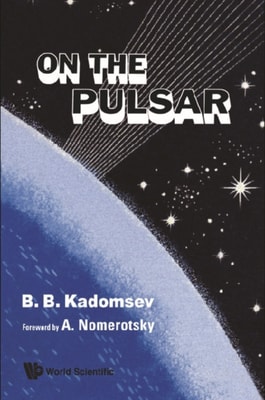
This book serves as a good introduction to the physics of pulsars by explaining the subject matter in simple terms which are understandable to both undergraduate physics students and also the general public.
Supernovae are highly energetic phenomena for which it is necessary to use simultaneously particle physics, nuclear physics and hydrodynamics to study the creation of the strong explosions involved.
If standard gravitational theory is correct, then most of the matter in the universe is in an unidentified form which does not emit enough light to have been detected by current instrumentation.
This book presents in a simple style the success story of modern astrophysics - how the application of known physics to models of stars can, together with the observational data, help us understand what stars are made of, how they live and how they die.
La danza del tiempo es un álbum lleno de imaginación y también de información, que resultará útil para padres y profesores que quieran adentrarse con los niños en un viaje diferente a través del sistema solar.
Fronteras del universo esta conformada por nueve ensayos que constituyen una introduccion general al estudio del universo y los fenomenos que en el ocurren.