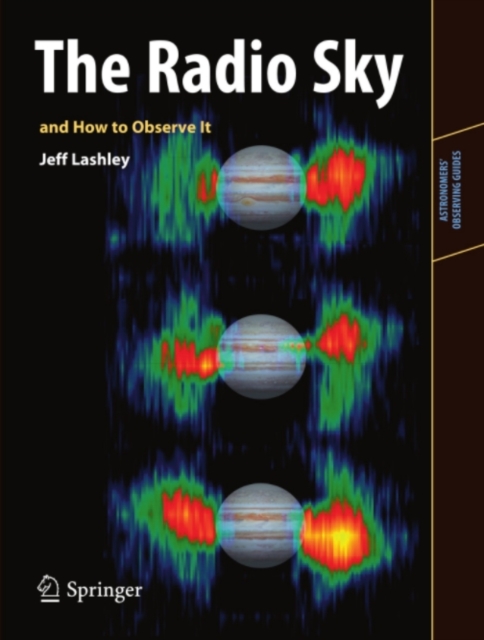
Radio astronomy is far from being beyond the scope of amateurs astronomers, and this practical, self-contained guide for the newcomer to practical radio astronomey is an ideal introduction.
A Spectroscopic Atlas of the Stars: A Pocket Field Guide is a standard reference book for all amateur astronomers interested in practical spectroscopy or spectrography.
Of all the many things we can look at in the night sky, the Moon is one of the richest in its ever-changing detail, as changes in light and shadow daily transform what you can see of every feature.
Any amateur astronomer who is interested in astrophotography, particularly if just getting started, needs to know what objects are best for imaging in each month of the year.
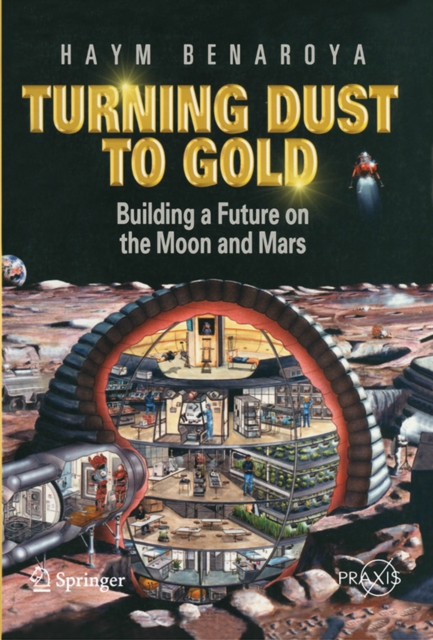
In the last thirty years humans have probed the Universe, explored the Solar System and visited with spacecraft some of the most incredible places humans have ever laid eyes upon.
Knowledge about the outer heliosphere and the interstellar medium, which were long treated as two separate fields, has improved dramatically over the past 25 years as a consequence of recent developments: The discovery of interstellar pickup ions and neutral helium inside the heliosphere, the determination of the interstellar hydrogen distribution in the heliosphere obtained using backscattered solar Lyman-alpha radiation, the prediction and subsequent detection of the hydrogen wall just outside of the heliopause, the development of detailed global models for the interaction of solar wind plasma with the interstellar medium, and most recently, direct in-situ plasma and field measurements inside of the heliosheath.
An exploration of mankind''s fascination with worlds beyond our own-by the bestselling author of The Physics of Star Trek
Lawrence Krauss -an international leader in physics and cosmology-examines our long and ardent romance with parallel universes, veiled dimensions, and regions of being that may extend tantalizingly beyond the limits of our perception.
Planetary atmospheres is a relatively new, interdisciplinary subject that incorporates various areas of the physical and chemical sciences, including geophysics, geophysical fluid dynamics, atmospheric science, astronomy, and astrophysics.
Bringing the material up to date, Black Holes, Wormholes and Time Machines, Second Edition captures the new ideas and discoveries made in physics since the publication of the best-selling first edition.
Offering practical advice on a range of wavelengths, this highly accessible and self-contained book presents a broad overview of astronomical instrumentation, techniques, and tools.
Advances in Machine Learning and Data Mining for Astronomy documents numerous successful collaborations among computer scientists, statisticians, and astronomers who illustrate the application of state-of-the-art machine learning and data mining techniques in astronomy.
Some 400 years after the first known patent application for a telescope by Hans Lipperhey, The Astronomy Revolution: 400 Years of Exploring the Cosmos surveys the effects of this instrument and explores the questions that have arisen out of scientific research in astronomy and cosmology.
Computer simulation of systems has become an important tool in scientific research and engineering design, including the simulation of systems through the motion of their constituent particles.
Carefully coordinated, reliable, and accurate time synchronization is vital to a wide spectrum of fields-from air and ground traffic control, to buying and selling goods and services, to TV network programming.
Reflecting a rich technical and interdisciplinary exchange of ideas, Water and Life: The Unique Properties of H20 focuses on the properties of water and its interaction with life.
The Ghost in the Telescope is an insider's account of the Herschel Space Observatory, which was launched to answer two of the biggest questions in astronomy: How were the stars and galaxies born?
One of the major philosophical texts of the 20th century, Process and Reality is based on Alfred North Whiteheads influential lectures that he delivered at the University of Edinburgh in the 1920s on process philosophy.
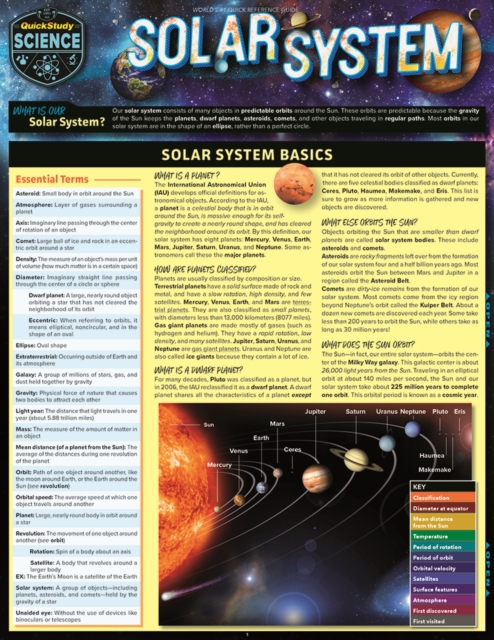
Ultimate quick reference guide for any earthlings questions about our solar system, whether a student, lover of all things space, or stargazing and night sky enthusiasts.
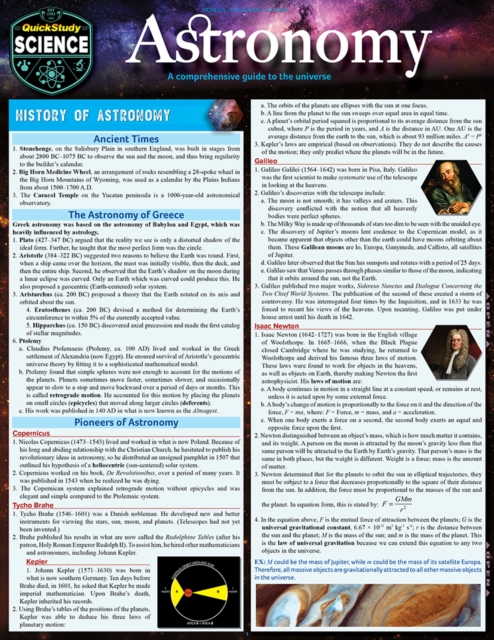
As a student, stargazer, or lover of our galaxy, space and the infinite, there is no resource for this price that in 6 pages can show you the universe this completely yet succinctly.
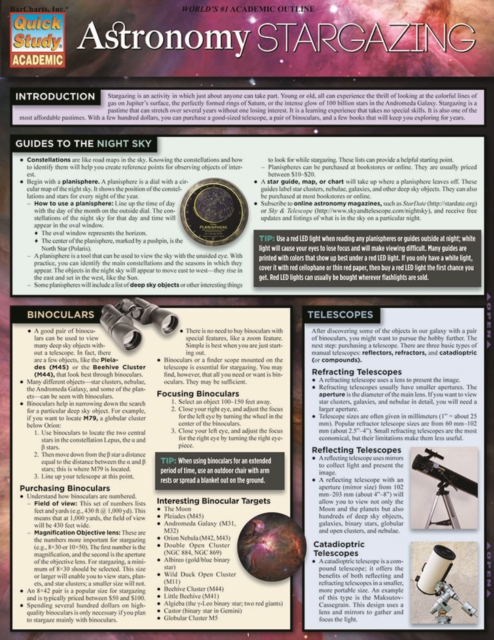
If you re a budding astronomer and need help in locating that one particular constellation or choosing the best telescope to use, this 6 page study guide is for you!
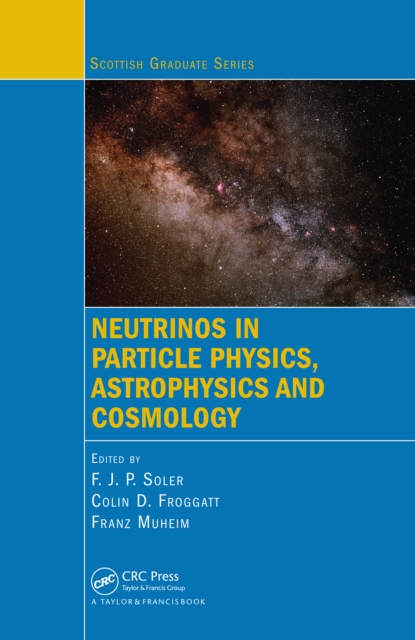
Up to date and comprehensive in its coverage, Neutrinos in Particle Physics, Astrophysics and Cosmology reviews the whole landscape of neutrino physics, from state-of-the-art experiments to the latest phenomenological and theoretical developments to future advances.
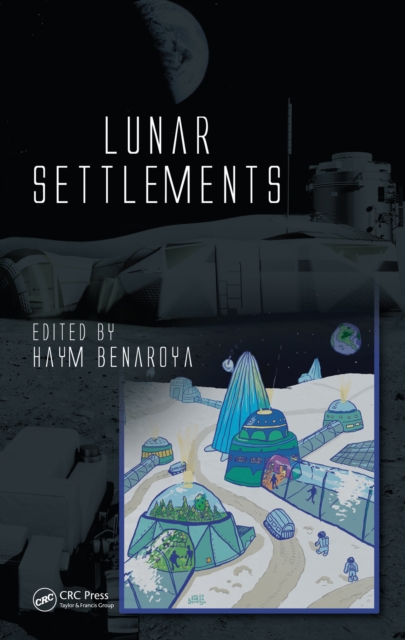
Bringing together some of the most recognized and influential researchers and scientists in various space-related disciplines, Lunar Settlements addresses the many issues that surround the permanent human return to the Moon.
Since the discovery of the first exoplanet orbiting a main sequence star in 1995, nearly 500 planets have been detected, with this number expected to increase dramatically as new ground-based planetary searches begin to report their results.
Long established as one of the premier references in the fields of astronomy, planetary science, and physics, the fourth edition of Orbital Motion continues to offer comprehensive coverage of the analytical methods of classical celestial mechanics while introducing the recent numerical experiments on the orbital evolution of gravitating masses and the astrodynamics of artificial satellites and interplanetary probes.
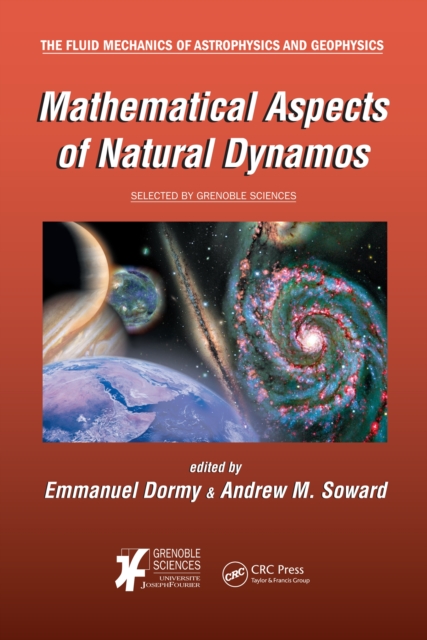
Although the origin of Earth's and other celestial bodies' magnetic fields remains unknown, we do know that the motion of electrically conducting fluids generates and maintains these fields, forming the basis of magnetohydrodynamics (MHD) and, to a larger extent, dynamo theory.
The Dictionary of Geophysics, Astrophysics, and Astronomy provides a lexicon of terminology covering fields such as astronomy, astrophysics, cosmology, relativity, geophysics, meteorology, Newtonian physics, and oceanography.
Seeking Ultimates: An Intuitive Guide to Physics, Second Edition takes us on a journey that explores the limits of our scientific knowledge, emphasizing the gaps that are left.
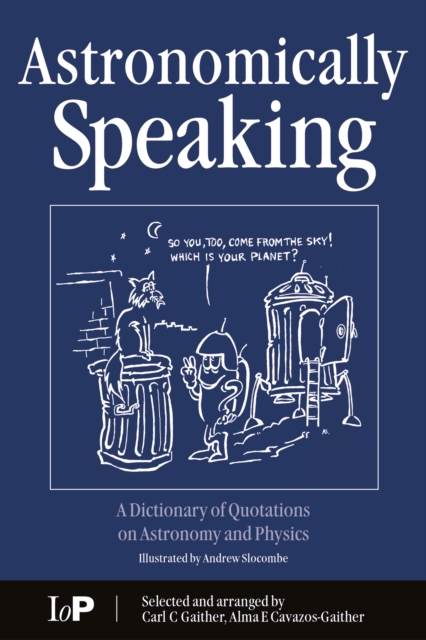
To understand the history, accomplishments, failures, and meanings of astronomy requires a knowledge of what has been said about astronomy by philosophers, novelists, playwrights, poets, scientists, and laymen.
An entertaining, instructive, diverse, and unusual book, Light and Dark: An Exploration in Science, Nature, Art and Technology encompasses a wide range of topics not normally found in one book.
Solar-terrestrial physics deals with phenomena in the region of space between the surface of the Sun and the upper atmosphere of the Earth, a region dominated by matter in a plasma state.