Many books today simply widen the field of astrology by promoting newly created techniques or championing older historical methods for investigating every possible nook and cranny of a horoscope.
Intelligent information Retrieval comprehensively surveys scientific information retrieval, which is characterized by growing convergence of information expressed in varying complementary forms of data - textual, numerical, image, and graphics; by the fundamental transformation which the scientific library is currently being subjected to; and by computer networking which as become an essential element of the research fabric.
From the Nobel Prizewinning physicist, a personal meditation on the quest for objective reality in natural scienceA century ago, thoughtful people questioned how reality could agree with physical theories that kept changing, from a mechanical model of the ether to electric and magnetic fields, and from homogeneous matter to electrons and atoms.
Stephen Hawking described it as 'the discovery of the century, if not of all time', yet the scientists who first detected the cosmic radiation that was identified as the afterglow of the big bang had to admit that it was more by accident than intention.
How all philosophical explanations of human consciousness and the fundamental structure of the cosmos are bizarreand why that's a good thingDo we live inside a simulated reality or a pocket universe embedded in a larger structure about which we know virtually nothing?
How all philosophical explanations of human consciousness and the fundamental structure of the cosmos are bizarreand why that's a good thingDo we live inside a simulated reality or a pocket universe embedded in a larger structure about which we know virtually nothing?
Big History is a new field on a grand scale: it tells the story of the universe over time through a diverse range of disciplines that spans cosmology, physics, chemistry, astronomy, geology, evolutionary biology, anthropology, and archaeology, thereby reconciling traditional human history with environmental geography and natural history.
The dark universe contains matter and energy unidentifiable with current physical models, accounting for 95% of all the matter and energetic equivalent in the universe.
The official record of America's first space station, this thorough and highly readable book from the NASA History Series chronicles the Skylab program from its planning during the 1960s through its 1973 launch and its conclusion in 1979.
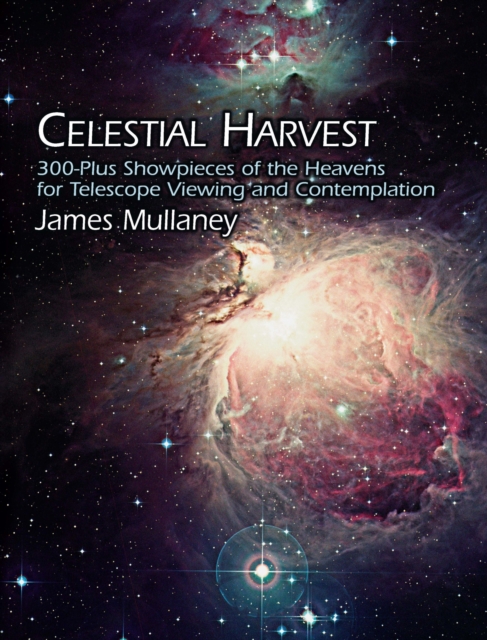
Discover more than 300 of the finest celestial wonders that can be viewed with common "e;backyard"e; telescopes, many of which are visible to the naked eye on dark, clear nights.
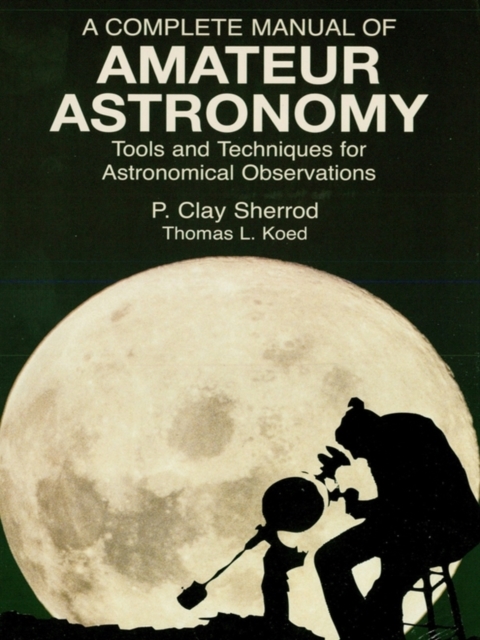
Concise, highly readable book discusses the selection, set-up, and maintenance of a telescope; amateur studies of the sun; lunar topography and occultations; and more.
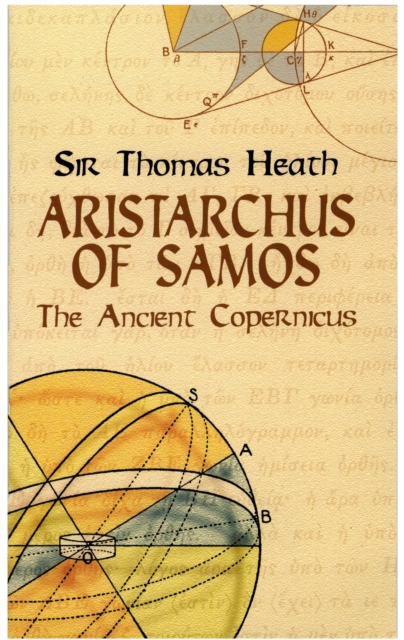
Masterly and authoritative, this book by the foremost scholar on the 16th-century astronomer provides lucid accounts of the development and progress of the Copernican theory as well as a fascinating portrait of the man who clarified the basis for modern cosmology.
From the ruins of Greek and Roman temples to Mexico's Pyramid of the Sun and the enduring mysteries of Stonehenge, this captivating study circles the earth in its examination of the legends, traditions, and superstitions that all cultures have woven about the sun.
An unrivaled text in the field of celestial mechanics, Moulton's theoretical work on the prediction and interpretation of celestial phenomena has not been superseded.
Radiometric Tracking Techniques for Deep-Space Navigation focuses on a broad array of technologies and concepts developed over the last four decades to support radio navigation on interplanetary spacecraft.
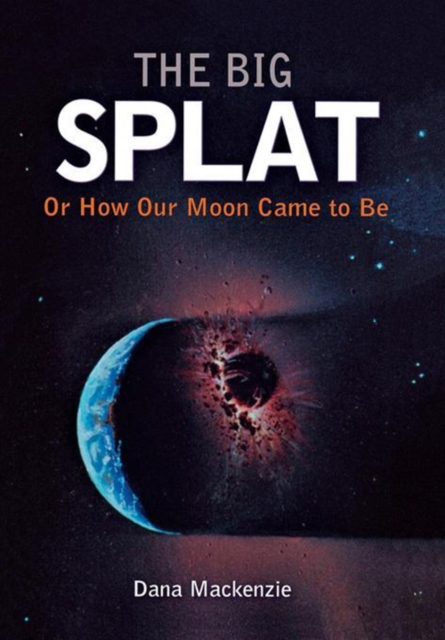
The first popular book to explain the dramatic theory behind the Moon's genesisThis lively science history relates one of the great recent breakthroughs in planetary astronomy-a successful theory of the birth of the Moon.
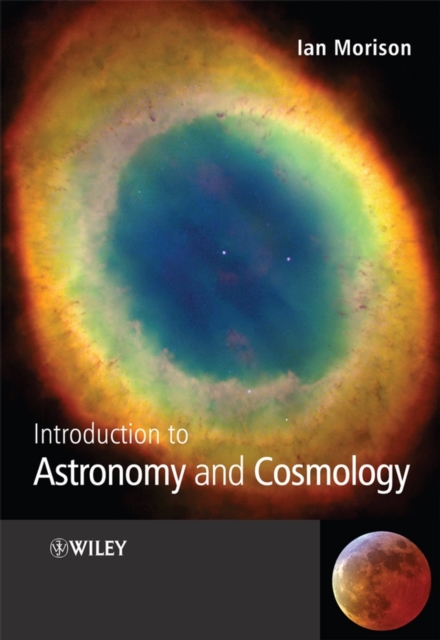
Introduction to Astronomy & Cosmology is a modern undergraduate textbook, combining both the theory behind astronomy with the very latest developments.
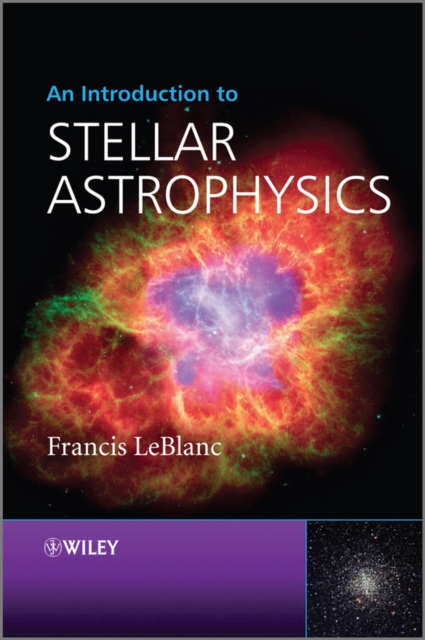
An Introduction to Stellar Astrophysics aspires to provide the reader with an intermediate knowledge on stars whilst focusing mostly on the explanation of the functioning of stars by using basic physical concepts and observational results.
In support of Pluto-the cutest and most unfairly treated planet Pity poor Pluto: It's a planet that was discovered because of a mistake, a planet that turned out not to be a planet at all, thanks to a still-disputed decision made in 2006.
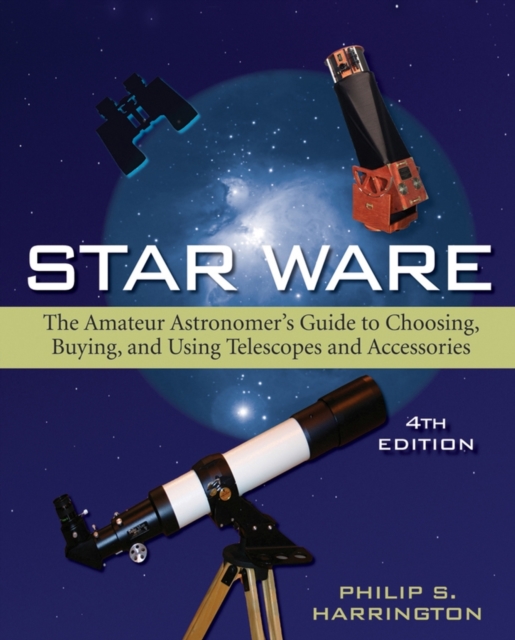
Praise for Star Ware "e;Star Ware is still a tour de force that any experienced amateur will find invaluable, and which hardware-minded beginners will thoroughly enjoy.
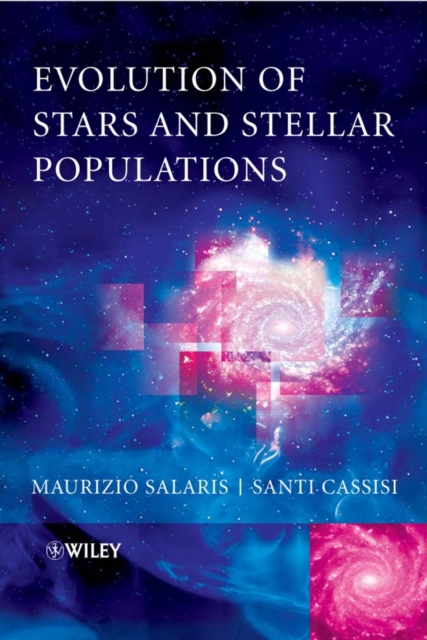
Evolution of Stars and Stellar Populations is a comprehensive presentation of the theory of stellar evolution and its application to the study of stellar populations in galaxies.
It has always been assumed that an Electric field shines from out the charge of an Electron, that Electrons are thus creating the Electric field, when in fact it is the other way around, it is a Universal field that is projecting Electrons.
The Feynman Lectures on Gravitation are based on notes prepared during a course on gravitational physics that Richard Feynman taught at Caltech during the 1962-63 academic year.
A variety of evolutionary sequences of models for the solar interior has been computed, corresponding to variations in input data, to obtain some idea of the uncertainties involved in predicting a solar neutrino flux.