After decades of painstaking planning, NASA's first dedicated exoplanet detection mission, the Kepler space telescope, was launched in 2009 from Cape Canaveral.
The discovery of life on other planets would be perhaps the most momentous revelation in human history, more disorienting and more profound than either the Copernican or Darwinian revolutions, which knocked the earth from the center of the universe and humankind from its position of lofty self-regard.
Most scientists now agree that some sixty-five million years ago, an immense comet slammed into the Yucatan, detonating a blast twenty million times more powerful than the largest hydrogen bomb, punching a hole ten miles deep in the earth.
Eminent Harvard astrophysicist David Layzer offers readers a unified theory of natural order and its origins, from the permanence, stability, and orderliness of sub-atomic particles to the evolution of the human mind.
In Search of a Theory of Everything takes readers on an adventurous journey through space and time on a quest for a unified "e;theory of everything"e; by means of a rare and agile interplay between the natural philosophies of influential ancient Greek thinkers and the laws of modern physics.
In Search of a Theory of Everything takes readers on an adventurous journey through space and time on a quest for a unified "e;theory of everything"e; by means of a rare and agile interplay between the natural philosophies of influential ancient Greek thinkers and the laws of modern physics.
An awe-inspiring, unforgettable journey of scientific exploration from Brian Cox and Jeff Forshaw, the top ten bestselling authors of The Quantum Universe.
In Time Reborn, Lee Smolin, one of our foremost physicists and thinkers offers a radical new view of the nature of time and the cosmosNothing seems more real than time passing.
In The Universe Within, Neil Shubin, one of the world's leading experts, reveals to us the extraordinary cosmic and evolutionary adventure of our own bodies.
Arthur Koestler's extraordinary history of humanity's changing vision of the universeIn this masterly synthesis, Arthur Koestler cuts through the sterile distinction between 'sciences' and 'humanities' to bring to life the whole history of cosmology from the Babylonians to Newton.
The Dynamics of Natural Satellites of the Planets is an accessible reference for understanding the celestial mechanics of planetary moons through the lens of both theory and observation.
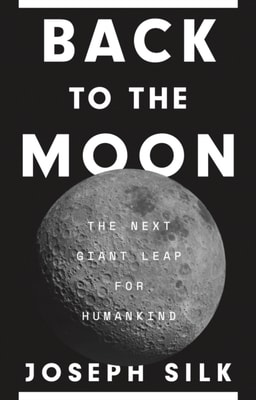
A scientist's inspiring vision of our return to the Moon as humanity's next thrilling step in space explorationJust over half a century since Neil Armstrong first stepped foot on the lunar surface, a new space race to the Moon is well underway and rapidly gaining momentum.
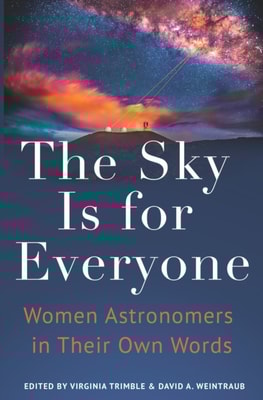
An inspiring anthology of writings by trailblazing women astronomers from around the globeThe Sky Is for Everyone is an internationally diverse collection of autobiographical essays by women who broke down barriers and changed the face of modern astronomy.
Mars Geological Enigmas: From the Late Noachian Epoch to the Present Day presents outstanding questions on the geology of Mars and divergent viewpoints based on varying interpretations and analyses.
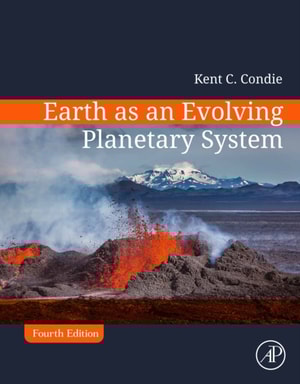
Earth as an Evolving Planetary System, Fourth Edition discusses key topics dealing with the evolution and interaction through time of Earth's crust, mantle, core, atmosphere, hydrosphere, and biosphere.
Ultraviolet Astronomy and the Quest for the Origin of Life addresses the use of astronomical observations in the ultraviolet range to better understand the generation of complex, life-precursor molecules.
Knowledge Discovery in Big Data from Astronomy and Earth Observation: Astrogeoinformatics bridges the gap between astronomy and geoscience in the context of applications, techniques and key principles of big data.
Big Data in Radio Astronomy: Scientific Data Processing for Advanced Radio Telescopes provides the latest research developments in big data methods and techniques for radio astronomy.
Heat Transport and Energetics of the Earth and Rocky Planets provides a better understanding of the interior of the Earth by addressing the processes related to the motion of heat in large bodies.
Space Science and Public Engagement: 21st Century Perspectives and Opportunities critically examines the many dimensions of public engagement with space science by exploring case studies that show a spectrum of public engagement formats, ranging from the space science community's efforts to communicate developments to the public, to citizenry attempting to engage with space science issues.
In six short years, Galileo Galilei went from being a somewhat obscure mathematics professor running a student boarding house in Padua to a star in the court of Florence to the recipient of dangerous attention from the Inquisition for his support of Copernicanism.
The uses of time in astronomy - from pointing telescopes, coordinating and processing observations, predicting ephemerides, cultures, religious practices, history, businesses, determining Earth orientation, analyzing time-series data and in many other ways - represent a broad sample of how time is used throughout human society and in space.