This book presents the first detailed scientific examination of Alessandro Piccolomini's two early astronomical works - De la Sfera del Mondo and De le Stelle Fisse.
This book presents the first detailed scientific examination of Alessandro Piccolomini's two early astronomical works - De la Sfera del Mondo and De le Stelle Fisse.
This textbook provides an accessible introduction to the basic concepts of relativistic cosmology and the standard big bang model of cosmology, along with an introduction to quantum field theory and the standard model of particle physics.
Embark on an Intellectual Odyssey: Delve into the Mysteries of the UniversePrepare to journey through the enigmatic realms of theoretical physics with Quivers of Reality: A Journey Through M-Theory and Lie Algebras.
Embark on an Intellectual Odyssey: Delve into the Mysteries of the UniversePrepare to journey through the enigmatic realms of theoretical physics with Quivers of Reality: A Journey Through M-Theory and Lie Algebras.
Adaptive Optics (AO) is a technique allowing the manipulation of the wavefront of the light benefitting multiple fields like Microscopy, Optical Coherence Tomography, Visual Testing, Optical Communications, and Astronomical Optics, just to mention some examples.
Although lunar exploration began in the 1960s, the moon and other planets have many long-standing, unanswered questions about planetary environments, origin, formation and evolution, magnetization of crustal rocks, internal structure, and possible life.
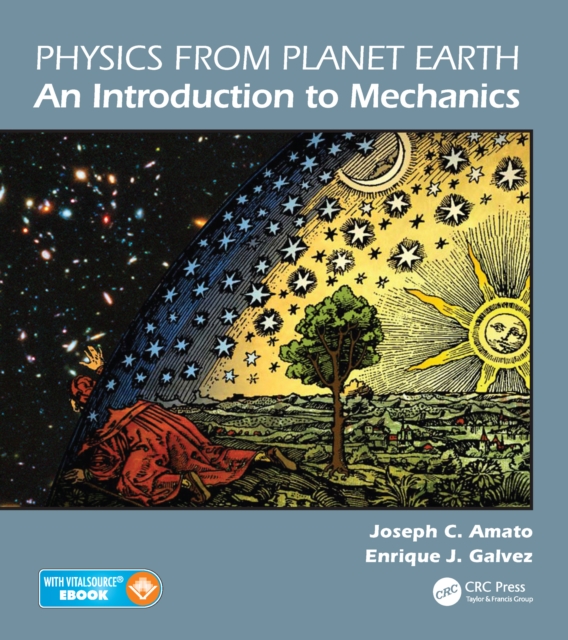
Expose Your Students to the Elegant World of Physics in an Enticing WayPhysics from Planet Earth - An Introduction to Mechanics provides a one-semester, calculus-based introduction to classical mechanics for first-year undergraduate students studying physics, chemistry, astronomy, or engineering.
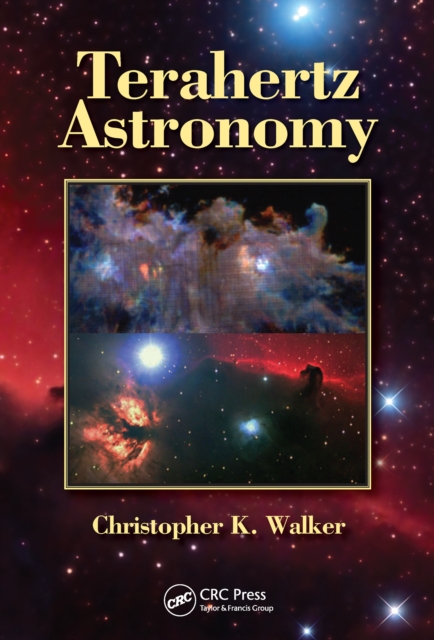
A Powerful Window into Cosmic EvolutionTerahertz (THz) observations of interstellar atoms, molecules, and dust serve as powerful probes of the conditions within the interstellar medium that permeates our galaxy, providing insights into the origins of stars, planets, galaxies, and the Universe.
This volume provides a wide-ranging introduction to Kepler's work, with essays on his religion, his cosmological theories, his work in astronomy, astrology, optics and mathematics and his interactions with Tycho Brahe and Galileo Galilei.
This volume provides a wide-ranging introduction to Kepler's work, with essays on his religion, his cosmological theories, his work in astronomy, astrology, optics and mathematics and his interactions with Tycho Brahe and Galileo Galilei.
Der Mond ist ein faszinierendes Himmelsobjekt, das nicht nur in der Mythologie und Kultur der Menschheit eine wichtige Rolle spielt, sondern auch einen wesentlichen Einfluss auf unser tägliches Leben hat.
The Correspondence of John Flamsteed: The First Astronomer Royal, Volume Two contains the letters Flamsteed wrote and received from June 1682 to the spring of 1703.
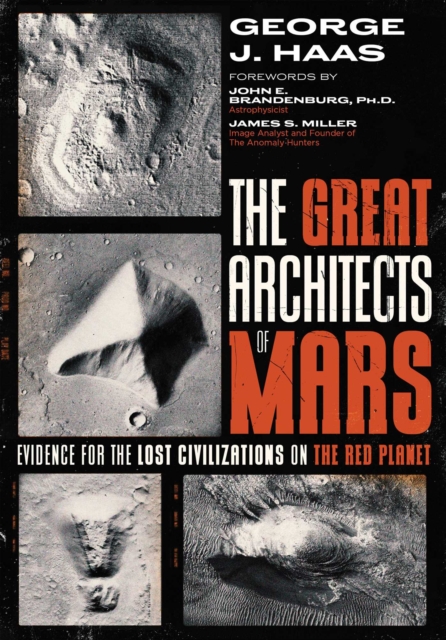
Explores a wide variety of anomalous structures on Marss surface that display a high degree of geometric and pictographic design Examines sites such as the Elysium pyramid famously described by Carl Sagan and city complexes in the Nepenthes Mensae and Atlantis Chaos regions Argues that Mayan creation stories of a Star War and Sumerian myths of the Anunnaki provide ancient evidence for the existence of a Martian cultureExploring evidence of a lost Martian civilization and its contact with Earth, investigator George Haas examines a wide variety of anomalous structures and geoglyphs on Marss surface that display a high degree of geometric and symbolic design that reveal an ancient bond between Earth and Mars.