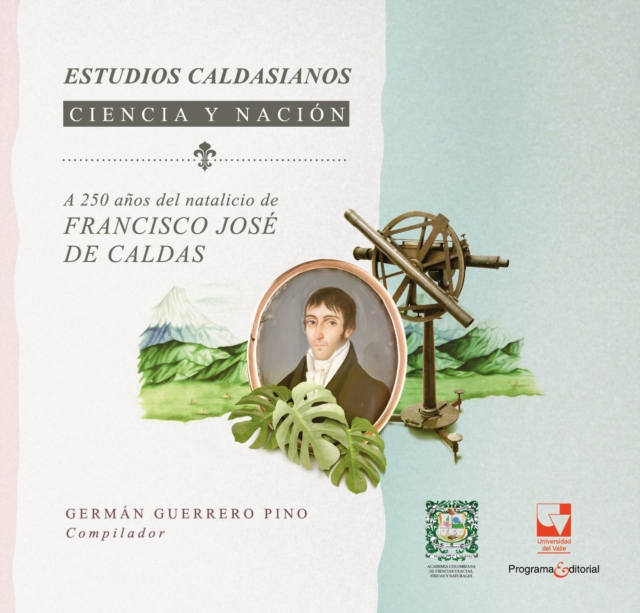
El interés de Caldas en la naturaleza se complementó con un profundo compromiso con su territorio y un sincero deseo de contribuir con el bien común y la difusión del conocimiento científico como una herramienta para el progreso y el desarrollo.
Este libro constituye en su mayoría las notas de parte de los cursos de Astronomía General I, Mecánica Celeste e introducción a la Cohetería y Astronáutica que el autor ha dictado en el Observatorio Astronómico Nacional.
Durante el 2009 se celebró el Año Internacional de la Astronomía, promulgado por la UNESCO con motivo de los 400 años del empleo del telescopio en la observación del firmamento y sus astros, dando inicio a la astronomía moderna.
La era espacial inició a mediados del siglo XX, cuando la ahora extinta Unión Soviética lanzó el Sputnik 1 el 4 de octubre de 1957, el cual se convirtió en el primer satélite artificial de la historia.
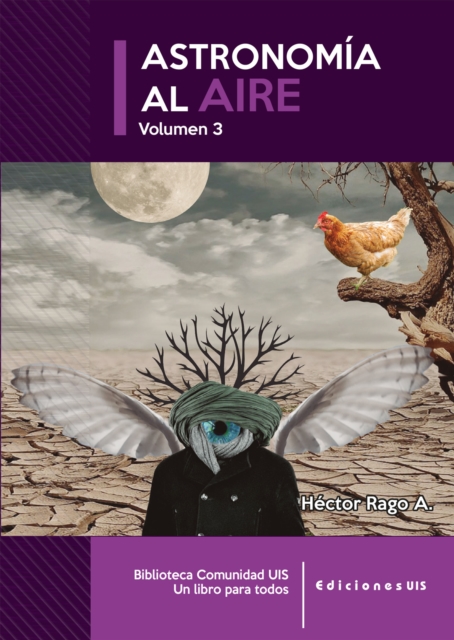
Esta serie de entregas de Astronomía de Bolsillo, incluida en la Colección Biblioteca Comunidad UIS: Un libro para todos, es una iniciativa de la Escuela de Física de la Universidad Industrial de Santander para divulgar la Astronomía y la Astrofísica como complemento impreso al proyecto de convergencia de medios (microprogramas radiales, blog y microblog) transmitidos diariamente por las emisoras UIS y retransmitidos a través de varias emisoras asociadas con la Red de Radios Universitarias de Latinoamérica y el Caribe, RRULAC.
Esta serie de entregas de Astronomía de Bolsillo, incluida en la Colección Biblioteca Comunidad UIS: Un libro para todos, es una iniciativa de la Escuela de Física de la Universidad Industrial de Santander para divulgar la Astronomía y la Astrofísica como complemento impreso al proyecto de convergencia de medios (microprogramas radiales, blog y microblog) transmitidos diariamente por las emisoras UIS retransmitidos a través de varias emisoras asociadas con la Red de Radios Universitarias de Latinoamérica y el Caribe, RRULAC.
The purpose of this book is to illustrate the fundamental concepts of complexity and complex behavior and the best methods to characterize this behavior by means of their applications to some current research topics from within the fields of fusion, earth and solar plasmas.
A decade after the confirmation of the Kuiper Belt's existence, 80 of the world's experts gathered in Chile to review what has been learned since 1992.
The workshop on The Cosmology of Extra Dimensions and Varying Fundamental Constants, which was part of JENAM 2002, was held at the Physics Department of the University of Porto (FCUP) from the 3rd to the 5th of September 2002.
Our knowledge of the heliosphere in three dimensions near solar minimum has advanced significantly in the last 10 years, largely as a result of the on-going ESAINASA Ulysses mission.
Recent advances in our understanding of instabilities in galactic type systems have led to an unravelling of some of the mysteries of what determines the form galaxies take.
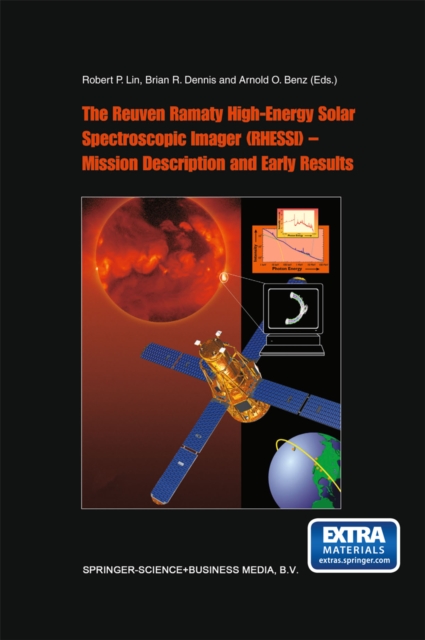
Over the last decade we entered a new exploration phase of solar flare physics, equipped with powerful spacecraft such as Yohkoh, SoHO, and TRACE that pro- vide us detail-rich and high-resolution images of solar flares in soft X-rays, hard X -rays, and extreme-ultraviolet wavelengths.
PERTH Western Australia March 2000 Increasingly explorationists are seeking to find new ore deposits in poorly prospected areas, be they geographically remote, such as in the Arctic, or geologically remote, such as those under sedimentary cover.
It is now a well-established tradition that every four years, at the end of winter, a group of 'celestial mechanicians' from all over the world gather in the Austrian Alps at the invitation of R.
This book is a historical-epistemological study of one of the most consequential breakthroughs in the history of celestial mechanics: Robert Hooke's (1635-1703) proposal to "e;compoun[d] the celestial motions of the planets of a direct motion by the tangent & an attractive motion towards a centrat body"e; (Newton, The Correspondence li, 297.
This volume, the fourteenth in the Space Sciences Series of ISS/, is dedicated to the matter in the universe, which was the topic of a workshop organized by ISSI from 19 to 22 March 2001 in Bern.
This volume contains papers presented at the US/European Celestial Mecha- nics Workshop organized by the Astronomical Observatory of Adam Mickiewicz University in Poznan, Poland and held in Poznan, from 3 to 7 July 2000.
In every scientific discipline there are milestones - periods of significant accom- plishment when it is appropriate to pause and summarize the state of the field.
The year 1998 marked the 50th anniversary of the invention of the neutron monitor, a key research tool in the field of space physics and solar-terrestrial relations.
Mars is about one-eighth the mass of the Earth and it may provide an analogue of what the Earth was like when it was at such an early stage of accretion.
This volume contains papers presented at an international conference to celebrate Fred Hoyle's monumental contributions to astronomy, astrophysics and astrobiology and more generally to humanity and culture.
We present certain empirico-statistical methods for the analysis of narrative and nu- merical data extracted from different texts of historical character such as chronicles or annals.
The last decade of this century has seen a renewed interest in the dynamics and physics of the small bodies of the Solar System, Asteroids, Comets and Meteors.