This book provides a detailed examination of the concentration, form and cycling of trace metals and metalloids through the aquatic biosphere, and has sections dealing with the atmosphere, the ocean, lakes and rivers.
This book provides a detailed examination of the concentration, form and cycling of trace metals and metalloids through the aquatic biosphere, and has sections dealing with the atmosphere, the ocean, lakes and rivers.
The plant hormone ethylene is one of the most important, being one of the first chemicals to be determined as a naturally-occurring growth regulator and influencer of plant development.
The plant hormone ethylene is one of the most important, being one of the first chemicals to be determined as a naturally-occurring growth regulator and influencer of plant development.
A Textbook of Modern Toxicology is a unique resource that provides both students and practitioners with a wide-ranging, accessible overview of the discipline.
Sheds new light on intrinsically disordered proteins and peptides, including their role in neurodegenerative diseases With the discovery of intrinsically disordered proteins and peptides (IDPs), researchers realized that proteins do not necessarily adopt a well defined secondary and tertiary structure in order to perform biological functions.
Sheds new light on intrinsically disordered proteins and peptides, including their role in neurodegenerative diseases With the discovery of intrinsically disordered proteins and peptides (IDPs), researchers realized that proteins do not necessarily adopt a well defined secondary and tertiary structure in order to perform biological functions.
Examines effects of the environmental distribution of antimicrobial resistance genes on human health and the ecosystem Resistance genes are everywhere in nature in pathogens, commensals, and environmental microorganisms.
Examines effects of the environmental distribution of antimicrobial resistance genes on human health and the ecosystem Resistance genes are everywhere in nature in pathogens, commensals, and environmental microorganisms.
This book provides the fundamentals, recent developments, and future research needs for critical mercury transformation and transport processes, as well as the experimental methods that have been employed in recent studies.
This book provides the fundamentals, recent developments, and future research needs for critical mercury transformation and transport processes, as well as the experimental methods that have been employed in recent studies.
This book provides up-to-date information on experimental and computational characterization of the structural and functional properties of viral proteins, which are widely involved in regulatory and signaling processes.
This book provides up-to-date information on experimental and computational characterization of the structural and functional properties of viral proteins, which are widely involved in regulatory and signaling processes.
The first and only book devoted entirely to MEMBRANE LIPID ASYMMETRY AND ITS BIOLOGICAL IMPLICATIONS Transmembrane Dynamics of Lipids is comprised of contributions from expert authors from leading research groups that present up-to-date quantitative data on the formation, stability, and biological consequences of the asymmetrical organization of lipids in cell membranes.
The first and only book devoted entirely to MEMBRANE LIPID ASYMMETRY AND ITS BIOLOGICAL IMPLICATIONS Transmembrane Dynamics of Lipids is comprised of contributions from expert authors from leading research groups that present up-to-date quantitative data on the formation, stability, and biological consequences of the asymmetrical organization of lipids in cell membranes.
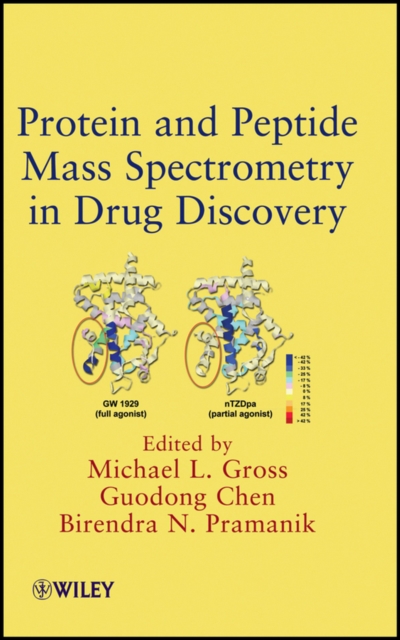
The book that highlights mass spectrometry and its application in characterizing proteins and peptides in drug discovery An instrumental analytical method for quantifying the mass and characterization of various samples from small molecules to large proteins, mass spectrometry (MS) has become one of the most widely used techniques for studying proteins and peptides over the last decade.
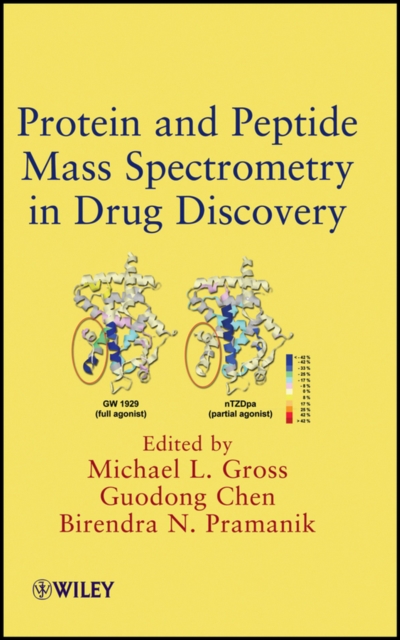
The book that highlights mass spectrometry and its application in characterizing proteins and peptides in drug discovery An instrumental analytical method for quantifying the mass and characterization of various samples from small molecules to large proteins, mass spectrometry (MS) has become one of the most widely used techniques for studying proteins and peptides over the last decade.
This book covers important advances in enzymology, explaining the behavior of enzymes and how they can be utilized to develop novel drugs, synthesize known and novel compounds, and understand evolutionary processes.
Complete, up-to-date coverage of the broad area of nucleic acid chemistry and biology Assembling contributions from a collection of authors with expertise in all areas of nucleic acids, medicinal chemistry, and therapeutic applications, Medicinal Chemistry of Nucleic Acids presents a thorough overview of nucleic acid chemistry a rapidly evolving and highly challenging discipline directly responsible for the development of antiviral and antitumor drugs.
Complete, up-to-date coverage of the broad area of nucleic acid chemistry and biology Assembling contributions from a collection of authors with expertise in all areas of nucleic acids, medicinal chemistry, and therapeutic applications, Medicinal Chemistry of Nucleic Acids presents a thorough overview of nucleic acid chemistry a rapidly evolving and highly challenging discipline directly responsible for the development of antiviral and antitumor drugs.
A look at the methods and algorithms used to predict protein structure A thorough knowledge of the function and structure of proteins is critical for the advancement of biology and the life sciences as well as the development of better drugs, higher-yield crops, and even synthetic bio-fuels.
The first book on the innovative study of biointerfaces using biophysical chemistry The biophysical phenomena that occur on biointerfaces, or biological surfaces, hold a prominent place in the study of biology and medicine, and are crucial for research relating to implants, biosensors, drug delivery, proteomics, and many other important areas.
A powerful framework for understanding how natural selection shapes adaptation and biological designDesign and diversity are the two great challenges in the study of life.
Biological Inorganic Chemistry: A New Introduction to Molecular Structure and Function, Second Edition, provides a comprehensive discussion of the biochemical aspects of metals in living systems.
An introduction to the physical principles of spectroscopy and their applications to the biological sciences Advances in such fields as proteomics and genomics place new demands on students and professionals to be able to apply quantitative concepts to the biological phenomena that they are studying.
Green Fluorescent Protein: Properties, Applications and Protocols, 2nd Edition Since the discovery of the gene for green fluorescent protein (GFP), derived from jellyfish, this protein that emits a green glow has initiated a revolution in molecular biosciences.
A multi-discipline, hands-on guide to microarray analysis of biological processes Analyzing Microarray Gene Expression Data provides a comprehensive review of available methodologies for the analysis of data derived from the latest DNA microarray technologies.
Thermodynamics of Biochemical Reactions emphasizes the fundamental equations of thermodynamics and the application of these equations to systems of biochemical reactions.
The first comprehensive and authoritative introductory work on biophotonics Biophotonics involves the use of photonics, the technology of generating and harnessing light and other radiant energy, for biological purposes.
A thorough, accessible guide for students of bioinorganic chemistry Bioinorganic chemical knowledge grows more interesting and more complex with each passing year.
Practical Enzyme Kinetics provides a practical how-to guide for beginning students, technicians, and non-specialists for evaluating enzyme kinetics using common software packages to perform easy enzymatic analyses.
How to design, execute, and interpret experiments for protein sequencing using mass spectrometry The rapid expansion of searchable protein and DNA databases in recent years has triggered an explosive growth in the application of mass spectrometry to protein sequencing.
Arsenic, antimony and bismuth, three related elements of group 15, are all found in trace quantities in nature and have interesting biological properties and uses.
Fermentation and the use of micro-organisms is one of the most important aspects of food processing, an industry worth billions of US dollars world-wide.
Arsenic, antimony and bismuth, three related elements of group 15, are all found in trace quantities in nature and have interesting biological properties and uses.