Radicals for Life: the Various Forms of Nitric Oxide provides an up-to-date overview of the role of nitrosocompounds and nitrosyl-iron complexes in physiology.
The critically acclaimed laboratory standard for more than forty years, Methods in Enzymology is one of the most highly respected publications in the field of biochemistry.
Protein Targeting, Transport, and Translocation presents an in-depth overview on the topic of protein synthesis, covering all areas of protein science, including protein targeting, secretion, folding, assembly, structure, localization, quality control, degradation, and antigen presentation.
Volume 43 of the Advances in Clinical Chemistry series contains review articles of wide interest to clinical laboratory scientists and diagnostic adventurers.
The ability of polypeptides to form alternatively folded, polymeric structures such as amyloids and related aggregates is being increasingly recognized as a major new frontier in protein research.
Protein NMR Spectroscopy, Second Edition combines a comprehensive theoretical treatment of NMR spectroscopy with an extensive exposition of the experimental techniques applicable to proteins and other biological macromolecules in solution.
Food Toxicants Analysis covers different aspects from the field of analytical food toxicology including emerging analytical techniques and applications to detect food allergens, genetically modified organisms, and novel ingredients (including those of functional foods).
Signal Processing for Neuroscientists introduces analysis techniques primarily aimed at neuroscientists and biomedical engineering students with a reasonable but modest background in mathematics, physics, and computer programming.
This volume emphasizes the intracellular consequences of DNA damage, describing procedures for analysis of checkpoint responses, DNA repair in vivo, replication fork encounter of DNA damage, as well as biological methods for analysis of mutation production and chromosome rearrangements.
Modern DNA microarray technologies have evolved over the past 25 years to the point where it is now possible to take many million measurements from a single experiment.
Volume forty-two in the internationally acclaimed Advances in Clinical Chemistry series, contains chapters submitted from leading experts from academia and clinical laboratory science.
The Ras superfamily (>150 human members) encompasses Ras GTPases involved in cell proliferation, Rho GTPases involved in regulating the cytoskeleton, Rab GTPases involved in membrane targeting/fusion and a group of GTPases including Sar1, Arf, Arl and dynamin involved in vesicle budding/fission.
DNA Repair, Part A provides detailed coverage of modern methods for molecular analysis of enzymes and enzyme systems that function in the maintenance of genome integrity.
Volume 41 in the internationally acclaimed Advances in Clinical Chemistry, contains chapters submitted from leading experts from academia and clinical laboratory science.
The concept of network as a mathematical description of a set of states, or events, linked according to a certain topology has been developed recently and has led to a novel approach of real world.
Volume thirty-nine in the internationally acclaimed Advances in Clinical Chemistry, contains chapters submitted from leading experts from academia and clinical laboratory science.
Joint endoprosthetics - the science of implanting artificial joints into the human body - has been around since the 1960's, and consistent advancements are leading to better practice, materials and mechanics.
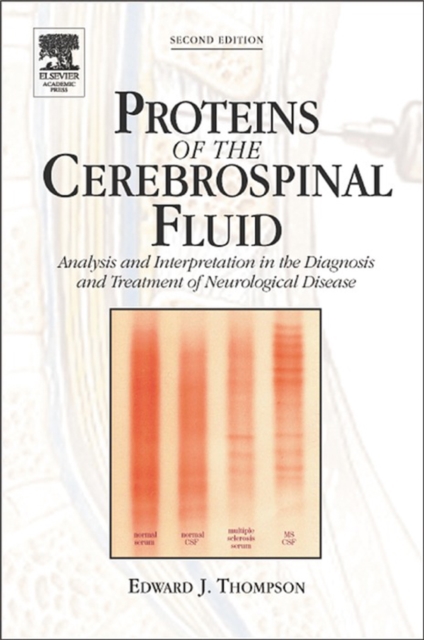
The analysis of the protein content of the Cerebrospinal Fluid (CSF) is a central tool in the diagnosis of a number of diseases, including Multiple Sclerosis and Encephalitis.
This book describes the major achievements and discoveries relevant to bacterial protein toxins since the turn of the new century illustrated by the discovery of more than fifty novel toxins (many of them identified through genome screening).
This manual is an indispensable tool for introducing advanced undergraduates and beginning graduate students to the techniques of recombinant DNA technology, or gene cloning and expression.
This updated edition is a comprehensive treatise that spans the complete range of basic biochemistry of bone and cartilage components to the clinical evaluation of disease markers in bone and joint disorders.