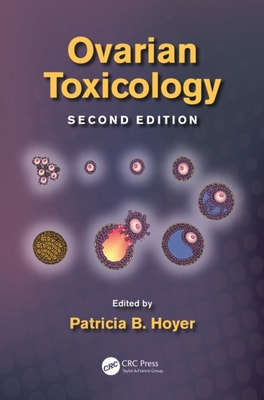
Today, we are exposed to an increasing number of chemicals in the environment and there is a growing awareness of the effects of these chemicals on the ovaries.
This volume gives up-to-date information on plasma lipid transport, the various categories of plasma lipid disorders and the relationship between plasma lipids, lipoproteins, and atherosclerotic disease.
Laccase and Polyphenol Oxidase: Biochemistry and Biotechnological Applications, a new volume in the Foundations and Frontiers in Enzymology series, provides a thorough discussion of the laccase and polyphenol oxidase enzyme families, which play a key role in the oxidation of phenolic substrates and an important biological function in many organisms.
Laccase and Polyphenol Oxidase: Biochemistry and Biotechnological Applications, a new volume in the Foundations and Frontiers in Enzymology series, provides a thorough discussion of the laccase and polyphenol oxidase enzyme families, which play a key role in the oxidation of phenolic substrates and an important biological function in many organisms.
The fractionation of human blood plasma can be considered to be a mature industry, with the basic technology, alcohol fractionation, dating back at least to the 1940s.
This book presents the role of nanoparticles in cancer therapy, emphasizing their innovative applications across treatment, diagnosis and the development of therapeutic strategies.
Carbon-Based Nanocomposite Applications and Microelectronic Technologies covers the fundamentals of carbon-based nanomaterials (CNMs) and their potential for technological and industrial applications.
Providing a comprehensive review of reactions of oxidation for different classes of organic compounds and polymers, and biological processes mediated by free radicals, Oxidation and Antioxidants in Organic Chemistry and Biology puts the data and bibliographical information you need into one easy-to-use resource.
Since the publication of the original edition in 1982, pesticide-related poisonings, both single cases and epidemic-scale situations, have continued to occur unabated.
Advances in Clinical Chemistry, Volume 122, the latest installment in this internationally acclaimed series, contains chapters authored by world-renowned clinical laboratory scientists, physicians, and research scientists.
Post-Translational Modifications of Proteins discusses several important topics of interest to researchers and students in protein chemistry and biochemistry, including the occurrence and function of hydroxylated residues and the three enzymes required for their formation; the damaging effects of reactions between sugars and proteins; ADP-riboosylation of proteins outside the nucleus; and Monod, Wyman, and Changeux's concerted model for allosteric control of enzyme activity exemplified by studies on glycogen phosphorylase.
Offering a new perspective on the hazards of pollution, Biological Effects of Surfactants examines the effects of anionic, non-ionic, cationic surfactants, and detergents on a wide range of organisms, populations, communities, and ecosystems.
This book provides the basic concepts of biotransformation and its applications in the fields of pharmaceutical and food industries, as well as in drug development.
This book discusses toxic Microcystis and the toxins from various viewpoints such as classification, cultivation, occurrences in lakes, and relations to zooplankton.
Advances in Clinical Chemistry, Volume 122, the latest installment in this internationally acclaimed series, contains chapters authored by world-renowned clinical laboratory scientists, physicians, and research scientists.
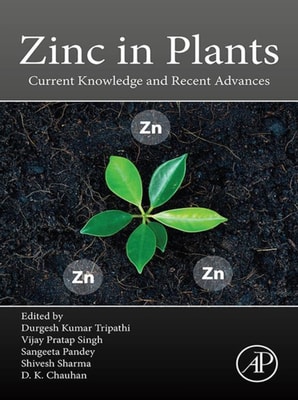
Zinc in Plants: Current Knowledge and Recent Advances addresses zinc hunger, the transport of zinc in the soil-plant interphase, zinc and abiotic stress in plants, and zinc and plant disease.
Molecular and Cellular Biology of the Vitamins is a key resource describing how vitamins function as physiologically active molecules at the cellular level.
Zinc in Plants: Current Knowledge and Recent Advances addresses zinc hunger, the transport of zinc in the soil-plant interphase, zinc and abiotic stress in plants, and zinc and plant disease.
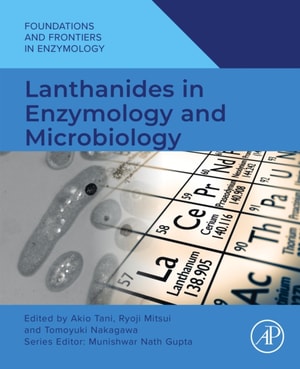
Lanthanides in Enzymology and Microbiology, a new volume in the Foundations and Frontiers in Enzymology Series, offers a detailed discussion of lanthanides and lanthanide-dependent enzyme biology.
The most talked about metalloid in the modern world, arsenic affects the liver, kidney, and lungs; leads to cardiovascular diseases, cancer, and diabetes; and may cause blindness with long-time exposure.
This book provides an in depth, yet understandable description of the ecological, socioeconomic, and other parts of the natural environment that may be affected.
Addressing the biology, husbandry, management, veterinary care and research applications of both large and miniature swine, this color resource is renowned as the laboratory reference on swine.
The Hidden World of Protein Aggregation, Volume 206 provides a comprehensive exploration of protein aggregation, uncovering the factors behind the formation of amorphous aggregates and ordered structures called amyloid fibrils.
The Hidden World of Protein Aggregation, Volume 206 provides a comprehensive exploration of protein aggregation, uncovering the factors behind the formation of amorphous aggregates and ordered structures called amyloid fibrils.