Introduction to Protein Mass Spectrometry, Second Edition provides a comprehensive overview of this increasingly important, yet complex, analytical technique.
With Wiley's Enhanced E-Text, you get all the benefits of a downloadable, reflowable eBook with added resources to make your study time more effective, including: * Embedded Student Solutions Manual* Problem Sets & Answers IncludedVoet, Voet and Pratt's Fundamentals of Biochemistry with Solutions Manual, Enhanced eText, 5th Edition addresses the enormous advances in biochemistry, particularly in the areas of structural biology and Bioinformatics, by providing a solid biochemical foundation that is rooted in chemistry to prepare students for the scientific challenges of the future.
This edited book is a comprehensive compilation of applications of plant molecular farming in various fields including agriculture, industry and medicine, using different plant/crop systems as bioreactors for the bulk production of products of interest.
This timely reference book discusses the biotechnological applications of microorganisms as a crucial solution for the sustainable management of different types of toxic pollutants.
Fluorine Metabolism, Transport and Enzymatic Chemistry, Volume 696 in the Methods in Enzymology series, highlights new advances in the field, with this new volume presenting interesting topics on Fluorine Metabolism, Transport, and Enzymatic Chemistry.
This volume details protocols ranging from high yield production metabolically labeled KRAS for NMR studies to approaches that quantify engagement of novel molecules that bind KRAS in live cells.
Antimicrobial Peptides, Volume 663 in the Methods in Enzymology series, highlights new advances in the field, with this new volume presenting interesting chapters on Unifying the classification of antimicrobial peptides in the Antimicrobial Peptide Database, Optimizing peptide library creation for PepSAVI-MS (RP libraries, etc.
This book offers a comprehensive and authoritative review of bioactive substances found in plant underground stems, roots, rhizomes, corms, and tubers from all around the world.
The term nutraceuticals is applied to the products isolated from the herbal sources, nutrients or dietary supplements, processed foods, (cereals, soup and beverages) and specific diets, that may also used as medicine other than nutrition.
Microbial Technology for Agro-Ecosystems: Crop Productivity, Sustainability, and Biofortification describes the application of competent microbes in plant growth promotion, nutrient management and recycling from molecular perspectives.
This book delves into the world of natural sources from medicinal plants, microbes, and fungi, to lichen, algae, and clay minerals that have been used for centuries in traditional medicine.
This book delves into the world of natural sources from medicinal plants, microbes, and fungi, to lichen, algae, and clay minerals that have been used for centuries in traditional medicine.
Carbon-Based Nanomaterials in Biosystems: Biophysical interface at Lower Dimensions provides a thoroughly comprehensive overview of all major aspects of carbon-based nanomaterials, their biophysical response, and biotechnological application.
The two Essential Molecular Biology books in the Practical Approach Series are designed for the absolute beginner at gene cloning whether they be at the start of their career or an experienced researcher in another field.
Cytogenetic Laboratory Management Cytogenetic Laboratory Management Chromosomal, FISH and Microarray-Based Best Practices and Procedures Cytogenetic Laboratory Management: Chromosomal, FISH and Microarray-Based Best Practices and Procedures is a practical guide that describes how to develop and implement best practice processes and procedures in the genetic laboratory setting.
Antimicrobial Peptides, Volume 663 in the Methods in Enzymology series, highlights new advances in the field, with this new volume presenting interesting chapters on Unifying the classification of antimicrobial peptides in the Antimicrobial Peptide Database, Optimizing peptide library creation for PepSAVI-MS (RP libraries, etc.
This volume details protocols ranging from high yield production metabolically labeled KRAS for NMR studies to approaches that quantify engagement of novel molecules that bind KRAS in live cells.
Molecular Biology and Clinical Medicine in the Age of Politicization, Volume 188 provides readers with an appreciation of the practical effects of the politicization of science on their work.
This timely reference book discusses the biotechnological applications of microorganisms as a crucial solution for the sustainable management of different types of toxic pollutants.
This comprehensive work illuminates the molecular foundations and applications of lipases, offering an understanding of their significance in human well-being as well as diseases.
Molecular Biology and Clinical Medicine in the Age of Politicization, Volume 188 provides readers with an appreciation of the practical effects of the politicization of science on their work.
Microbial Technology for Agro-Ecosystems: Crop Productivity, Sustainability, and Biofortification describes the application of competent microbes in plant growth promotion, nutrient management and recycling from molecular perspectives.
This textbook provides students with a more holistic, systems-based perspective of harmful algal blooms, or HABs and HAB toxins, while explaining details on occurrence, health effects, and treatment processes for the removal of HAB cells and toxins from drinking water.
This updated edition presents topical knowledge and technologies for the thermal, chemo- and enzymatic-catalytic conversion of biomass into chemicals, materials and fuels.
This book presents a comprehensive description of the basic concepts of soft matter mechanics and of the nano- and microscale biomedical methods that allow characterizing the mechanical properties of cells and tissues.
The role of metal ions in protein folding and structure is a critical topic to a range of scientists in numerous fields, particularly those working in structural biology and bioinorganic chemistry, those studying protein folding and disease, and those involved in the molecular and cellular aspects of metals in biological systems.
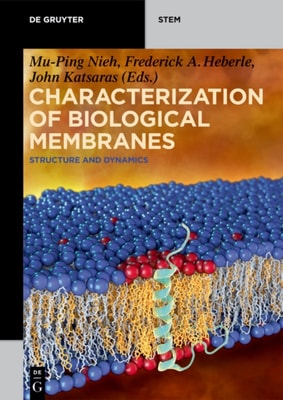
The study of membranes has become of high importance in the fields of biology, pharmaceutical chemistry and medicine, since much of what happens in a cell or in a virus involves biological membranes.
This updated edition presents topical knowledge and technologies for the thermal, chemo- and enzymatic-catalytic conversion of biomass into chemicals, materials and fuels.
The electrophoresis techniques are used in medicine, biochemistry, analytical chemistry, and biology to separate soluble and insoluble proteins, nucleic acids, chromosomes, viruses, as well as lysosomes, mitochondria, ribosomes and other cell organelles, red cells, tissue cells, and parasites.