Tantalizing Therapeutics in Bronchopulmonary Dysplasia is a concise reference that provides an overview of emerging concepts in the understanding of lung development and injury from a molecular and cellular point-of-view, including exciting pathways that are paving the way for new options to prevent or treat Bronchopulmonary Dysplasia (BPD).
Recent Trends in Computer-aided Diagnostic Systems for Skin Diseases: Theory, Implementation, and Analysis provides comprehensive coverage on the development of computer-aided diagnostic (CAD) systems employing image processing and machine learning tools for improved, uniform evaluation and diagnosis (avoiding subjective judgment) of skin disorders.
Microsomes, Drug Oxidations, and Chemical Carcinogenesis, Volume II, documents the proceedings of the 4th International Symposium on Microsomes and Drug Oxidations held in Ann Arbor, July 1979.
One of the only books discussing new advances in venous ulcer therapy, Venous Ulcers provides a comprehensive look at the molecular biology and pathophysiology of venous ulcers.
Museums--along with books, newspapers, and Wild West shows in the 19th century, movies and television in the 20th--have shaped our perceptions of American Indians.
A uniquely accessible way of looking at recent major advances in the science of embryonic development In the span of just three decades, scientific understanding of the formation of embryos has undergone a major revolution.
Starting in the late nineteenth century, scholars and activists all over the world suddenly began to insist that understandings of sex be based on science.
In this text, students are invited to rethink psychology by grounding it in the natural sciences with the understanding that evolutionary and developmental processes work together with culture to solve problems of human adaptation.
Advances in Physiological Sciences, Volume 32: Contributions to Thermal Physiology is a collection of papers that details the advances in the understanding of the thermal aspects of physiology.
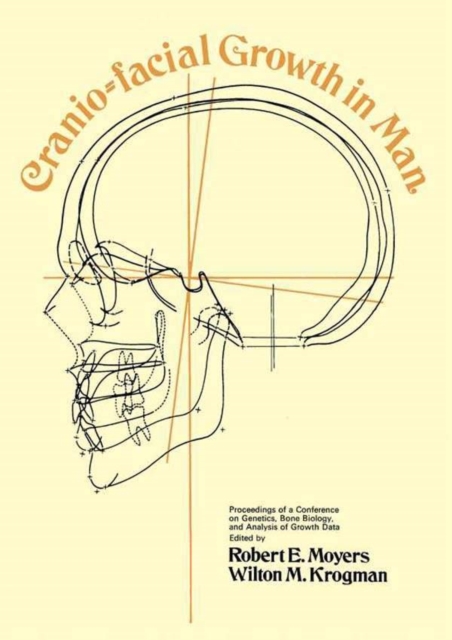
Cranio-Facial Growth in Man contains the proceedings of a Conference on Genetics, Bone Biology, and Analysis of Growth Data, held in Ann Arbor, Michigan on May 1-3, 1967.
Muscle Biology: The Life History of a Muscle looks at the story of a muscle from its embryonic beginnings, through its growth and ability to adapt to changing functional circumstances during adult life, to its eventual decline in both structure and function as old age progresses.
Techniques in the Behavioral and Neural Sciences, Volume 7: Microdialysis in the Neurosciences focuses on the neurochemical methods employed in behavioral and neural sciences.
Perspectives on Behavioral Medicine, Volume 2: Neuroendocrine Control and Behavior provides a selective overview of important recent developments in the neurosciences related to neuroendocrine control mechanisms which have important implications for major areas of interest in behavioral medicine.
Physiology of the Eye: An Introduction to the Vegetative Functions, Second Edition discusses the fundamental concept of the operating process of the visual system.
Recent Progress in Hormone Research, Volume 37 presents the proceedings of the 1980 Laurentian Hormone Conference held in Mont Tremblant Lodge on August 24-29, 1980.
International Review of Neurobiology, Supplement 1: Neurobiology of the Trace Metals Zinc and Copper represents a first report in the study of the neurobiology of zinc and copper.
Studies in Neurolinguistics, Volume 3 presents detailed case histories, multi-subject experimental studies, literature reviews, and research papers that employ a variety of experimental and observational techniques.
The Physiological Basis of Rehabilitation Medicine: Second Edition presents a comprehensive examination of the management of patients with functional impairments due to disease or trauma.
Human Growth Hormone is a compendium of papers that discusses all aspects of human growth hormone (HGH) relevant in the treatment of dwarfs who are HGH deficient.
Nervous System Theory: An Introductory Study focuses on the nervous system theory, stressing the means for understanding the nature of the biological system rather than the elaboration of mathematical theories.
Psychophysiology: Today and Tomorrow focuses on the most important theoretical aspects and practical outlets of the problem, as well as the main potentialities and interests of psychophysiology.
Advances in Physiological Sciences, Volume 25: Oxygen Transport to Tissue covers the proceedings of the satellite symposium of the 28th International Congress of Physiological Science, held in Budapest, Hungary in 1980.
Excitation and Inhibition: Synaptic Morphology proposes the S-F hypothesis that emphasizes the relationship between structure and function of synapses.
Advances in Physiological Sciences, Volume 11: Kidney and Body Fluids offers a thorough discussion of the experiments, research, and investigations done on the function, composition, and chemical reactions the kidney and body fluids undergo.
Advances in Physiological Sciences, Volume 10: Respiration focuses on the movements in respiratory research, including studies on the breathing process in humans; how respiratory muscles aid in respiration; and how various drugs affect breathing.
Hormones, Lipoproteins and Atherosclerosis, Volume 35, emerged from the international symposium on "e;"e;Hormones, Lipoproteins and Atherosclerosis"e;"e; held in Bratislava, Czechoslovakia.
The Endocrine Function of the Human Testis, Volume II, contains the papers that were given in the third and final part of the course of lectures on "e;The Endocrine Function of the Human Testis,"e; held in Florence, 17-19 April 1973.
Neuroanatomy for Medical Students, Second Edition provides a fundamental knowledge base that is essential to a proper understanding of the clinical neurosciences.
Multiple Choice Questions in Ophthalmic and Neuroanatomy was written from notes that made by the author while preparing for the College of Ophthalmologists' primary examination.
Advances in Metabolic Disorders, Volume 8: Somatomedins and Some Other Growth Factors covers the proceedings of the 28th Nobel Symposium held at Hasselby, Sweden on September 4-7, 1974.
International Series of Monographs in Cerebrovisceral and Behavioral Physiology and Conditioned Reflexes, Volume 3: Biology and Neurophysiology of the Conditioned Reflex and its Role in Adaptive Behavior focuses on the biological roots, characteristics, and nature of conditioned reflex and its function in adaptive behavior.
The Neuropsychology of Consciousness is based on a symposium entitled "e;Consciousness and Cognition: Neuropsychological Perspectives held at the University of St Andrews, September 1990.
Advances in Physiological Sciences, Volume 8: Cardiovascular Physiology: Heart, Peripheral Circulation and Methodology presents the proceedings of the 28th International Congress of Physiological Sciences, held in Budapest, Hungary, on July 13-19, 1980.
Recent Progress in Hormone Research, Volume 26 covers the proceedings of the 27th annual meeting of the Laurentian Hormone Conference held at Mont Tremblant, Quebec, Canada on August 24-29, 1969.
Microchemical Analysis of Nervous Tissue focuses on the use of microbiochemical methods in the analysis of nervous tissue, with emphasis on those related to the study of amines, amino acids, phospholipids, and proteins.