The perception that civilization is crossing a period of Global Climatic Changes that can seriously threaten our lifestyle, along with energy security and the search for prosperity, are the main drivers that are pushing men to use more biomass as a source of energy.
Petunia belongs to the family of the Solanaceae and as such is closely related to important crop species like tomato, potato, eggplant, pepper and tobacco.
The 5th International Symposium on the Molecular Breeding of Forage and Turf covers all aspects of molecular breeding of forage and turf plants, from gene discovery, functional genomics, molecular genetics and marker technology, marker-assisted selection, transgenesis to transgenic molecular breeding; address applications - among others - for enhanced quality, tolerance to biotic and abiotic stresses; relating to forage grasses, forage legumes, their bacterial and fungal endosymbionts, as well as turf grasses.
When one is privileged to participate long enough in a professional capacity, certain trends may be observed in the dynamics of how challenges are met or how problems are solved.
The Book of Genes & Genomes presents a concise overview of the advances in genetics and genomics and provides the unfamiliar reader with a succinct description of many of the applications and implications of this field.
A few members of the Gossypium (cotton) genus are cultivated for the production of elongated single-celled fibers valued worldwide at about $20 billion annually at the farm gate, and which sustain one of the world's largest industries (textiles) with an annual worldwide economic impact of about $500 billion.
Ethanol as an alternative fuel is receiving a lot of attention because it addresses concerns related to dwindling oil supplies, energy independence, and climate change.
Agrobacterium is a plant pathogen which causes the "e;crown-gall"e; disease, a neoplastic growth that results from the transfer of a well-defined DNA segment ("e;transferred DNA"e;, or "e;T-DNA"e;) from the bacterial Ti (tumor-inducing) plasmid to the host cell, its integration into the host genome, and the expression of oncogenes contained on the T-DNA.
Having spent most of my life in Academia teaching and carrying out fundam- tal research on plant form and function, I found this collection of essays to be of considerable interest as they expanded my knowledge of genomics to plants - yond the well-studied model systems of Arabidopsis, rice, and temperate maize.
Gene mapping is used in experimental genetics to improve the hardiness or productivity of animals or plants of agricultural value, to explore basic mechanisms of inheritance, or to study animal models of human inheritance.
Rice has been chosen as the model cereal for functional genomics by the international scientific community not only because it is a major global food crop but also because of its small genome, the ease with which it can be transformed, its well understood genetics with detailed genome physical maps and dense molecular markers, and the existence of great similarities in gene sequence, gene structure, gene order and gene function among all the cereals and grasses.
Neural Crest Induction and Differentiation, written by an international panel of recognized leaders in the field, discusses all aspects of modern neural crest biology from its evolutionary significance, to its specification, migration, plasticity and contribution to multiple lineages of the vertebrate body, to the pathologies associated with abnormal neural crest development and function.
For the past decade, there has been success in using conventional map-based strategies in identification and cloning of quantitative trait loci (QTL) in model plant species including tomato and Arabidopsis.
Power Laws, Scale-free Networks and Genome Biology deals with crucial aspects of the theoretical foundations of systems biology, namely power law distributions and scale-free networks which have emerged as the hallmarks of biological organization in the post-genomic era.
This volume provides an overview of the latency strategies developed during the estimated 200,000 year-long coevolution of Alpha-, Beta- and Gammaherpesvirinae and their host species.
Bioconductor is a widely used open source and open development software project for the analysis and comprehension of data arising from high-throughput experimentation in genomics and molecular biology.
Despite the historical signifigance of flavonoids and their pigments in establishing the basis for modern genetics, research in this large group of secondary metabolites continues to be more intense than ever.
Forensic Botany: Principles and Applications to Criminal Casework, Second Edition updates what, at the time, was the very first book published on the subject.
In recent years, the field of epigenetics has grown significantly, driving new understanding of human developmental processes and disease expression, as well as advances in diagnostics and therapeutics.
This thoughtfully updated revision of a classic text sheds new light on the potential sociological and biological differences that result in deep, seemingly unbridgeable political divisions.
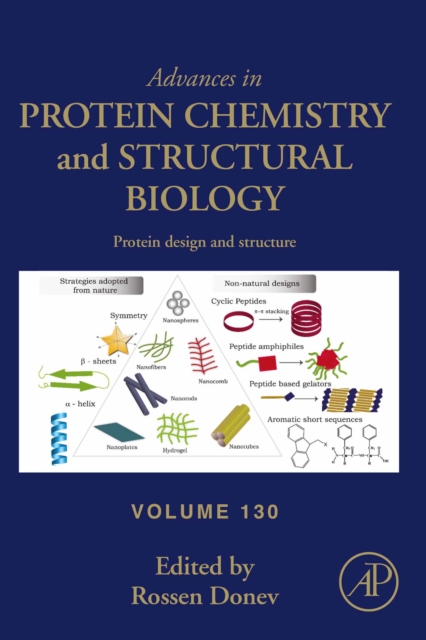
Protein Design and Structure, Volume 130 in the Advances in Protein Chemistry and Structural Biology series, highlights new advances in the field, with this new volume presenting interesting chapters.
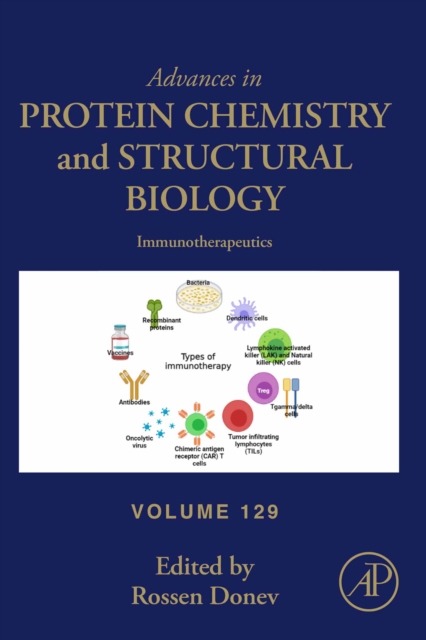
Immunotherapeutics, Volume 129 in the Advances in Protein Chemistry and Structural Biology series highlights new advances in the field, with this new volume presenting interesting chapters on a variety of topics, including Vaccines for the prophylaxis and treatment of HPV, Lung-targeted RNA-based therapeutics, Clostridium difficile: Current overview and future perspectives, Antivenoms for treatment of snake bites, Natural killer cell-based strategies for immunotherapy of cancer, Immunological insights of selectins in human disease mechanism, Current update, challenges, and future aspects of immunotherapeutics in non-small cell lung cancer, In silico interaction analysis of NEMO binding domain peptide on the NFkB protein, and much more.