Sensory Individuals: Unimodal and Multimodal Perspectives provides an interdisciplinary, well-balanced, and comprehensive look at different aspects of unisensory and multisensory objects, using both nuanced philosophical analysis and informed empirical work.
Computational neuroscience is the theoretical study of the brain to uncover the principles and mechanisms that guide the development, organization, information processing, and mental functions of the nervous system.
Regenerative medicine is transforming the way clinicians understand and treat pain—shifting the focus from symptom control to true tissue repair and functional restoration.
Regenerative medicine is transforming the way clinicians understand and treat pain—shifting the focus from symptom control to true tissue repair and functional restoration.
This is the first of two volumes offering the very first comprehensive treatise of self-organization and non-linear dynamics in electrochemical systems.
This book provides a detailed understanding of the complex associations among nutrition, cellular homeostasis, and autophagy through the incorporation of recent scientific advancements as well as practical data focusing on strategies to improve brain health and prolong lifespan.
This book provides a detailed understanding of the complex associations among nutrition, cellular homeostasis, and autophagy through the incorporation of recent scientific advancements as well as practical data focusing on strategies to improve brain health and prolong lifespan.
This book captures the experience of transitioning from prison to the community, the tensions between risk management, public protection and enabling flourishing in those that have been released from prison.
This book captures the experience of transitioning from prison to the community, the tensions between risk management, public protection and enabling flourishing in those that have been released from prison.
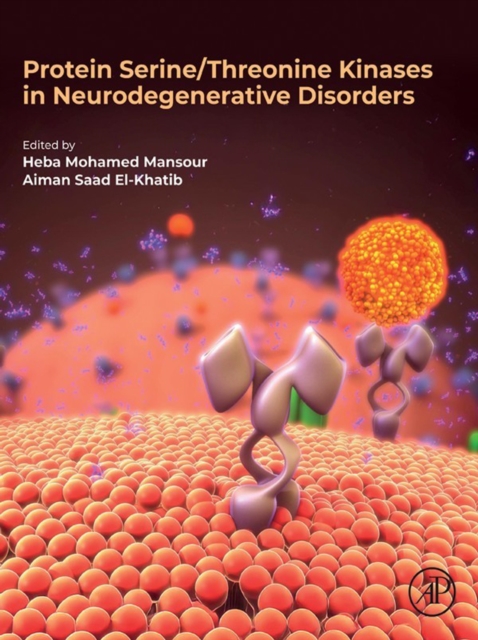
Protein Serine/Threonine Kinases in Neurodegenerative Disorders discusses protein kinase inhibitors and their potential role in modulating and treating neurodegenerative diseases.
"e;A practical guide to accessing profound states"e; - Shauna Shapiro, Professor of Psychology at Santa Clara University"e;Battle-tested tools to rewire your brain for lasting bliss"e; - Mark Divine, Retired U.
Public Engagement and Ethical Communication in Brain Research, Innovation, and Health, Volume Nine in the Developments in Neuroethics and Bioethics series, provides a comprehensive overview of various understandings of neuroscience and (neuro)ethics communication across research, policy, and society.
This book provides a structured, multidisciplinary synthesis of the psychological, social, and neurobiological consequences of combat-related posttraumatic stress disorder (PTSD).
This book provides a structured, multidisciplinary synthesis of the psychological, social, and neurobiological consequences of combat-related posttraumatic stress disorder (PTSD).
This book presents an authoritative, extensive exploration of the models of degenerative diseases, providing coverage of the preclinical models that are essential for investigation of principles of the diseases, mechanisms of development of functional deficits, and development of therapeutic approaches, including safety analysis.
This book presents an authoritative, extensive exploration of the models of degenerative diseases, providing coverage of the preclinical models that are essential for investigation of principles of the diseases, mechanisms of development of functional deficits, and development of therapeutic approaches, including safety analysis.
This book presents a timely and comprehensive overview of how cutting-edge technologies are transforming rehabilitation practices for individuals with physical disabilities.
This book presents a timely and comprehensive overview of how cutting-edge technologies are transforming rehabilitation practices for individuals with physical disabilities.
This book explores the rapidly advancing field of gut–brain interactions, with a particular focus on the emerging evidence linking the gut microbiome to neurodegenerative diseases such as Alzheimer’s disease, Parkinson’s disease, cerebral palsy, and amyotrophic lateral sclerosis (ALS).
This book explores the rapidly advancing field of gut–brain interactions, with a particular focus on the emerging evidence linking the gut microbiome to neurodegenerative diseases such as Alzheimer’s disease, Parkinson’s disease, cerebral palsy, and amyotrophic lateral sclerosis (ALS).
This book explores the physiology and neurophysiology of the endocrine system, emphasizing the intricate brain-endocrine crosstalk, from pathophysiology to clinical applications.