An engaging blend of environmental theory and literary studies, Natures State looks behind the myth of Alaska as Americas last frontier, a pristine and wild place on the fringes of our geographical imagination.
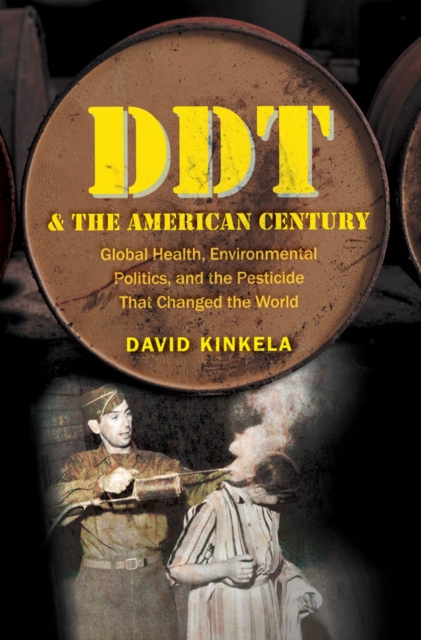
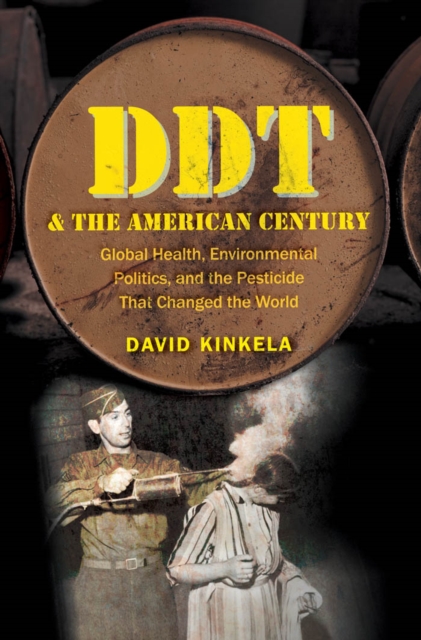
Praised for its ability to kill insects effectively and cheaply and reviled as an ecological hazard, DDT continues to engender passion across the political spectrum as one of the worlds most controversial chemical pesticides.
Praised for its ability to kill insects effectively and cheaply and reviled as an ecological hazard, DDT continues to engender passion across the political spectrum as one of the worlds most controversial chemical pesticides.
The Oxford Handbook of Developmental Cognitive Neuroscience brings together the leading developmental cognitive neuroscientists in the field that work on understanding human development, and the complex interplay of genetic, environmental, and brain maturational factors that shape social and cognitive functioning in development.
Diploma Thesis from the year 2002 in the subject Biology - Ecology, grade: 1,0 (A), University of Rostock (Institute for Botany), language: English, abstract: Since the end of the 19th century, overall per-capita mobility of humans has increased significantly, leading to increased rates in human-mediated transportation of animal and plant species.
Mechanical Design of Structural Materials in Animals explores the principles underlying how molecules interact to produce the functional attributes of biological materials: their strength and stiffness, ability to absorb and store energy, and ability to resist the fatigue that accrues through a lifetime of physical insults.
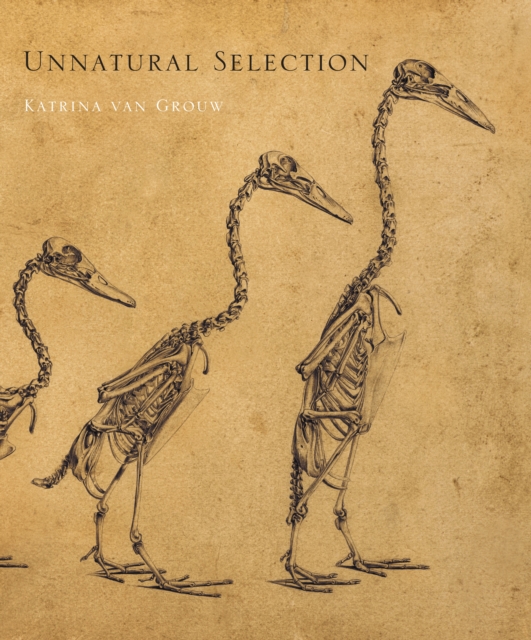
A lavishly illustrated look at how evolution plays out in selective breedingUnnatural Selection is a stunningly illustrated book about selective breeding-the ongoing transformation of animals at the hand of man.
This comprehensive handbook provides an authoritative collection of exercise-cognition research, exploring the historical development, current state, and future implications of the field.
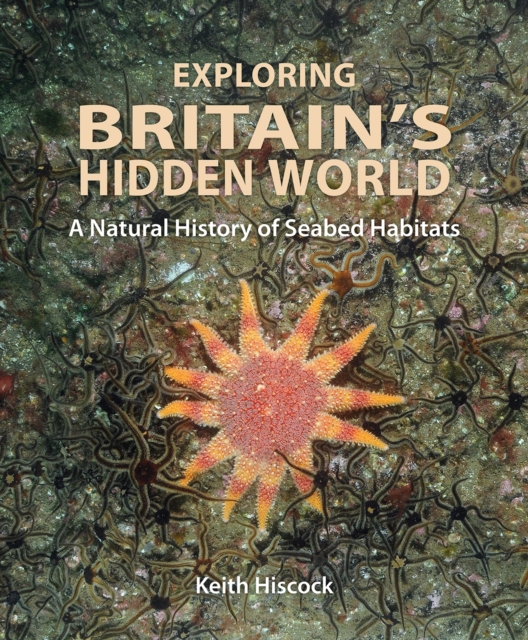
The Marine World is a book for everyone with an interest in the ocean, from the marine biologist or student wanting expert knowledge of a particular group to the naturalist or diver exploring the seashore and beyond.
The concept of fitness has long been a topic of intense debate among evolutionary biologists and their critics, with its definition and explanatory power coming under attack.
Synthesizing studies of parental care in a wide variety of animals, this book is the first attempt to provide general answers to the following important questions: Why does the extent of parental care vary so widely between species?
Natural selection is an immense and important subject, yet there have been few attempts to summarize its effects on natural populations, and fewer still which discuss the problems of working with natural selection in the wild.
Whether in felling trees for wood, rearing insects for biological control, or culling animals for conservation purposes, efficient management of biological systems requires quantitative analysis of population growth and harvesting policies.
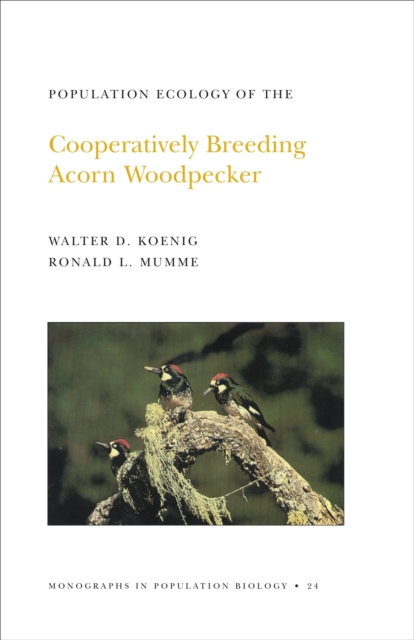
Ever since the acorn woodpecker was observed and described by Spanish explorers, its behavior--particularly the unique habit of caching acorns in specialized storage trees or granaries--has impressed observers.
This book maintains that higher plants manifest some degree of sexual selection, and it begins to build a framework that unifies many features of plant reproduction previously considered unrelated.
Many animals regulate their population density by patterns of behavior that would be easy to explain if the forces of natural selection acted to optimize group properties.
To show the importance of stochastic processes in the change of gene frequencies, the authors discuss topics ranging from molecular evolution to two-locus problems in terms of diffusion models.
This book deals with a key area of population genetics: the ratio of the sexes in a population, or the allocation of resources to male versus female reproductive function.
The variety of social systems among the New World blackbirds (Family Icteridae) and the structural simplicity of their foraging environment provide excellent opportunities for testing theorics about the adaptive significance of their behavior.
In this study of arthropod predador-prey systems Michael Hassell shows how many of the components of predation may be simply modeled in order to reveal their effects on the overall dynamics of the interacting populations.
Although ecologists have long considered morphology and life history to be important determinants of the distribution, abundance, and dynamics of plants in nature, this book contains the first theory to predict explicitly both the evolution of plant traits and the effects of these traits on plant community structure and dynamics.
A common tendency in the field of population ecology has been to overlook individual differences by treating populations as homogeneous units; conversely, in behavioral ecology the tendency has been to concentrate on how individual behavior is shaped by evolutionary forces, but not on how this behavior affects population dynamics.
Professor Levins, one of the leading explorers in the field of integrated population biology, considers the mutual interpenetration and joint evolution of organism and environment, occurring on several levels at once.
In spite of the fact that parasites represent more than half of all living species of plants and animals, their role in the evolution of life on earth has been substantially underestimated.
A number of scholars have found that concepts such as mutation, selection, and random drift, which emerged from the theory of biological evolution, may also explain evolutionary phenomena in other disciplines as well.
Through use of the models Professor Horn has devised, plant ecologists, foresters, and botanists will be able to predict the growth and productivity of a forest, the invading and senile species in a forest, the effect of shade tolerance on forest succession, and similar questions.
Professor Cody's monograph emphasizes the role of competition at levels above single species populations, and describes how competition, by way of the niche concept, determines the structure of communities.
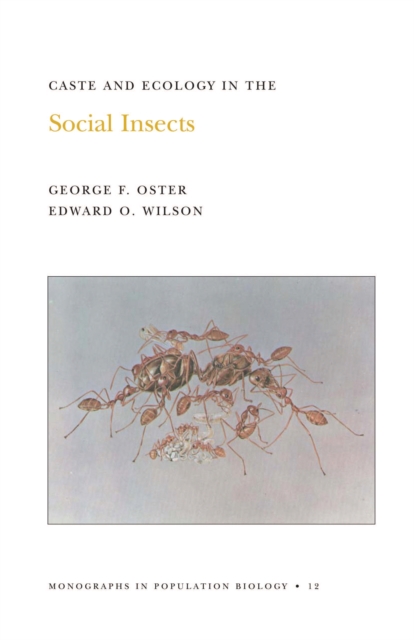
In this pathbreaking and far-reaching work George Oster and Edward Wilson provide the first fully developed theory of caste evolution among the social insects.
Spatial Ecology addresses the fundamental effects of space on the dynamics of individual species and on the structure, dynamics, diversity, and stability of multispecies communities.
This edited volume presents updated and significant contributions to the study of climate change and ecosystem services, with a strong focus on real-world case studies from diverse geographic regions, especially across Asia.
Evolutionary Community Ecology develops a unified framework for understanding the structure of ecological communities and the dynamics of natural selection that shape the evolution of the species inhabiting them.
The modern ecologist usually works in both the field and laboratory, uses statistics and computers, and often works with ecological concepts that are model-based, if not model-driven.
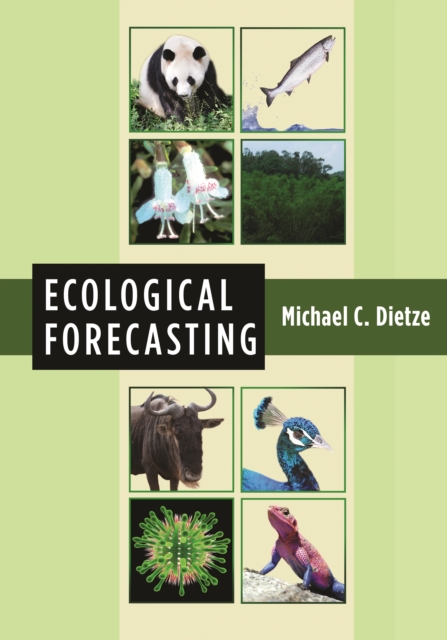
An authoritative and accessible introduction to the concepts and tools needed to make ecology a more predictive scienceEcologists are being asked to respond to unprecedented environmental challenges.
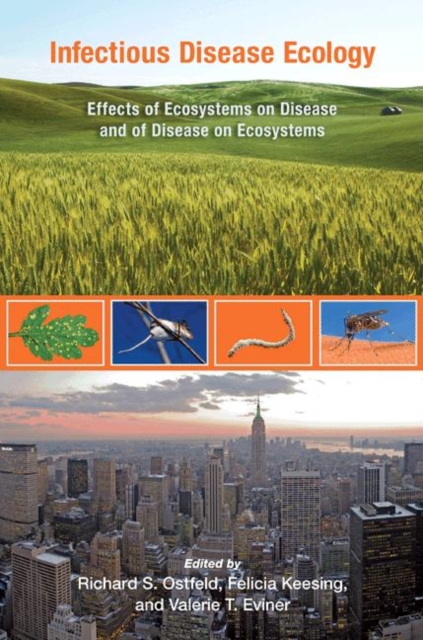
News headlines are forever reporting diseases that take huge tolls on humans, wildlife, domestic animals, and both cultivated and native plants worldwide.
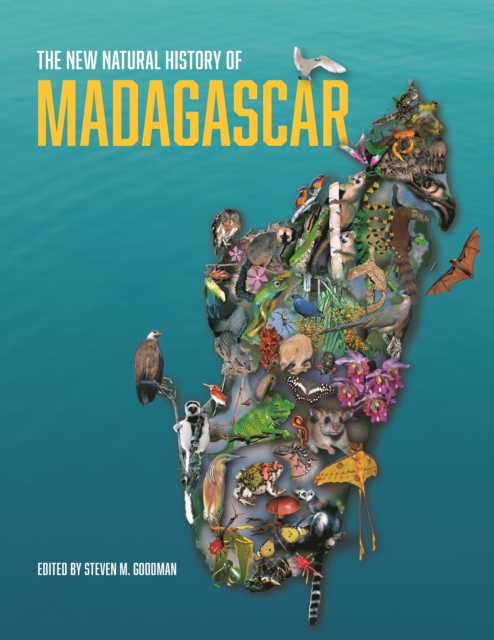
A marvelously illustrated reference to the natural wonders of one of the most spectacular places on earthSeparated from Africa's mainland for tens of millions of years, Madagascar has evolved a breathtaking wealth of biodiversity, becoming home to thousands of species found nowhere else on the planet.