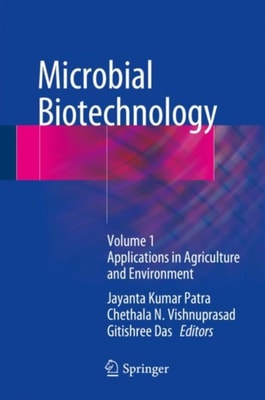
This edited book, is a collection of 20 articles describing the recent advancements in the application of microbial technology for sustainable development of agriculture and environment.
This book provides a comprehensive description of theories and applications of high-solid and multi-phase bioprocess engineering, which is considered as an important way to address the challenges of "e;high energy consumption, high pollution and high emissions"e; in bio-industry.
This book addresses basic and applied aspects of two nexus points of microorganisms in agro-ecosystems, namely their functional role as bio-fertilizers and bio-pesticides.
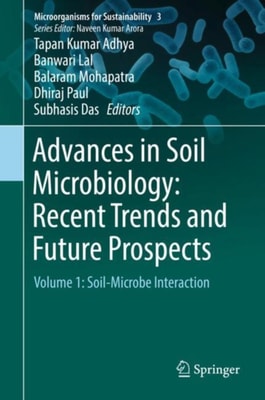
This book presents a comprehensive collection of articles illustrating the importance of microbial community structure and function for ecosystem sustainability and environmental reclamation.
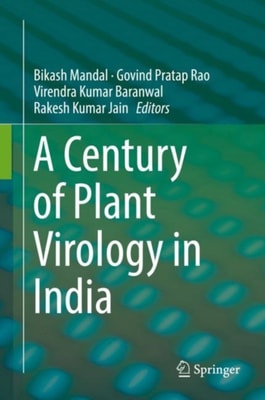
Begomoviruses are one of the most interesting plant viruses to study for basic and applied research as they cause huge economic losses to agriculture industries and farmers all over the world.
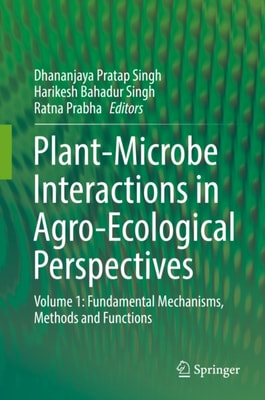
This books presents an updated compilation on fundamental interaction mechanisms of microbial communities with the plant roots and rhizosphere (belowground) and leaves and aerial parts (aboveground).
The existence of living organisms in diverse ecosystems has been the focus of interest to human beings, primarily to obtain insights into the diversity and dynamics of the communities.
This book presents state-of-the-art research on the many facets of the plant microbiome, including diversity, ecology, physiology and genomics, as well as molecular mechanisms of plant-microbe interactions.
This book is a compilation of case studies from different countries and covers contemporary with future prospective for sustainable development of agriculture.
This book is a one-stop reference resource, presenting recent research in various emerging areas of microbiology, including microbial biotechnology, microbes in health, microbial interactions, agricultural microbiology and computational approaches.
This book offers up-to-date information on different microbiomes, their community composition and interactive functions with the host, bringing together information from diverse research reports to provide an overview of the rapid developments in meta-omics technologies.
This book explores the developments in important aspects of fungi related to the environment, industrial mycology, microbiology, biotechnology, and agriculture.
This two volume book set provides a comprehensive and practical overview of the state-of-the-art molecular biological diagnostic strategies that are currently used in a wide variety of disciplines.
This book reviews the potential mechanisms in arbuscular mycorrhizas (AMs), in the hope that this can help arbuscular mycorrhizal fungi (AMF) to be more used efficiently as a biostimulant to enhance stress tolerance in the host plants.
This book primarily focuses on microbial colonization, its role in plant growth and nutrient cycling, mycorrhizae, and providing an overview of phytospheric microorganisms in sustainable crop systems.
This book brings together and updates the latest information on the diversity of yeasts, their molecular features and their applications in the welfare of mankind.
The main focus of this book is to survey the current status of research, development and use of agriculturally important microorganisms in Asian countries and develop a strategy for addressing critical issues various policy constraints due to which bio-pesticides have found limited applications.
This book introduces readers to Direct Acting Antiviral (DAAs) agents, newly developed drugs to treat chronic hepatitis C virus infection, which have an excellent anti-viral effect on virus replication.
Acarology - the study of mites and ticks, is a subdiscipline of Zoology, and is many times considered in the field of Entomology (the study of insects).
Global yields of legumes have been relatively stagnant for the last five decades, despite the adoption of conventional and molecular breeding approaches.
Molecular Medical Microbiology, Third Edition presents the latest release in what is considered to be the first book to synthesize new developments in both molecular and clinical research.
En este trabajo se presentan los resultados del estudio de la comunidad fitoplanctónica del lago Boa, un lago de meandro de aguas claras ubicado en la cuenca media del río Caquetá, Amazonia colombiana.
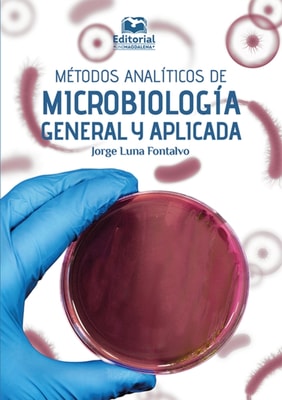
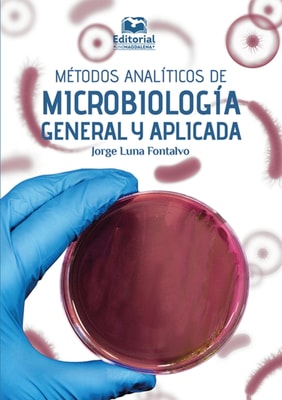
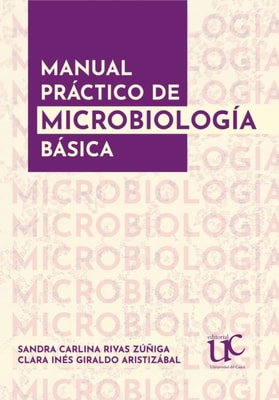
La Microbiología es una ciencia que se encarga de estudiar a los organismos vivos como hongos, bacterias y virus; incluyendo su morfología, fisiología y ecología.
Este libro de divulgacion de resultados de los estudios realizados por el Grupo de Investigacion en Modelacion de Sistemas Ambientales- GIMSA del Programa de Ingenieria Ambiental y Sanitaria de la Universidad del Magdalena, tiene por objeto la socializacion dek trabajo que se ha venido realizando desde hace tres anos, en la Linea de investigacion de Calidad del Aire y en las areas especificas de Microbiologia Ambiental y Salud Publica.
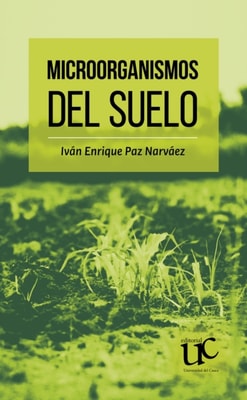
Este libro pretende abordar aspectos relacionados con el papel que cumplen los microorganismos del suelo, mediante procesos e interacciones complejas, para mantenerlo activo, fertil e integrado a las cadenas troficas, indispensables para el sostenimiento de la vida.
Contar con un estricto control de las materias primas y derivados lácteos y cárnicos es indispensable para proteger la salud de los consumidores; por ello, la zootecnia es uno de los eslabones que contribuye a la seguridad alimentaria mundial.