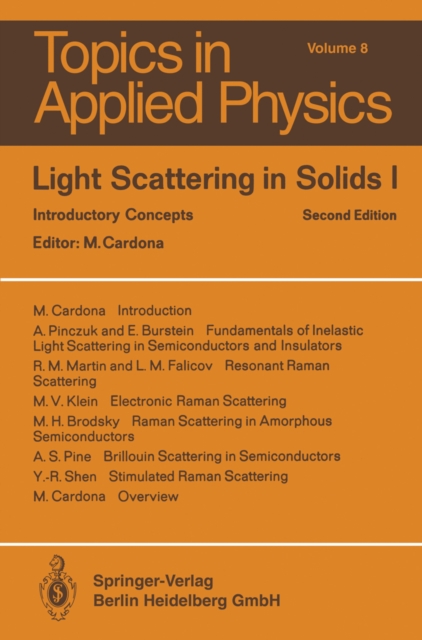
This volume contains extended abstracts of the 10 plenary lectures, 27 invited symposium lectures and ap- proximately 300 contributed papers that were presented at the 25th Congress Ampere.
This volume contains review articles written by the invited speakers at the ninth International Summer Institute in Surface Science (ISISS 1989), held at the Uni- versity of Wisconsin-Milwaukee in August of 1989.
This volume appears at a time when the prospects for banishing the threat of nuclear annihilation are brighter than at any time since the first atomic device exploded over the desert at Alamogordo.
After many years of sterile arms control negotiations between the super powers, which did not produce a single genuine disarmament measure - and sometimes had the opposite effect of stimulating the development of new weapons to serve as bargaining chips - an agreement to abolish completely two categories of nu- clear weapons, the INF Treaty, was signed and is now being implemented.
These proceedings are the result of the third international workshop on Desorption Induced by Electronic Transitions, DIET III, which took place on Shelter Island, NY, May.
In this book the author discusses the investigation of ion bombardment of solids by computer simulation, with the aim of demonstrating the usefulness of this approach to the problem of interactions of ions with solids.
The aim of this book is to give a comprehensive description of the basic methods used in the ultraviolet spectroscopy of proteins, to discuss new trends and development of these methods, and to analyze their different applications in the study of various aspects of protein structure and dynamics.
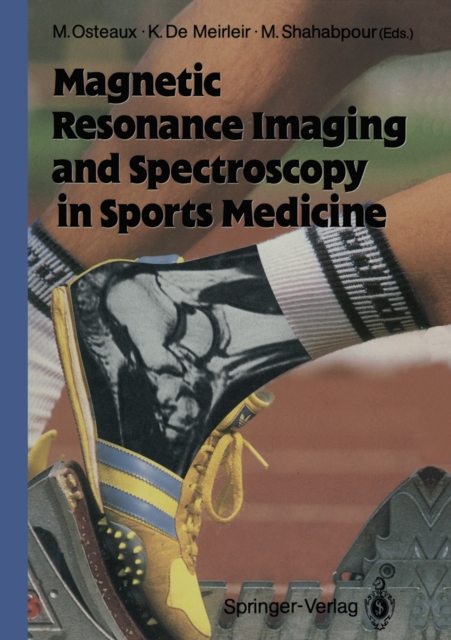
Even the earliest applications of nuclear magnetic resonance (NMR) spectroscopy and tomography to medical inquiries, using experimental apparatus that was primitive by today's standards, demonstrated the extraordinary potential of the NMR method.
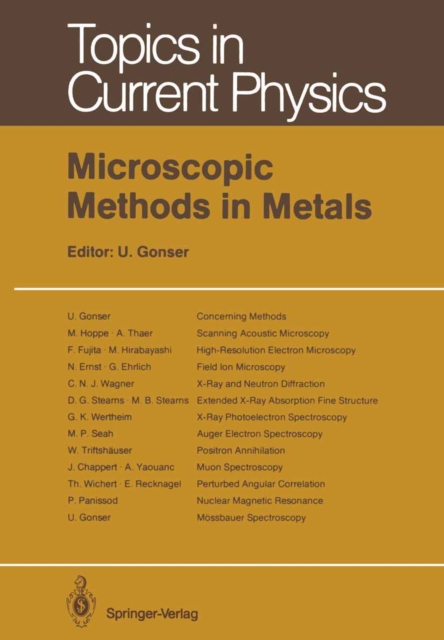
Despite the recent progress in developing various microanalytical tools of better spatial resolution and more sensitivity to chemical analyses for the study of various defects in metallic solids the Field-Ion Microscope (FIM) still remains the only instrument up to now to resolve single atoms in the surface of a metal.
Since the first successful NMR experiments in 1946 it was well appreciated that dynamic processes play an important role in the NMR spectroscopy of bulk matter [1].
The development of mineralogy, the evolutionary changes in compre- hending the mineral substance of the earth are closely associated with the progress of research methods.
During the last five years transmission electron microscopy (TEM) has added numerous important new data to mineralogy and has considerably changed its outlook.
This book gives physical chemists a broader view of potential biological applications of their techniques for the study of nucleic acids in the gas phase.
Dieser Buchtitel ist Teil des Digitalisierungsprojekts Springer Book Archives mit Publikationen, die seit den Anfängen des Verlags von 1842 erschienen sind.
Mit dem rasch wachsenden Integrationsgrad mikroelektronischer Schaltungen steigt der mögliche Schaden durch hochenergetische Strahlung, insbesondere im Einsatzbereich von Luft- und Raumfahrttechnik, aber auch bei Kernreaktoren, in der Materialforschung und in der medizinischen Diagnostik und Therapie.
Dieser Buchtitel ist Teil des Digitalisierungsprojekts Springer Book Archives mit Publikationen, die seit den Anfängen des Verlags von 1842 erschienen sind.
Dieser Buchtitel ist Teil des Digitalisierungsprojekts Springer Book Archives mit Publikationen, die seit den Anfängen des Verlags von 1842 erschienen sind.
Anybody concerned about the maintenance of peace in our world, and in prospects of reaching agreements on arms control and disarmament, is bound to be interested in one of the key pre-conditions for related international treaties: the verification of compliance with such treaties.
The collisions of neutral or charged gaseous particles with solid surfaces govern many physical and chemical phenomena, as has been The gas/solid phenomena in turn depend on a recognized for a long time.
This book presents the various types of resonance effects on excitons, biexcitons and the local electronic centers (LEC) in solids, such as paramagnetic and paraelectric resonances on excitons, exciton acoustic resonance at intra- and interband transitions, radio-optical double resonance on excitons, hole-nuclear double resonance on localized biexcitons, ENDOR and acoustic ENDOR on LEC.
The volume presents, for the very first time, an exhaustive collection of those modern theoretical methods specifically tailored for the analysis of Strongly Correlated Systems.
Nanoscale miniaturization and femtosecond laser-pulse spectroscopy require a quantum mechanical description of the carrier kinetics that goes beyond the conventional Boltzmann theory.
In recent years submicron and nanoscale systems have featured strongly on the research agenda due to the technological progress and new physics that have emerged from studies of ultra-small systems.
Latest developments associated with two currently active and very important theoretical and practical topics in nonlinear optics, namely solitons and fibers, are considered in this volume.
Photoemission spectroscopy is one of the most extensively used methods to study the electronic structure of atoms, molecules, and solids and their surfaces.