Sean Ashton's doctoral thesis, which he finished at the Technical University in Munich, describes the challenge of constructing a Differential Electrochemical Mass Spectrometer instrument (DEMS).
The problem of conventional, low-temperature superconductivity has been regarded as solved since the seminal work of Bardeen, Cooper, and Schrieffer (BCS) more than 50 years ago.
This book primarily focuses on the fundamentals of and new developments in electrochemiluminescence (ECL), presenting high-quality content and explicitly aiming to summarize and disseminate the current state-of-the-art.
A broad, almost encyclopedic overview of spectroscopic and other analytical techniques useful for investigations of phase boundaries in electrochemistry is presented.
This volume contains full proceedings of the Fourth International Conference on Secondary Ion Mass Spectrometry (SIMS-IV), held in the Minoo-Kanko Hotel, Osaka, Japan, from November 13th to 19th, 1983.
One often hears that nanoscience or, in other words, the knowledge and control of matter at length scales of a few nanometers, will be the scientific frontier of the 21st century.
Fluorescence correlation spectroscopy (FCS) was developed in order to char- acterize the dynamics of molecular processes in systems in thermodynamic equilibrium.
The PUILS series delivers up-to-date reviews of progress in Ultrafast Intense Laser Science, a newly emerging interdisciplinary research field spanning atomic and molecular physics, molecular science and optical science which has been stimulated by the recent developments in ultrafast laser technologies.
Dealing with the basics, theory and applications of dynamic pulsed-field-gradient NMR NMR (PFG NMR), this book describes the essential theory behind diffusion in heterogeneous media that can be combined with NMR measurements to extract important information of the system being investigated.
This book delivers up-to-date reviews of progress in ultrafast intense laser science, an expanding interdisciplinary research field spanning atomic and molecular physics, molecular science, solid state physics, and optical science, which has been stimulated by the recent developments in ultrafast laser technologies.
This two-volume book provides an enriching insight into the laser, covering different types of lasers, the basic science behind the technology, their role at the cutting-edge of current scientific research, and their applications in medicine, industry, and the arts.
Computational Chemistry for Experimentalists: A Nonspecialist's Guide to Practical and Predictive Simulations empowers chemists-especially those at emerging institutions or in small and medium enterprises-by transforming foundational chemical concepts into practical computational skills.
This book presents an innovative approach to the synthesis and mechanical characterization of hydroxyapatite (HA)-based nanocomposites for biotechnological applications.
This two-volume book provides an enriching insight into the laser, covering different types of lasers, the basic science behind the technology, their role at the cutting-edge of current scientific research, and their applications in medicine, industry, and the arts.
This book delivers up-to-date reviews of progress in ultrafast intense laser science, an expanding interdisciplinary research field spanning atomic and molecular physics, molecular science, solid state physics, and optical science, which has been stimulated by the recent developments in ultrafast laser technologies.
This book presents an innovative approach to the synthesis and mechanical characterization of hydroxyapatite (HA)-based nanocomposites for biotechnological applications.
This book highlights how superconductor detectors that replace conventional detectors, such as semiconductor detectors and secondary electron multipliers, can overcome the fundamental limitations of certain analytical instruments.
The book reviews the natural product chemistry of Australian rainforest plants, with a particular focus on their fascinating phylogenetic relationships.
This book highlights how superconductor detectors that replace conventional detectors, such as semiconductor detectors and secondary electron multipliers, can overcome the fundamental limitations of certain analytical instruments.
This book provides a comprehensive overview of the latest applications of laser-induced breakdown spectroscopy (LIBS) in the environmental and forensic sciences along with chemometric methods.
The book reviews the natural product chemistry of Australian rainforest plants, with a particular focus on their fascinating phylogenetic relationships.
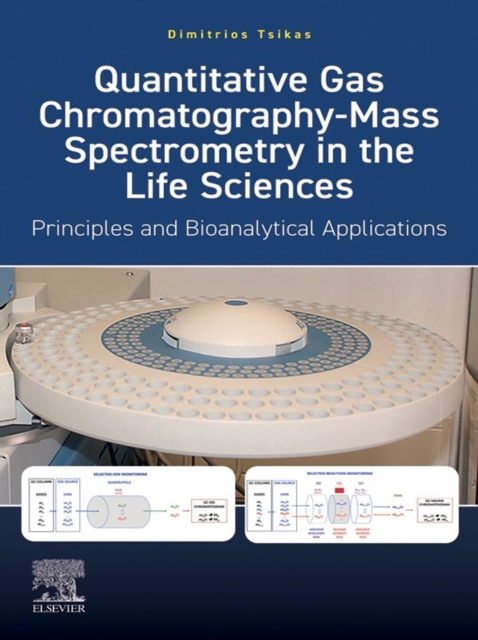
Quantitative Gas Chromatography-Mass Spectrometry: Principles in Life Sciences and Biochemical Applications provides an in-depth exploration of the principles and practices of GC-MS.
This book explores the latest advancements in optical probe technology, their theoretical foundations, and practical applications in ensuring food safety.
This book provides a comprehensive overview of the latest applications of laser-induced breakdown spectroscopy (LIBS) in the environmental and forensic sciences along with chemometric methods.
Fluorescence Spectroscopy in Analytical Chemistry: A Practical Approach provides a comprehensive overview of the fundamental, theoretical aspects and advanced applications of fluorescence spectroscopy in analytical chemistry.
This book explores the latest advancements in optical probe technology, their theoretical foundations, and practical applications in ensuring food safety.