Multidimensional Analytical Techniques in Environmental Research is a comprehensive resource on the many multidimensional analytical strategies to qualitatively and quantitatively assess and map the organic and inorganic pollutants in complex atmospheric, water and soil matrices.
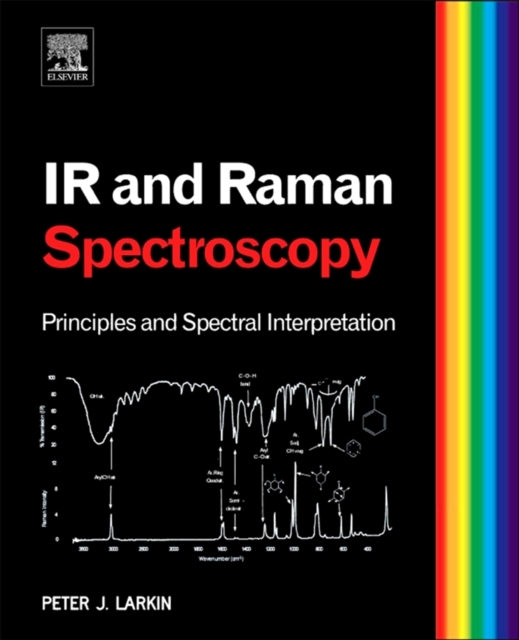
Infrared and Raman Spectroscopy: Principles and Spectral Interpretation explains the background, core principles and tests the readers understanding of the important techniques of Infrared and Raman Spectroscopy.
Chemical Analysis of Food: Techniques and Applications, Second Edition, reviews the latest technologies and challenges in all stages of food analysis, from selecting the right approach, how to perform analytic procedures, and how to measure and report the results.
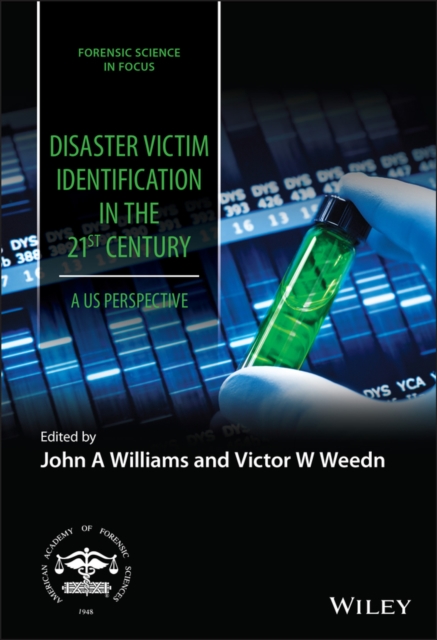
A comprehensive examination of all critical aspects of Disaster Victim Identification (DVI) As the frequency of both natural and man-made mass fatality disasters increases worldwide, the establishment of clear standards and best practices within the field of Disaster Victim identification (DVI) is of vital importance.
A comprehensive examination of all critical aspects of Disaster Victim Identification (DVI) As the frequency of both natural and man-made mass fatality disasters increases worldwide, the establishment of clear standards and best practices within the field of Disaster Victim identification (DVI) is of vital importance.
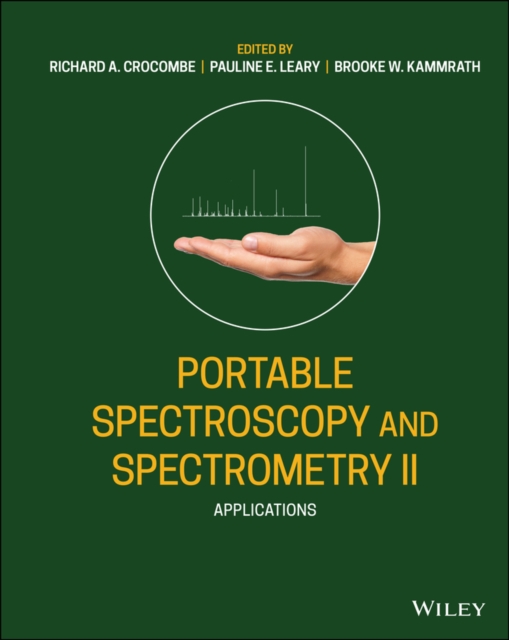
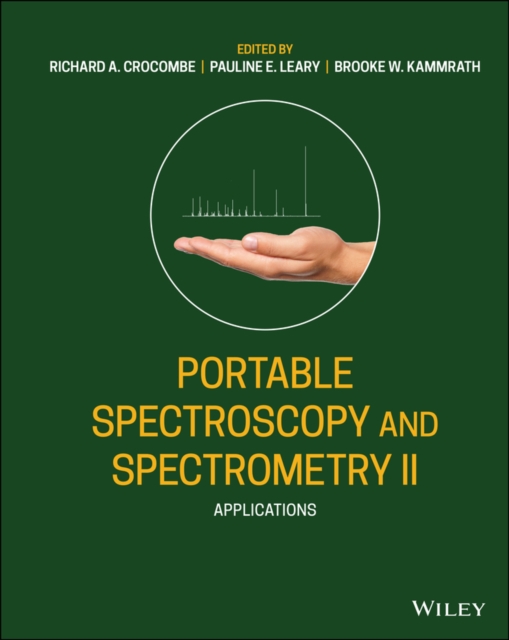
The most comprehensive resource available on the many applications of portable spectrometers, including material not found in any other published work Portable Spectroscopy and Spectrometry: Volume Two is an authoritative and up-to-date compendium of the diverse applications for portable spectrometers across numerous disciplines.
The most comprehensive resource available on the many applications of portable spectrometers, including material not found in any other published work Portable Spectroscopy and Spectrometry: Volume Two is an authoritative and up-to-date compendium of the diverse applications for portable spectrometers across numerous disciplines.
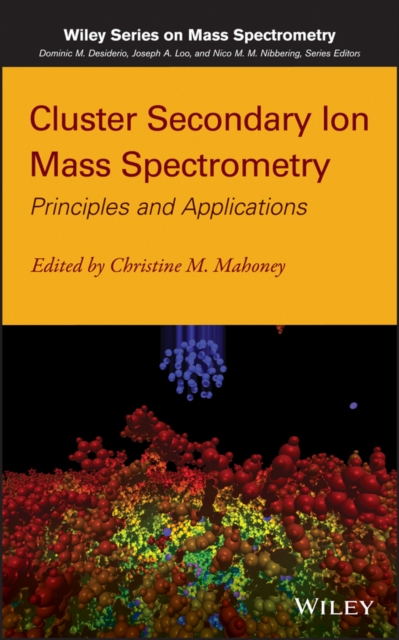
Explores the impact of the latest breakthroughs in cluster SIMS technology Cluster secondary ion mass spectrometry (SIMS) is a high spatial resolution imaging mass spectrometry technique, which can be used to characterize the three-dimensional chemical structure in complex organic and molecular systems.
Explores the impact of the latest breakthroughs in cluster SIMS technology Cluster secondary ion mass spectrometry (SIMS) is a high spatial resolution imaging mass spectrometry technique, which can be used to characterize the three-dimensional chemical structure in complex organic and molecular systems.
Protein NMR Spectroscopy, Second Edition combines a comprehensive theoretical treatment of NMR spectroscopy with an extensive exposition of the experimental techniques applicable to proteins and other biological macromolecules in solution.
Smokeless Tobacco Products: Characteristics, Usage, Health Effects, and Regulatory Implications, a title in the Emerging Issues in Analytical Chemistry series, presents an overview of research on the second most dangerous tobacco product.
Designed to provide a comprehensive, step-by-step approach to organic process research and development in the pharmaceutical, fine chemical, and agricultural chemical industries, this book describes the steps taken, following synthesis and evaluation, to bring key compounds to market in a cost-effective manner.
Recent advances in infrared molecular spectroscopy have resulted in sophisticated theoretical and laboratory methods that are difficult to grasp without a solid understanding of the basic principles and underlying theory of vibration-rotation absorption spectroscopy.
Anthropic Awareness: The Human Aspects of Scientific Thinking in NMR Spectroscopy and Mass Spectrometry blends psychology, philosophy, physics, mathematics, and chemistry, describing a human-centered philosophy of the essence of scientific thinking in the natural sciences and in everyday life.
This edited book of proceedings is a collection of twelve selected and peer-reviewed contributions from the Virtual Conference on Chemistry and its Applications (VCCA-2022).
Applications of High Resolution Mass Spectrometry: Food Safety and Pesticide Residue Analysis is the first book to offer complete coverage of all aspects of high resolution mass spectrometry (HRMS) used for the analysis of pesticide residue in food.
Writing Reaction Mechanisms in Organic Chemistry, Third Edition, is a guide to understanding the movements of atoms and electrons in the reactions of organic molecules.
Thermal Analysis: From Introductory Fundamentals to Advanced Applications presents an easy-to-understand introduction to Thermal Analysis (TA) principles alongside in-depth coverage of the wide variety of techniques currently in use across several industries.
Reviews in Fluorescence 2004, the first book of a new book series from Springer, is a collection of current trends and emerging hot topics in the field of Fluorescence.
It may be argued that silicon, carbon, hydrogen, oxygen, and iron are among the most important elements on our planet, because of their involvement in geological, biol- ical, and technological processes and phenomena.
Nanostructured Materials: Selected Synthesis Methods, Properties and Applications presents several important recent advances in synthesis methods for nanostructured materials and processing of nano-objects into macroscopic samples, such as nanocrystalline ceramics.
Physics of Semiconductor Devices covers both basic classic topics such as energy band theory and the gradual-channel model of the MOSFET as well as advanced concepts and devices such as MOSFET short-channel effects, low-dimensional devices and single-electron transistors.
Electron Paramagnetic Resonance (EPR) spectroscopy - also sometimes termed Electron Spin Resonance spectroscopy - has manifold potential uses in biochemistry and medicine.
With the development in the 1960s of ultrahigh vacuum equipment and techniques and electron, X-ray, and ion beam techniques to determine the structure and composition of interfaces, activities in the field of surface science grew nearly exponentially.
Particle characterization is an important component in product research and development, manufacture, and quality control of particulate materials and an important tool in the frontier of sciences, such as in biotechnology and nanotechnology.
The Foundation for Advances in Medicine and Science (FAMS), the organizers of SCANNING 98, sponsored its third annual Atomic Force Microscopy/Scanning Tunneling Microscopy Symposium at the Omni Inner Harbor Hotelin Baltimore, Maryland, from May 9 to 12, 1998.