Biosensors have captured the imagination of the world's scientific and commercial communities by combining interdisciplinary skills of biologists, physicists, chemists and engineers to provide innovative solutions to analytical problems.
This book identifies test procedures used within sectors of the solid/liquid separation equipment industry, providing practical explanations for test data and their uses when faced with a new application to assess.
Laser induced breakdown spectroscopy (LIBS) is basically an emission spectroscopy technique where atoms and ions are primarily formed in their excited states as a result of interaction between a tightly focused laser beam and the material sample.
This book presents developments of techniques for detection and analysis of two electrons resulting from the interaction of a single incident electron with a solid surface.
Radioactivity: Introduction and History provides an introduction to radioactivity from natural and artificial sources on earth and radiation of cosmic origins.
Lectins: Analytical Technologies covers both analytical and biological aspects of lectins (functional carbohydrate (complex sugar) recognition proteins) and provides researchers in the field with a resource containing background information and 'look-up' tables detailing lectin specificity and structures.
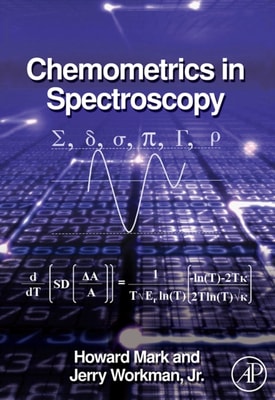
Chemometrics in Spectroscopy builds upon the statistical information covered in other books written by these leading authors in the field by providing a broader range of mathematics and progressing into the fundamentals of multivariate and experimental data analysis.
An understanding of the fate and behaviour of organic chemicals, such as surfactants, in the environment is a prerequisite for the sustainable development of human health and ecosystems.
This book originated out of a desire to combine topics on vibrational absorption, Raman scattering, vibrational circular dichroism (VCD) and Raman optical activity (VROA) into one source.
Trace Determination of Pesticides and their Degradation Products in Water is a critical compilation of analytical methods for the monitoring of pesticides and their degradation products in water.
There is a worldwide effort towards the development of bioanalytical devices that can be used for detection, quantification and monitoring of specific chemical species.
The results of a special research project carried out for "e;Molecular Approaches to Non-equilibrium Process in Solution"e; were presented during The 42nd Yamada Conference on "e;Structure, Fluctuation and Relaxation in Solution"e; which was held from 11-15 December, 1994.
Based on a concrete set of working MATLAB programs, the book begins with a short program of snippets describing basic principles and proceeds to a complete application program filling a central analytical need: obtaining pure spectra from the observed overlapping spectra, with standard deviations for thesolutions obtained.
Contains proceedings from the 8th International Symposium on Process Systems Engineering (PSE), which brought together the global community of process systems engineering researchers and practitioners involved in the creation and application of computing based methodologies for planning, design, operation, control, and maintenance of chemical processes.
This publication provides comprehensive material on the chemical and physical attributes of surfactants and new models for the understanding of structure-property relationships.
Rapid advances in chromatographic procedures, spectroscopic techniques and pharmacological assay methods have resulted in the discovery of an increasing number of new and interesting natural products from terrestrial and marine sources.
This revised and updated Second Edition of the best-selling reference/text is essential reading for students and scientists who seek a thorough and practical introduction to the field of polymer spectroscopy.
Spectrophotometry enables one to determine, with good precision and sensitivity, almost all the elements present in small and trace quantities of any material.
This book is an updated, completely revised version of a previous volume in this series entitled: ENVIRONMENTAL ANALYSIS -- Techniques, applications and quality assurance.
One of the first books devoted entirely to the subject of Raman microscopy, Raman Microscopy addresses issues of great interest to engineers working in Raman-microscope development and researchers concerned with areas ofapplication for this science.
Numerous sources of ionizing radiation can lead to human exposure: natural sources, nuclear explosions, nuclear power generation, use of radiation in medical, industrial and research purposes, and radiation emitting consumer products.
Quality assurance (QA) for environmental analysis is a growing feature of the nineties as is illustrated by the number of QA guidelines and systems which are being implemented nowadays.
Handbook of Thermal Analysis and Calorimetry, Volume 1: Principles and Practice describes the basic background information common to thermal analysis and calorimetry in general.