The exponential increase of the Internet of Things (IoTs) has revolutionized lives, but it has also resulted in massive resource consumption and environmental pollution.
The accurate measurement of additives in food is essential in meeting both regulatory requirements and the need of consumers for accurate information about the products they eat.
Electrochemistry is the study of chemical reactions with an exchange of electrons, and of the chemical phenomena that are caused by the action of applied currents and voltages.
Electrochemistry is the study of chemical reactions with an exchange of electrons, and of the chemical phenomena that are caused by the action of applied currents and voltages.
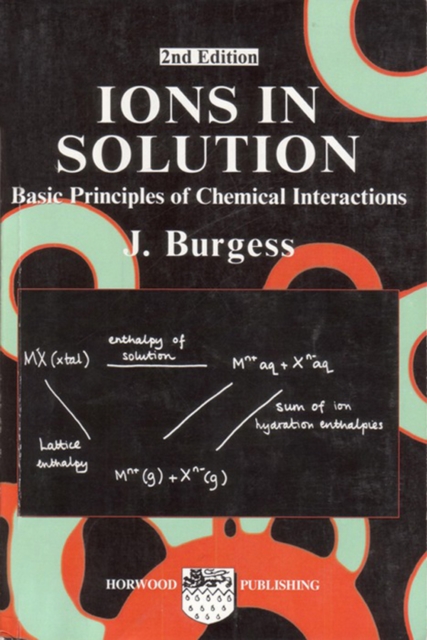
This outline of the principles and chemical interactions in inorganic solution chemistry delivers a course module in an area of considerable complexity.
Mid-infrared (MIR) or Fourier Transform Infrared (FTIR) spectroscopy is a vibrational spectroscopy technique that identifies chemicals based on the interaction of molecules with electromagnetic radiation in the mid-infrared region.
The presented work summarizes and systematizes an extensive experimental material of the results of studying polymers using spectroscopy in the low-frequency infrared region.
Each class of spectroscopy has been presented in this book in the form of a sufficient number of solved problems and their answers have been provided in simple and lucid language which will help the students attain deeper understanding of the subject.
Spectroscopic Methods in Mineralogy and Material Science covers significant advances in the technological aspects and applications of spectroscopic and microscopic techniques used in the Earth and Materials Sciences.
Frontiers in Computational Chemistry, originally published by Bentham and now distributed by Elsevier, presents the latest research findings and methods in the diverse field of computational chemistry, focusing on molecular modeling techniques used in drug discovery and the drug development process.
Applications of NMR Spectroscopy, Volume 2, originally published by Bentham and now distributed by Elsevier, presents the latest developments in the field of NMR spectroscopy, including the analysis of plant polyphenols, the role of NMR spectroscopy in neuroradiology, NMR-based sensors, studies on protein and nucleic acid structure and function, and mathematical formations for NMR spectroscopy in structural biology.
Applications of NMR Spectroscopy, Volume 1, originally published by Bentham and now distributed by Elsevier, presents the latest developments in the field of NMR spectroscopy, including the analysis of edible oils and lipid content in foods, the role of NMR spectroscopy in the human metabolomics and the diagnosis of autism-related disorders, protein-protein interactions, and NMR spectroscopy of chiral molecules.
Frontiers in Computational Chemistry, originally published by Bentham and now distributed by Elsevier, presents the latest research findings and methods in the diverse field of computational chemistry, focusing on molecular modeling techniques used in drug discovery and the drug development process.
Dieses umfangreiche Chemie Buch bietet eine strukturierte Einführung in die wichtigsten Bereiche der Chemie und eignet sich sowohl für Studienanfänger als auch fortgeschrittene Lernende.
This book includes three chapters that discuss the analytical tool called mass spectrometry, which is used to measure the mass-to-charge ratio of ions.
This well-planned, logically structured and user-friendly book provides a useful insight into the world of non-enzymatic glycation from its early stages to an advanced level, with an eye on glycating agents, their enhancers and inhibitors.
This compilation focuses on laser-induced breakdown spectroscopy, a technique that provides a versatile qualitative and quantitative analysis of any sample.
Gas Chromatography: History, Methods and Applications focuses on the main applications of gas chromatography in clinical and forensic toxicology, mainly in the determination of drugs of abuse including the new psychoactive substances in several types of biological matrices.
The aim of the book is to provide domain-specific text/reference material pertaining water chemistry/hydrogeochemistry catering to students of geology, hydrogeology, civil engineers, hydrochemistry and environmental sciences.
In this compilation, the authors review the planning of multithermal titration calorimetry experiments using triosephosphate isomerase as a case study with two of its inhibitors, 2PG and PGH, under physiological conditions and osmotic stress.
Lewis acids have been utilized to activate molecules, whether it be the generation of a simple Lewis acid-base adduct or the coordination and activation of a substrate molecule in a catalytic transformation.
In recent decades, the science of gas separation by use of a nanoporous permselective membrane has widely developed due to properties such as low energy consumption, easy operation, low waste generation and economic benefits.
Conventional sample preparation techniques like solid phase extraction and liquid-liquid extraction prove to be tedious, time-consuming and oftentimes cumbersome.
Crystal structures and their associated electronic features play an enormous role in chemistry, constituting the most fundamental basis for analyzing and predicting properties of solid-state materials.
X-Ray Fluorescence: Technology, Performance and Applications opens with a study wherein the possibilities of polarizing energy dispersive X-ray fluorescence spectrometry were fully explored to materialize rapid trace element determinations of various geological samples.
In this collection, the authors discuss the way in which it is possible to detect the low concentrations at which toxic compounds and metabolites are present in specimens due to the huge development of chromatographic techniques.
Although initially described as major regulators of cytoskeletal remodeling, Rho GTPases have been implicated in the establishment of polarity, endocytosis, vesicle trafficking, morphogenesis, cytokinesis, transcriptional activation, cell cycle progression, and apoptosis, to mention a few.